The Jakarta Post
Please Update your browser
Your browser is out of date, and may not be compatible with our website. A list of the most popular web browsers can be found below.
Just click on the icons to get to the download page.


Popular Reads
Top Results
No results found. Please check your search term and try again
Can't find what you're looking for?
View all search results
Popular Reads
Top Results
No results found. Please check your search term and try again
Can't find what you're looking for?
View all search resultsTrump’s $1b levy
While the Prabowo government may seek to avoid economic "punishment" through proximity to the Trump administration, our national dignity and strategic independence are at stake.
Change text size
Gift Premium Articles
to Anyone
Share the best of The Jakarta Post with friends, family, or colleagues. As a subscriber, you can gift 3 to 5 articles each month that anyone can read—no subscription needed!
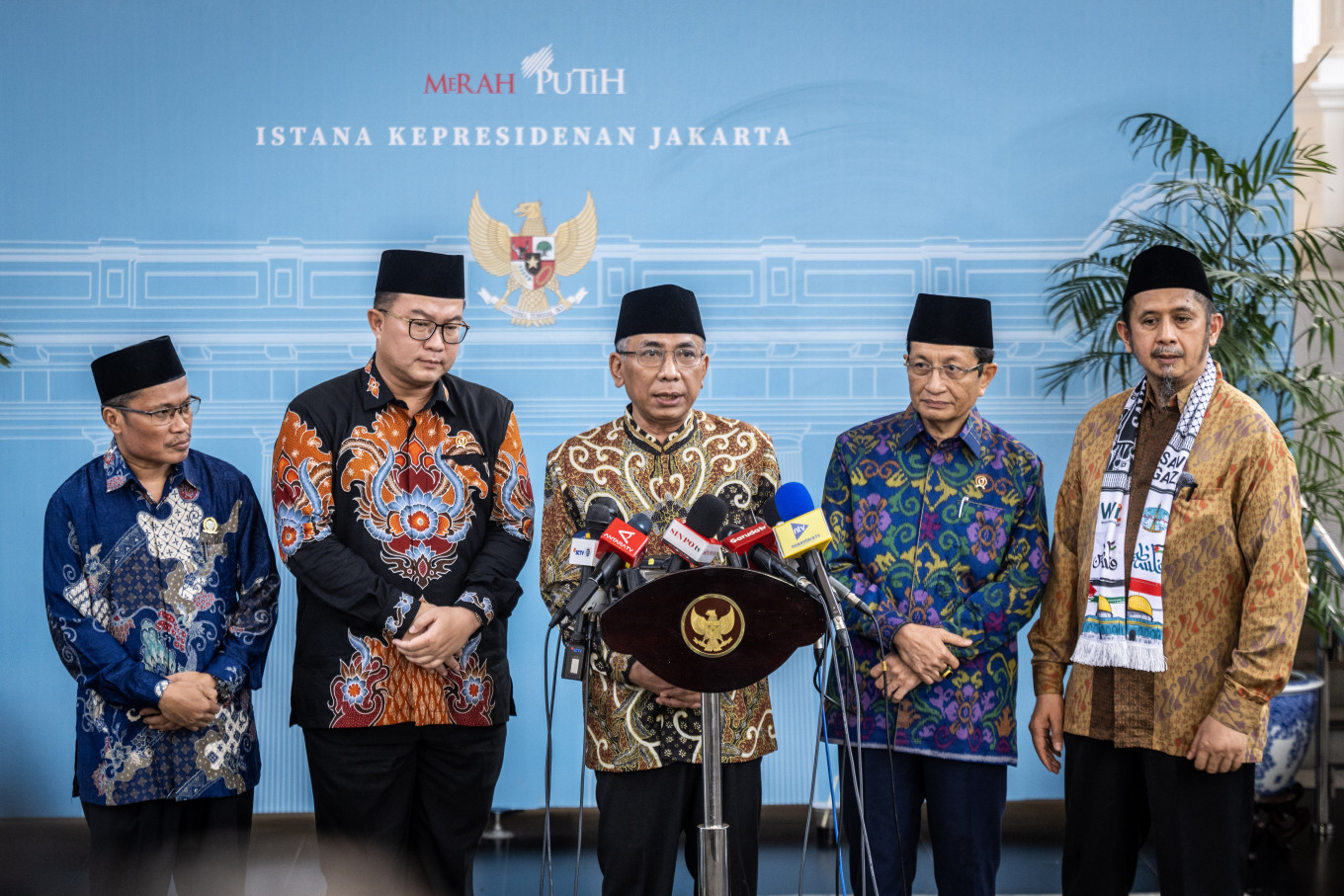 Religious Affairs Minister Nasaruddin Umar (second right) attends a press conference on Feb. 3 alongside religious leaders after a meeting with President Prabowo Subianto at the Merdeka Palace in Central Jakarta. The meeting discussed Indonesian participation in the Board of Peace. (Antara/Bayu Pratama S)
W
e strongly urge President Prabowo Subianto to reconsider Indonesia’s entry to the nascent Board of Peace and fulfill United States President Donald Trump’s demand for a US$1 billion mandatory contribution.
President Prabowo’s realization of the commitment constitutes a significant departure from Indonesia’s foundational foreign policy. Indonesia, too, is not a nation so wealthy that it can afford to misallocate such a vast sum toward a personal diplomatic initiative with questionable long-term institutional stability.
Participation in the Trump-led board sends a conflicting signal regarding Indonesia’s bebas aktif (independent and active) doctrine. By committing significant capital to an organization governed by a charter that grants "nearly absolute power" to a single foreign leader, Jakarta risks appearing as if it has abandoned its non-aligned stance.
While the Prabowo government may seek to avoid economic "punishment" through proximity to the Trump administration, we must ask: at what cost to national dignity and strategic independence?
The financial obligation required for permanent membership, exceeding $1 billion in cash within the first year, is staggering. Rather than funding a foreign diplomatic experiment, these resources could be directed toward bolstering social safety nets for the millions of Indonesians still living below the poverty line.
Furthermore, such a sum could provide critical infrastructure development in rural provinces or fund significant upgrades to national vocational training and medical facilities. For resource-rich Gulf states that have joined the board, such a levy may be negligible; for Indonesia, it represents a massive diversion of capital from urgent national priorities.

Proponents of joining the board argue that this contribution should not be viewed as a sunk cost, but rather as a strategic investment in Indonesia-US economic relations. In an era of transactional diplomacy, this membership contribution may serve as the necessary "entry fee" to secure favorable terms in ongoing trade negotiations.