TheJakartaPost
Please Update your browser
Your browser is out of date, and may not be compatible with our website. A list of the most popular web browsers can be found below.
Just click on the icons to get to the download page.


Popular Reads
Top Results
No results found. Please check your search term and try again
Can't find what you're looking for?
View all search results
Popular Reads
Top Results
No results found. Please check your search term and try again
Can't find what you're looking for?
View all search resultsTerawan's dismissal and epidemic of scientific illiteracy
Until today, there is no robust scientific evidence and consensus supporting Terawan`s practice apart from people's testimonies.
Change text size
Gift Premium Articles
to Anyone
Share the best of The Jakarta Post with friends, family, or colleagues. As a subscriber, you can gift 3 to 5 articles each month that anyone can read—no subscription needed!
O
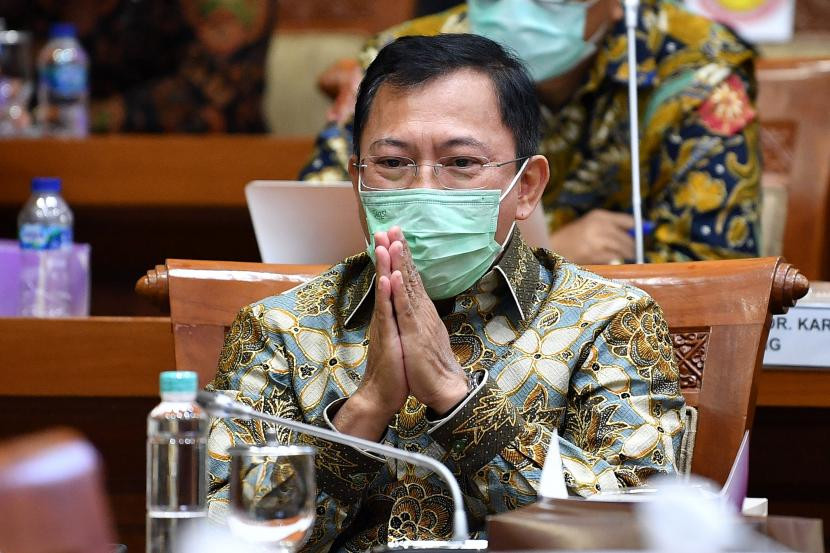
ver the past few weeks, the public's attention has been drawn to the polemic of former health minister Terawan Agus Putranto's dismissal as a member of the Indonesian Medical Association (IDI). Initially, it was a dispute between the two, but considering Terawan’s prominence, it is difficult not to expect the issue will trigger a public — if not high-level political — debate.
Basically, the issue is simple, straightforward and is not really complicated to comprehend. It only requires a bit of comprehension of how scientific findings, especially in medicine, can be delivered to the public. Unfortunately, there are reasons to believe that science has not become an integral part of the Indonesian people`s life. Not only laypeople, but government officials can be anti-science
The crux of Terawan's dismissal is the lack of ethical adherence in delivering his practice as a doctor — or radiologist to be more precise. He performed a medical procedure known as direct subtraction angiography (DSA), which in colloquial terms, is known as brainwashing.
DSA is not a new procedure and has been regularly used as a diagnostic method for imaging as reflected by its name. Angiography means the imaging of blood vessels. Hence, DSA is essentially a diagnostic procedure instead of a medical therapy intervention as offered by Terawan at a quite expensive rate.
Until today, there is no robust scientific evidence and consensus supporting Terawan`s practice apart from people`s testimony. IDI asked Terawan several times to explain the ethical concerns about this practice but he did not respond to its invitations until IDI handed down the punishment.
In medical practice, adherence to ethical standards is mandatory and cannot be separated from a doctor's way of life. The main reason is that doctors are in constant demand to deliver the best possible clinical practice for their patients based on current medical guidelines and research.
Therefore, doctors need to always be up to date with medical advancements in diagnoses and treatments. Failure to comply with this principle can bring deleterious consequences for the patients, which in the worst case may lead to their death.
That’s why every single diagnostic method, medication and intervention used in medical practice needs to be carefully and systematically assessed before they can be approved for routine application on patients. This is known as a clinical trial, a process in which a careful study is performed, starting from animal to human study, to study drugs/interventions' efficacy and any possible side effect.
Therefore, the conclusion of whether a type of medication or procedure is safe should be proven with empirical data that can be measured objectively and minimize all possible biases. Thus, any good testimony that cannot be measured and proven scientifically can never replace any clinical trial or other scientific evidence.
A doctor cannot routinely prescribe drugs or interventions only based on patients' subjective feelings without ever being scientifically proven. Hence, there is a sacred principle in medicine known as evidence-based medicine (EBM) — that all medical decisions should be based on evidence. In this regard, testimonies are not classified as scientific evidence.
Medical doctors also work under the principle of primum non nocere, which means “first, do no harm”.
Those principles should always be kept in a doctor's mind when serving a patient.
Based on the ethical concerns and from a scientific point of view, Terawan has violated the principle of EBM and IDI had a reasonable basis in its decision, as Terawan had failed to robustly prove the scientific rationale of his actions and charged an expensive fee for a form of intervention that has not been scientifically and clinically proven.
Unfortunately, many have innocently defended Terawan and accused IDI of deliberately preventing Indonesia's best doctors from creating breakthroughs and innovations. Some even argue that IDI should be dissolved. In defending Terawan, most people refer to the testimonies of his patients.
It is obvious that this prolonged controversy is the result of public unawareness of scientific and medical standards that have been globally accepted. While it is crystal clear that Terawan has violated the basic principles of medical therapy and could not scientifically prove the rationale of his practice, but because of their blindness to standard ethical, scientific and medical practices, the public has made the opposite conclusion.
Unfortunately, some House of Representatives lawmakers and government officials are as clueless as the public at large. During a hearing with IDI, a House member praised Terawan`s DSA practice as beneficial, having no side effects and boosting patients’ health and brain. Such a claim, which has no scientific basis, indicates that even policymakers lack scientific-based policy-making skills and the ability to spot the fundamental issues that need to be addressed.
The same is true with the Nusantara vaccine, which is being developed by Terawan and has gained wide support eve though it is scientifically flawed. The vaccine has not gone through a preclinical study on animals, which is a mandatory step before progressing to a clinical study on humans. Furthermore, in the first phase clinical study, 71.4 percent of participants experienced side effects. Therefore, the National Food and Drug Control Agency (BPOM) did not grant approval for this vaccine.
However, the public, again, in their innocence and perhaps illiteracy, saw it a different way. We can recall the Agriculture Ministry proposing an anti-corona necklace made from eucalyptus extract that it claimed could kill COVID-19 without standardized scientific proof.
That public and especially government scientific illiteracy has often led to prolonged debates as in the case of Terawan is worrying. When the government and lawmakers lack scientific-based policy-making skills, public welfare will be at stake. On the other end, a trivial matter can end up in an unnecessary conflict and debate because of a lack of knowledge.
As long as our society doubts science, more controversy will follow the Terawan hullabaloo.
***
The writer is a medical doctor and master’s student at the Institute of Cardiovascular Science, University College London.