TheJakartaPost
Please Update your browser
Your browser is out of date, and may not be compatible with our website. A list of the most popular web browsers can be found below.
Just click on the icons to get to the download page.


Popular Reads
Top Results
No results found. Please check your search term and try again
Can't find what you're looking for?
View all search results
Popular Reads
Top Results
No results found. Please check your search term and try again
Can't find what you're looking for?
View all search resultsBPJS to provide uniform universal health care by 2024
BPJS Kesehatan is seeking to gradually phase out its prevailing three-tiered National Health Insurance hospitalization classes and provide an equitable health service system for all policyholders by 2024, two years later than planned.
Change text size
Gift Premium Articles
to Anyone
Share the best of The Jakarta Post with friends, family, or colleagues. As a subscriber, you can gift 3 to 5 articles each month that anyone can read—no subscription needed!
T
he state-owned Health Care and Social Security Agency (BPJS Kesehatan) is seeking to gradually phase out its prevailing three-tiered National Health Insurance (JKN) hospitalization classes and provide an equitable health service system for all policyholders by 2024, two years later than planned.
The government has been planning to eliminate service classes for the JKN program since 2020, through Presidential Regulation (Perpres) No. 82/2018 on health insurance issued by President Joko “Jokowi” Widodo.
The regulation mandated BPJS Kesehatan to provide one standardized basic service for all JKN policyholders by 2022 in a bid to ensure deficit-stricken program’s sustainability and to make sure that it could provide basic health care for all eligible Indonesians.
For a large part of its eight year existence, the BPJS Kesehatan has been suffering from massive deficits. In 2019 for example, the state-owned insurers lost Rp 51 trillion while in 2020 it lost some Rp 5.69 trillion (US$380 million).
This deficit was reversed only last year, after Jokowi increased the premiums for the JKN program and as people avoided going to health facilities for fear of contracting COVID-19.
Health Minister Budi Gunadi Sadikin said the government needed more time to ensure that all hospitals in the country were ready to implement a standardized basic service based on 12 indicators set by the National Social Security Council (DJSN).
"Out of 784 private and government-owned hospitals that we've recently surveyed, around 25 percent need major renovations and some 30 percent need minor refurbishment to implement the new standardized system," Budi said at a meeting with House of Representatives Commission IX overseeing health care and manpower on Monday.
"Hospitals need money and time to prepare for the new standardized care. The amount varied from one hospital to another, some needed Rp 500 million and another could need up to Rp 150 billion. We're currently calculating the budget needed to implement this new program," he added.
The DJSN’s 12 indicators involve a standardized medical staff size, room temperatures, level of lighting, a maximum number of four beds per room, and one bathroom per hospital ward, among others.
Pilot project
Last week, BPJS Kesehatan started a trial run of an equitable health service system for all JKN policyholders in five hospitals owned by the Health Ministry, namely general hospital (RSUP) Dr. Kariadi Central in Semarang, Central Java; RSUP Dr. Tadjuddin Chalid RSUP in Makassar, South Sulawesi; RSUP Dr. J. Leimena RSUP in Ambon, Maluku; RSUP Surakarta in Central Java; and the National Stroke Hospital in Bukittinggi, West Sumatra.
If the trial is successful, the BPJS Kesehatan will gradually expand the standardized inpatient services to some 2,800 hospitals that were in partnership with the agency.
BPJS Kesehatan director Ali Ghufron said that through the pilot project, authorities would be able to figure out the hospitals’ readiness in implementing the standardized care as well knowing the impact of the new scheme on the hospitals’ service quality and income.
"We hope that all hospitals owned by the Health Ministry can implement the standardized service by the end of next year so that by 2024 all of our partner hospitals can provide equitable care," Ali said on Monday.
Despite the big plan, Arif said that as of now there would not be any changes to the JKN premiums formula, at least until 2024.
Currently, premiums for formal workers are calculated at 5 percent of their monthly salaries, with employees paying 1 percent and their employers chipping in the remainder. Workers with salaries under Rp 4 million per month will receive the second-class service while those earning more than Rp 4 million a month will be eligible for the first-class service.
Meanwhile, informal workers can choose between three service classes provided by the BPJS Kesehatan. Premiums for the first-class service stand at Rp 150,000 per month per person, the second-class service stands at Rp 100,000 per person per month.
Premiums for the third class stand at Rp Rp 42,000, with the government providing a Rp 7,000 subsidy for this service category, so participants only have to pay Rp 35,000.
The government also provides full third class subsidies for JKN policyholders who are unemployed or come from low-income families under the so-called contribution assistance (PBI) scheme.
Shifting focus
Budi said that to further ensure the JKN program sustainability, the Health Ministry was currently trying to shift its focus to preventive health care instead of curative efforts.
"We want to focus more on preventing non-communicable diseases [NCDs], such as diabetes. We have seen a sharp rise in our diabetic patients in the last few years. Unless serious preventative measures are in place, we will not be able to cope with the burden of disease in the next 10 years," he said.
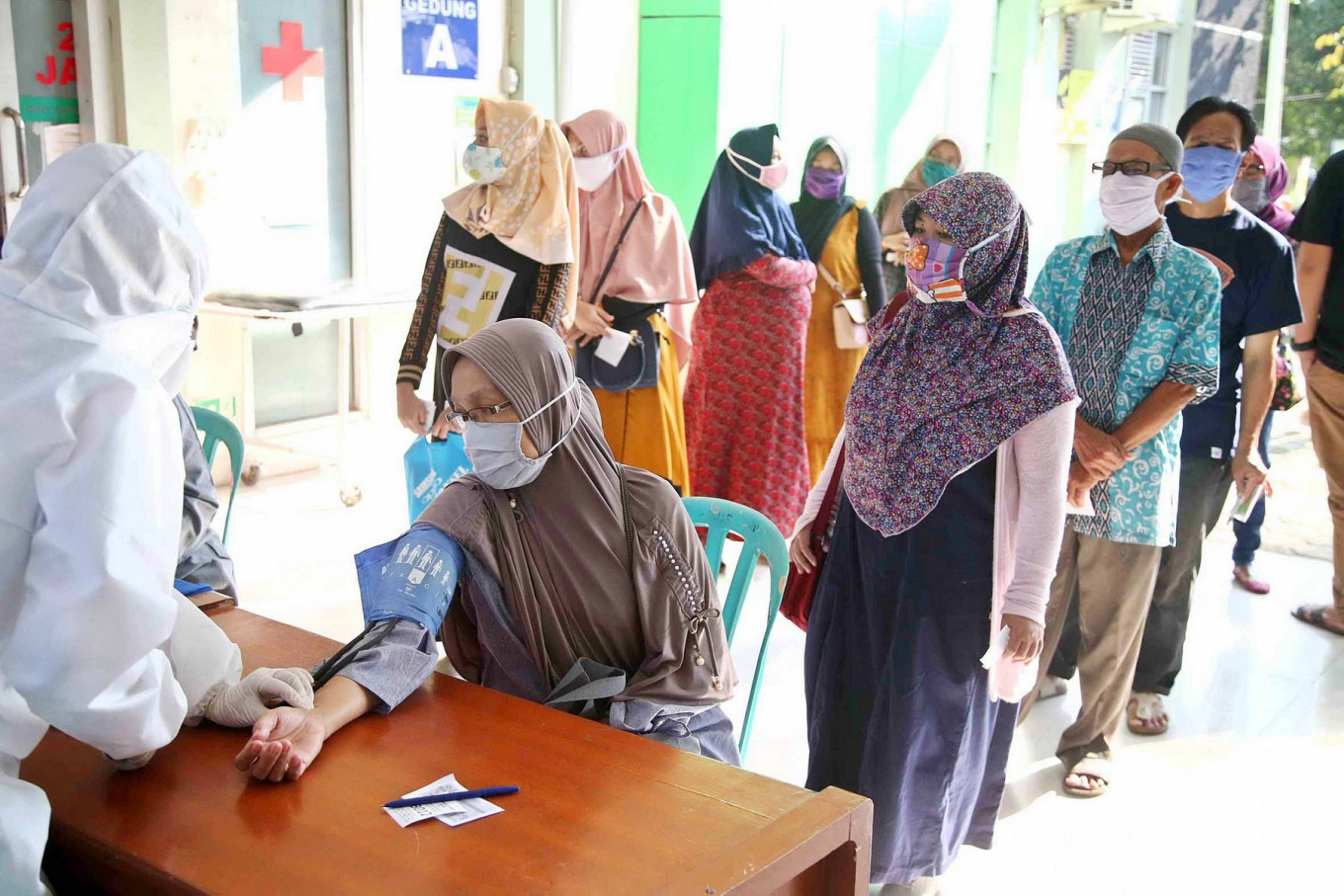
According to Budi, one of the Health Ministry NCDs’ prevention efforts was providing all JKN policyholders with free health screening for various diseases including diabetes, hypertension and cervical cancer in the nearest community health centers (Puskesmas).
According to the 2021 estimation report from the International Diabetes Federation (IDF) Indonesia is among the top-five countries with the highest number of diabetes patients in the world with 19.5 million adults in the country suffering from the disease.
The number of diabetic patients in 2021 increased almost twofold from 2019 and threefold from 2011, when Indonesia was estimated to have around 10.7 million and 7.3 million diabetic people respectively. Making matters worse, the IDF estimated that 74 percent of the 19.5 million Indonesian adults with diabetes, or 14.3 million people, are currently undiagnosed and untreated.
Prior to the COVID-19 pandemic, the BPJS Kesehatan’s spending for catastrophic illnesses was Rp 15.4 trillion, accounting for 21.6 percent of all healthcare service spending of Rp 71.2 trillion in 2019.
In 2018, catastrophic illness spending accounted for 21.66 percent of all healthcare service spending, that is Rp 20.4 trillion out of Rp 94.2 trillion.