TheJakartaPost
Please Update your browser
Your browser is out of date, and may not be compatible with our website. A list of the most popular web browsers can be found below.
Just click on the icons to get to the download page.


Popular Reads
Top Results
No results found. Please check your search term and try again
Can't find what you're looking for?
View all search results
Popular Reads
Top Results
No results found. Please check your search term and try again
Can't find what you're looking for?
View all search resultsDeforestation-free label requires clarity on forest terminology
The regulation no longer singles out palm oil as the main villain in deforestation.
Change text size
Gift Premium Articles
to Anyone
Share the best of The Jakarta Post with friends, family, or colleagues. As a subscriber, you can gift 3 to 5 articles each month that anyone can read—no subscription needed!
E
uropean Union environment ministers reached an agreement on a general approach to new rules addressing global deforestation during a meeting of the Environment Council in Luxembourg on June 28.
The proposal, which was initially presented by the European Commission in November 2021, aims to ensure that products and commodities imported into the EU are “deforestation-free” which is defined as “not having caused deforestation or forest degradation during their production”.
The council agreed to set mandatory due diligence rules for all operators and traders who place, make available or export products of six commodities: coffee, cocoa, palm oil, soy, beef and wood, as well as a number of their derivative products
The regulation no longer singles out palm oil as the main villain in deforestation.
The council defined “deforestation” as the conversion of forest to agricultural use, whether human-induced or not. While “forest degradation” means “structural changes to forest cover, that translate into the conversion of primary forests into plantation forests or into other wooded land”. In the document, “forest” is defined as land spanning more than 0.5 hectares with trees higher than five meters and a canopy cover of more than 10 percent.
This commitment imposes a double-edged sword impact on developing countries with highly forested landscapes such as Indonesia.
It is a general, more pragmatic approach in addressing deforestation in the supply chain of commodities that are linked with forest degradation.
It should be noted, however, that the document is missing the reality when we realize that the deforestation label can be applied any product that allegedly converts 0.5 ha of land. Such terms are too simplistic and only applicable in certain regions, such as temperate Europe. While, in tropical countries like Indonesia, the area can be considered forest if it is larger and more complex ecologically.
Therefore, there are critical gaps in the definition of forest and deforestation between EU and Indonesia that need to be reconciled.
Despite its noble purpose and goals, the commitment fails to recognize highly forested landscapes, like Papua, and the opportunity for indigenous Papuans to economically develop and thrive. Further, the EU commitment also disregards in its forest definition and governance the nature of biophysical forests in other regions, such as tropical forests, and the producing country’s sovereignty.
It is unfortunate that such an important document was not supported with a more comprehensive scientific basis as shown in its failure to clarify the terms of forest and deforestation, which need to take the local context of the producing countries.
Therefore, the definition of “deforestation-free” should be sufficiently broad to cover both deforestation and forest degradation applicable in producing countries not entirely based on the understanding of policy makers in the EU. Also, it should provide legal clarity and should be measurable based on quantitative, objective and internationally recognized data.
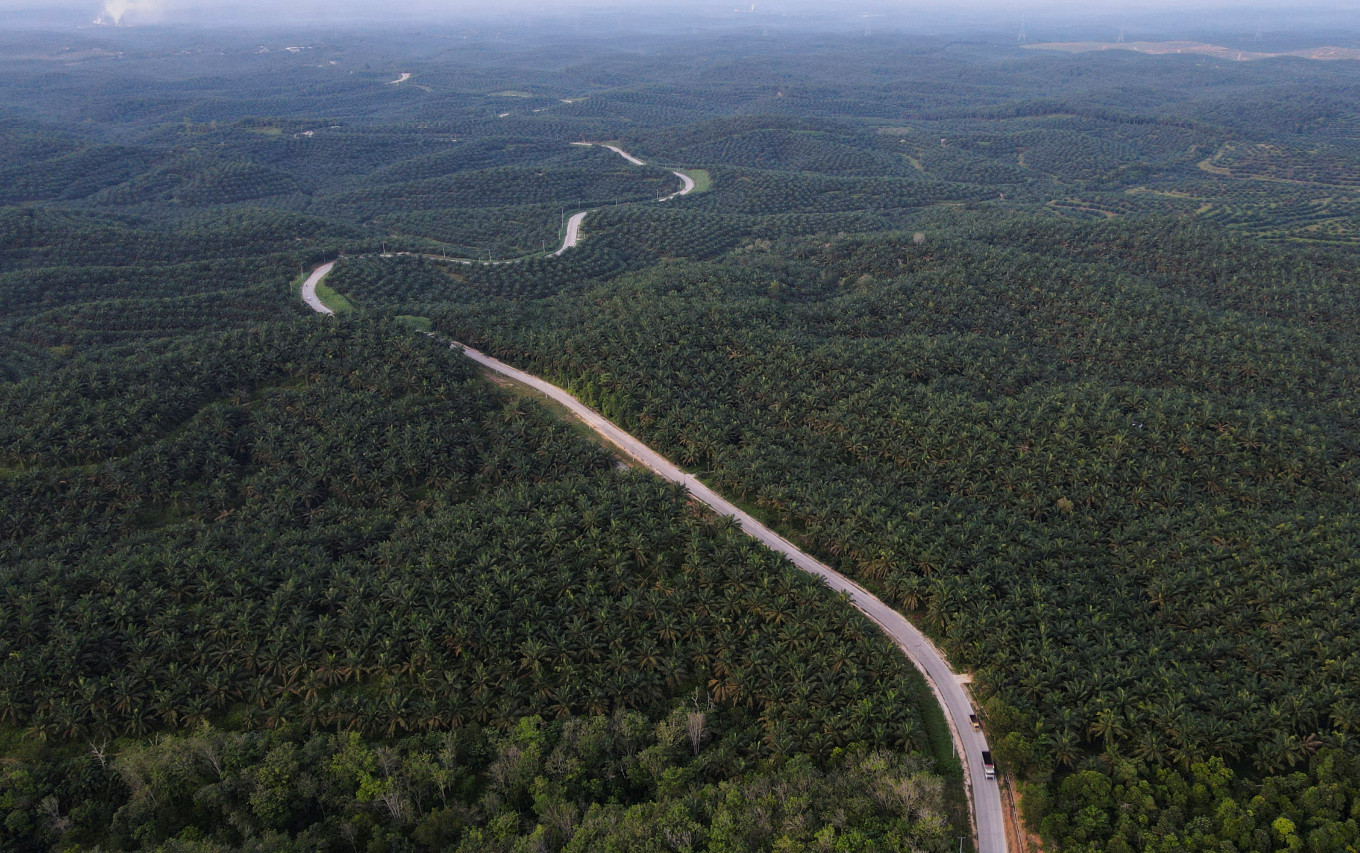
The deforestation-free commitment has become an overarching restriction for new development of commodities, including palm oil in highly forested landscapes such as Papua. Such strict prerequisites have downplayed the importance of the development needed for indigenous Papuans to thrive economically. The situation needs to be addressed.
Indonesia should use the ongoing due diligence in the EU as an opportunity and impetus to devise more careful and detailed definitions of criteria for sustainable palm oil, covering all relevant environmental, social, labor and human rights issues.
The government should conduct a review of the criteria through a multistakeholder process, including representatives of oil palm farmers, indigenous peoples, local communities and civil society organizations, alongside government and industry.
In response to the EU deforestation-free commitment, the government needs to take robust action to introduce new forest and deforestation policies. There are three policy and program priorities that need to be undertaken.
First, the government needs to define the fixed, widely-accepted definition of forest and deforestation based on scientific considerations, particularly on ecological functions and environmental services. All High Conservation Value (HCV) and High Carbon Stock (HCS) areas in a landscape must be categorized as forest areas. Deforestation should be termed as any change or conversion of the designated forest area into other purposes.
Consequently, the government should counter that any development in areas designated as non-forest is not considered deforestation.
Second, forest land use must be redesignated into protection, conservation and production forest. The protected and conservation forest will include primary forests which must be kept intact from any development. Tree plantations can only be developed in production forests. Deforestation and forest degradation labels will be imposed for breaching the commitment to preserve the areas gazetted as protected and conservation forest.
Third, for highly forested landscapes such as Papua, forest land use should reconcile and integrate environmental and socioeconomic considerations, which would allow some of the high cover to be converted and develop certain commodities at a limited scale. The spatial land-use mapping for this particular region needs a more thorough and intensive multi-stakeholder process to account for customary rights, sustainable development opportunity and climate change.
The fourth and most urgent task is that the government needs to conduct extensive and detailed forest mapping throughout the country, especially in the forested areas such as Papua, Kalimantan and Sumatra. The forest map must be agreed upon by all government agencies and stakeholders as the base map and blueprint for sustainable regional development from the provincial down to the village level.
When we have clarity on the understanding of forests and deforestation, have developed fixed national forest land use, have a strategy on sustainable development in highly forested landscapes and have a completed and detailed national forest map, then we will be in the position to counter and provide an alternate version of our own deforestation-free commitment.
Forest mapping and governance are not only important for forest management but also provide clarity on how the country is going to manage its endowment of natural resources.
***
The writer is a sustainable palm oil analyst.