TheJakartaPost
Please Update your browser
Your browser is out of date, and may not be compatible with our website. A list of the most popular web browsers can be found below.
Just click on the icons to get to the download page.


Popular Reads
Top Results
No results found. Please check your search term and try again
Can't find what you're looking for?
View all search results
Popular Reads
Top Results
No results found. Please check your search term and try again
Can't find what you're looking for?
View all search resultsPolice credibility on the line as questions plague officer killing
That official account has been seriously challenged by Yosua’s family, who suspect that the slain officer was in fact a victim of premeditated murder.
Change text size
Gift Premium Articles
to Anyone
Share the best of The Jakarta Post with friends, family, or colleagues. As a subscriber, you can gift 3 to 5 articles each month that anyone can read—no subscription needed!
A
ll eyes are on the National Police as questions abound over their investigation into the fatal shooting of an officer at the official residence of a high-ranking police official.
Brig. Nopryansyah Yosua Hutabarat, also known as officer J, was reportedly killed in an exchange of fire with second agent (Bharada) E at the official residence of the police’s internal affairs chief, Insp. Gen. Ferdy Sambo, in Jakarta on July 8.
According to the police’s account of the incident, Yosua was confronted by officer E after the latter heard screams coming from the bedroom of Putri Candrawathi, Ferdy’s wife, who claimed Yosua had tried to assault her. Yosua allegedly drew his firearm first and fired at E before being killed in the shootout.
Officer E is a member of the police’s Mobile Brigade unit who had been assigned as an aide de camp to Ferdy, while Yosua had been assigned as a chauffeur to Ferdy’s wife. According to the police, the incident unfolded at around 5 p.m. on July 8, when Yosua entered Ferdy’s second-floor bedroom where his wife was resting.
Premedidated murder?
That official account has been seriously challenged by Yosua’s family, who suspect that the slain officer was in fact a victim of premeditated murder.
“We have made a report to the police with the allegation of premeditated murder,” Kamaruddin Simanjuntak, the coordinator for the legal team representing the family, said at the National Police headquarters in Jakarta on Monday.
The family claimed to have found laceration wounds and bruises on Yosua’s body that conflicted with the police’s official account that he had been killed in a shootout.
“He had wounds under the eyes, on the nose, lips, shoulders, hands and on the legs,” Kamaruddin said, suggesting that Yosua had been tortured.
The legal team also reported the suspicious events surrounding his death, including the fact the family was initially barred from seeing Yosua’s body. Yosua’s cell phones were also missing and attempts were made to hack into the cell phones of his relatives after they had been told of his demise, according to Kamaruddin.
Previously, police watchdogs flagged a number of irregularities in the case, which includes the police’s statement that officer E had not only fired five shots at Yosua — who outranked him — but had accurately struck him each time despite the situation. They also questioned why Yosua, a sniper, had not been able to shoot officer E after firing seven times.
Questions have also been raised over the police’s claim that not a single closed-circuit television (CCTV) camera at Ferdy’s house, which could shed light on the case, was on during the incident.
In response to public pressures, National Police chief Gen. Listyo Sigit Prabowo set up a special team to investigate the case. He also suspended Ferdy Sambo from his position as internal affairs chief amid speculations Ferdy — who the police said was out taking a polymerase chain reaction (PCR) test when the incident took place at his residence — had been involved in the killing.
‘Too slow’
The team, however, has yet to restore public trust in the investigation, given that many questions surrounding the case remain unresolved.
“The special team formed by the National Police chief must quickly solve [the case] and find the people […] responsible. The IPW [Indonesian Police Watch] and the public at large are of the opinion that the special team’s work is moving too slow. As a result, wild speculations keep popping up on social media,” said IPW head Sugeng Teguh Santoso.
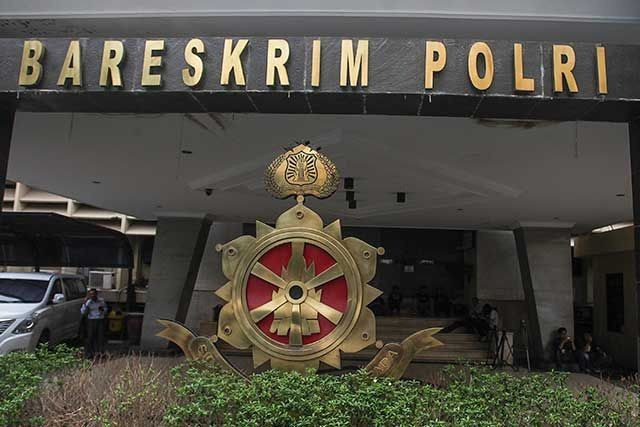
While the case is being handled by the South Jakarta Police, the investigation team is positioned in a supervisory role. It comprises members of the Criminal Investigation Department (Bareskrim) and General Supervision Inspectorate (Irwasum), among others, and is aided externally by the National Commission on Human Rights (Komnas HAM) and the National Police Commission (Kompolnas).
Former Kompolnas commissioner M. Nasser said the special investigation team still lacked representatives from civil society groups, adding that the addition of these figures would help convince the public of transparency in the investigation process.
“These [civil society] representatives will not only be useful for the police, but also for the public. They will help make the results of the special team’s investigation more credible, and in turn, strengthen the public’s confidence in the National Police going forward,” he said.
Dwindling public trust
Bambang Rukminto of the Institute of Security and Strategic Studies (ISESS) said that while the formation of a special investigation team and Ferdy’s suspension had been the right move, the police were still failing to provide any meaningful results.
“Indications so far suggest that no concrete steps have been taken by the special team, as it has failed to name a suspect,” Bambang said on Tuesday. “I would also not consider Ferdy’s suspension a serious step, unless it is followed by the suspension of other police officers who have incited this distrust in the National Police.”
Rivanlee Anandar of the Commission for Missing Persons and Victims of Violence (KontraS) said on Tuesday that if the National Police failed to get the public on their side, it would further diminish public trust in them as a law enforcement institution.
“[To convince the public], the special team should work faster and provide regular updates on its [investigation],” Rivanlee said. “Police should make sure that any external investigations into the incident, such as by [Yosua’s] family, should be facilitated. This will prove that [the police] are providing space for public participation.” (ahw)