The Jakarta Post
Please Update your browser
Your browser is out of date, and may not be compatible with our website. A list of the most popular web browsers can be found below.
Just click on the icons to get to the download page.


Popular Reads
Top Results
No results found. Please check your search term and try again
Can't find what you're looking for?
View all search results
Popular Reads
Top Results
No results found. Please check your search term and try again
Can't find what you're looking for?
View all search resultsGovt extends lowest PPKM level amid Omicron XBB surge
The latest PPKM protocol is largely unaligned with calls from medical experts, who urge the government to tighten restrictions lest it enables a primary aggravating factor contributing to the recent COVID-19 case surge.
Change text size
Gift Premium Articles
to Anyone
Share the best of The Jakarta Post with friends, family, or colleagues. As a subscriber, you can gift 3 to 5 articles each month that anyone can read—no subscription needed!
 Set as preferred source
T
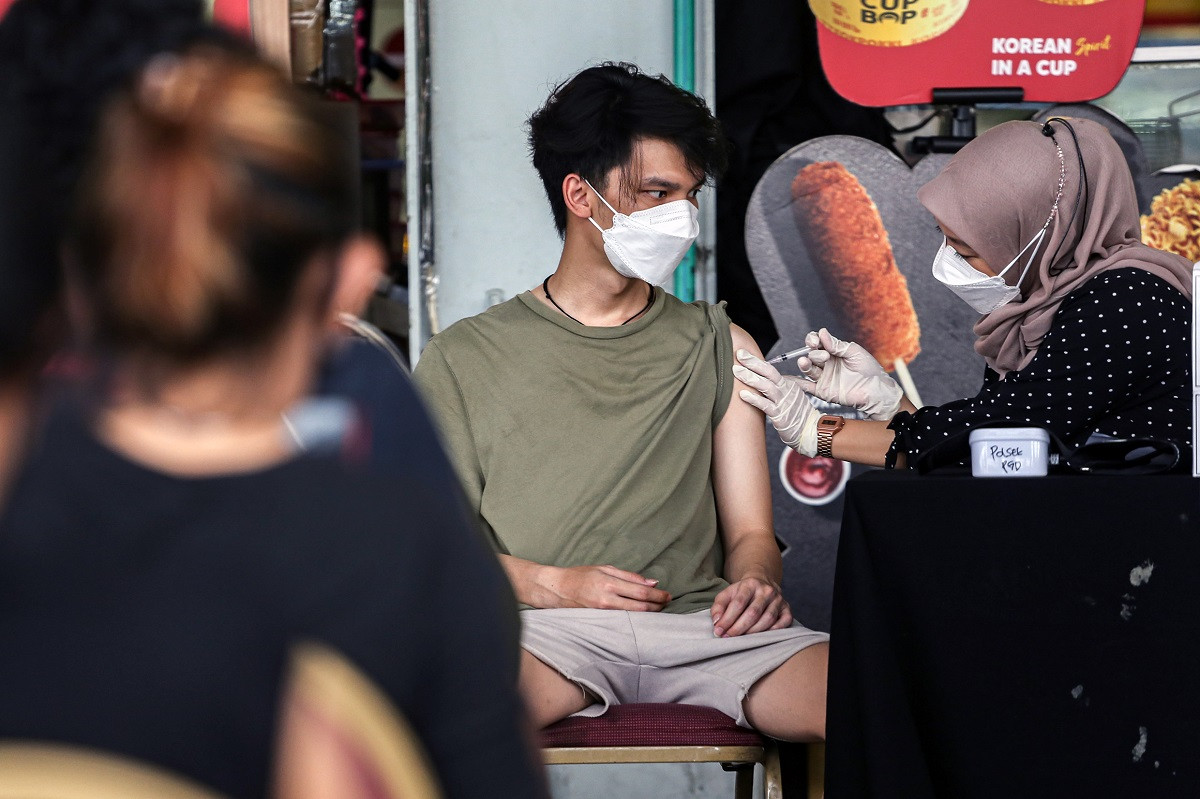
he Home Ministry on Tuesday announced that Java and Bali would proceed with the lowest level of public activity restriction (PPKM) for two weeks until Nov. 5. This extension, which will not pose any significant changes to daily operations, was made amid a global and national spike of COVID-19 Omicron XBB cases, with over 6,000 national daily cases recorded as of Saturday.
The newest protocol is largely unaligned with experts’ calls, who have previously urged that the government tighten restrictions lest it enables one of the primary aggravating factors contributing to the recent COVID-19 trend.
The two-week-long PPKM extension will mostly affect restaurants and cafes, which will face “slight adjustments” to their operating hours as well as tighter surveillance, the ministry’s release said. With the widespread fanfare brought by the 2022 World Cup in Qatar, public viewing parties will still be allowed, under the condition that all attendees check in with the national health-surveillance application PeduliLindungi.
“This most-recent PPKM was enforced coinciding with the World Cup. Seeing the massive scale of euphoria, the government has decided to enforce some rules on [public] viewing parties,” said Safrizal, the ministry’s director general of territorial administration development.
In efforts to reduce the spread of the virus, the ministry had also suggested that restaurants and cafes hold their viewing parties in well-ventilated areas with air filters.
While the minor adjustments would tighten public social activities, the extension would grant offices more freedom as the 75-percent maximum-capacity rule was scratched. Starting on Tuesday, businesses across Java and Bali can start fully operating from their offices, though preventative protocols like mask-wearing remain mandatory.
The number of new daily confirmed cases nationwide had gradually risen since the beginning of November, reaching a high of nearly 8,500 cases and 54 deaths as of Nov. 16.