The Jakarta Post
Please Update your browser
Your browser is out of date, and may not be compatible with our website. A list of the most popular web browsers can be found below.
Just click on the icons to get to the download page.


Popular Reads
Top Results
No results found. Please check your search term and try again
Can't find what you're looking for?
View all search results
Popular Reads
Top Results
No results found. Please check your search term and try again
Can't find what you're looking for?
View all search resultsIndonesia may face rising instability in 2026: CSIS
Failure to address the need for better welfare and democratic policymaking may cause people to have lower trust in the government, therefore threatening political stability in the country, according to Centre for Strategic and International Studies (CSIS) researchers.
Change text size
Gift Premium Articles
to Anyone
Share the best of The Jakarta Post with friends, family, or colleagues. As a subscriber, you can gift 3 to 5 articles each month that anyone can read—no subscription needed!
 Set as preferred source
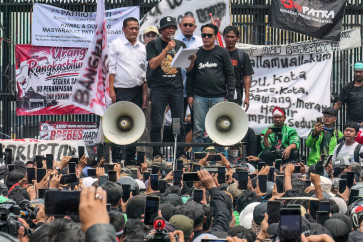
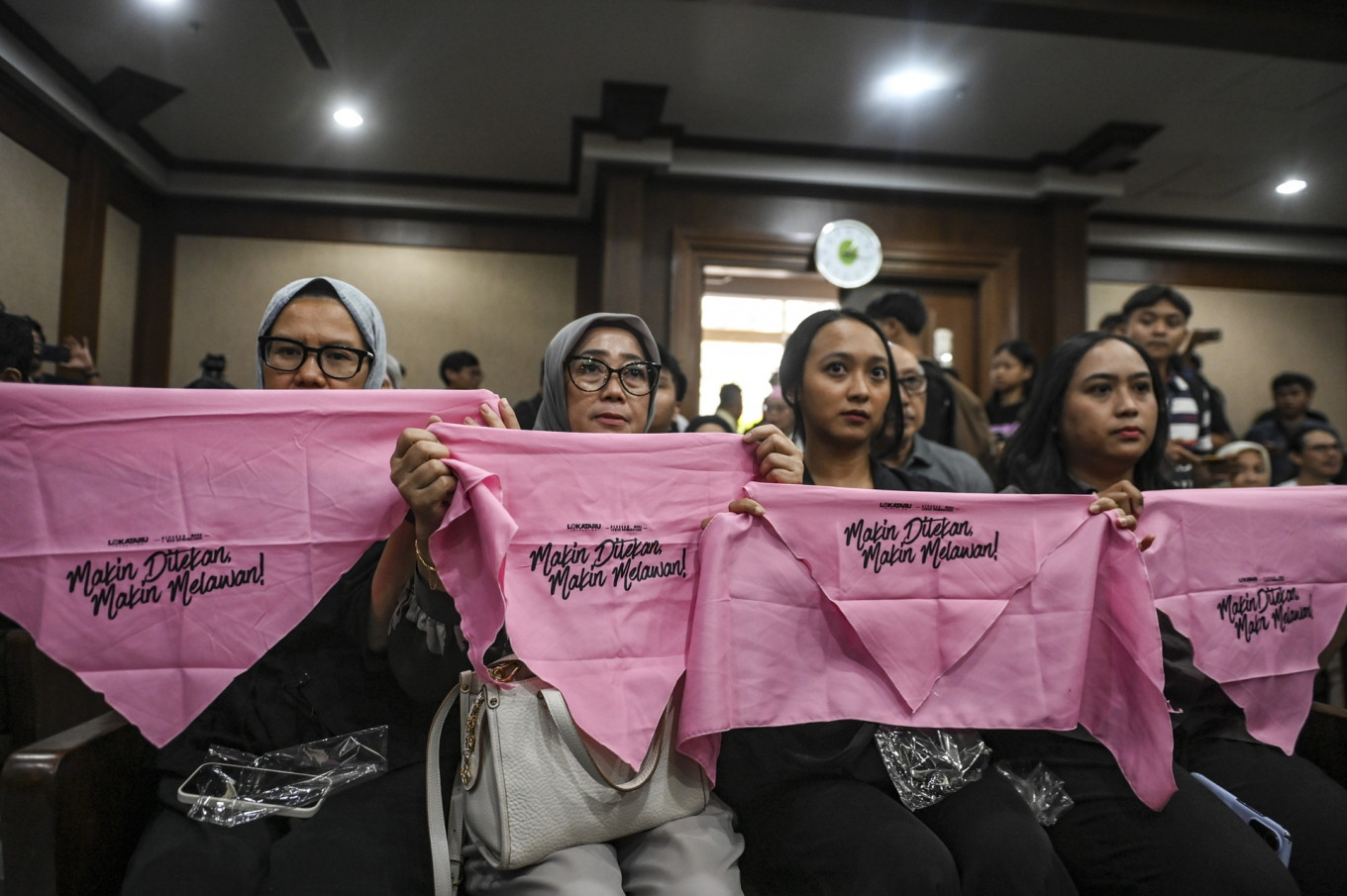 Women holds cloths that read “Makin Ditekan Makin Dilawan“ (The more pressure, the more the fight) ahead of the indictment hearing on Dec. 16, 2025, against Delpedro Marhein, executive director of rights group Lokataru Foundation, at the Central Jakarta District Court. Prosecutors indicted Delpedro for allegedly inciting hostility toward the government and encouraging students, including minors, to take part in riots. (Antara/Hafidz Mubarak A)
U
nresolved challenges from 2025, ranging from weakening democratic institutions to climate and ecological crises, may become new obstacles that put Indonesia at a heightened risk of instability this year, a think tank has warned.
In a media briefing on Wednesday, researchers from the Jakarta-based Centre for Strategic and International Studies (CSIS) warned the country may face growing uncertainty in the next 12 months, especially if President Prabowo Subianto’s administration did not strengthen reforms and improve public trust in the government.
“Complex” government policies and the lack of a clear reform road map may become major sources of political instability, said CSIS political and social change department head Arya Fernandes. He warned that slow reform in key sectors, such as politics, legal, bureaucracy and anti-corruption, could fuel public dissatisfaction.
Among things highlighted by Arya in the sector is a controversial plan raised by Prabowo’s coalition to scrap direct elections for regional leaders. Several political parties in the coalition have voiced their support on the proposal to change the poll system with one used during former president Soeharto’s New Order authoritarian era, when governors, regents and mayors were appointed by regional legislative councils (DPRDs).
Read also: Democrats back Prabowo’s plan to end direct regional elections
Reviving indirect regional elections would pose “a serious test for national political stability”, Arya said, recalling how large-scale public demonstrations in 2014 pressured then-president Susilo Bambang Yudhoyono to overturn a similar move by the legislative majority.

“If the current government and ruling coalition choose to press on, it would trigger widespread public resistance,” Arya noted. “Recent protests have shown that large demonstrations can flare up quickly without any leading figure, and be mobilized through social media.”