TheJakartaPost

Please Update your browser

Your browser is out of date, and may not be compatible with our website. A list of the most popular web browsers can be found below.
Just click on the icons to get to the download page.


Jakarta Post

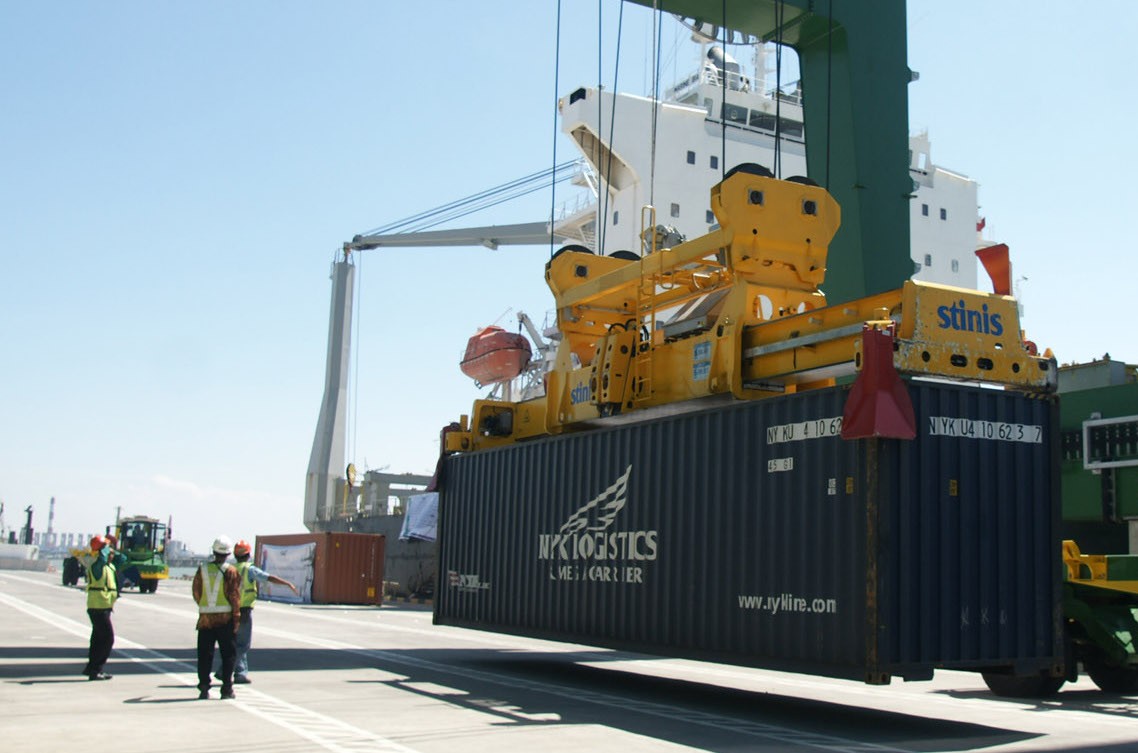
RI eyes new markets for coal, palm oil as global recession looms

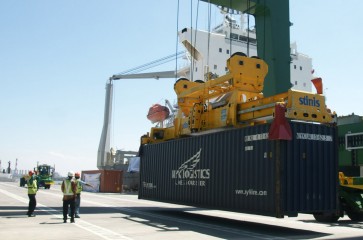
Crude and crude palm oil are the country’s key export commodities, accounting for 18.77 percent and 12.14 percent of total exports from January to November last year, according to Statistics Indonesia (BPS).

Fadhil Haidar Sulaeman (The Jakarta Post)
Jakarta
Wed, January 11, 2023 Published on Jan. 10, 2023 Published on 2023-01-10T20:42:31+07:00

Change text size

Gift Premium Articles
to Anyone

Share the best of The Jakarta Post with friends, family, or colleagues. As a subscriber, you can gift 3 to 5 articles each month that anyone can read—no subscription needed!

T

he government has targeted to diversify trade export destinations for coal and palm oil this year amid a looming recession in advanced economies, but analysts question whether these new markets will make up for the diminishing demands.  

Trade Minister Zulkifli Hasan said Indonesia would look to expand its exports in Africa, South Asia and Middle East.

Crude and crude palm oil (CPO) are the country’s key export commodities, accounting for 18.77 percent and 12.14 percent of total exports from January to November last year, according to Statistics Indonesia (BPS).

Global economic recovery and a war between Russia and Ukraine resulted in strong demands from the key commodities, bringing the country trade surplus and strong economic growth throughout the year.

“Trade deals are the toll roads to maintain export growth in times of hardship,” Trade Minister Zulkifli Hasan said in a 2023 outlook keynote speech recently.

Read also: Indonesia to divert exports to new markets amid languid global demand

The government is expecting a decrease in exports as the world’s biggest economies, the United States, China and Europe are projected to head into a slowdown this year. International Monetary Fund Managing Director Kristalina Georgieva estimated that one-third of the world economy would be in recession.

Zulkifli said Indonesia would rely on a comprehensive economic partnership agreement (CEPA) with countries, for example with South Korea and the United Arab Emirates (UAE).  

The Indonesian trade chief expects businesses not only to increase trade in goods and services with Seoul, but also better access to enter the South Korean market and partnership to enhance human capital, particularly in manufacturing, agriculture, forestry and marine resources.

Data from the Trade Ministry shows that South Korea has eliminated 11,267 tariff posts under the deal, which equals 95.5 percent of total tariff, for Indonesian imports to 0 percent that includes bicycles, motorcycles, auto parts and textile products.

The two countries have also agreed to open up more than 100 service subsectors that will permit 49 percent to 100 percent foreign equity participation.

Zulkifli said the CEPA deal with the UAE was currently waiting for ratification at the House of Representatives. Therefore, he expects lawmakers can pass the ratification in the next two months to help accelerate efforts in opening new markets.  

He estimated that when the CEPA with the UAE becomes effective, Indonesian exports to the Middle East, Central Asia and South Asia will accelerate due to the Arabic country’s position as a hub, where he estimated that exports would increase by 53.90 percent through this partnership within the next 10 years.

Other than these two trade agreements, Zulkifli said India was getting his “special attention” due to its position as the main Indonesian trading partner that saw the sharpest increase in non-oil and gas exports from January to November last year.

Trade Ministry Policy Agency head Kasan Muhri said on Dec. 20, 2022 that the government targeted a trade surplus to reach US$38.3 billion to $38.5 billion in 2023, higher than the $31.7 billion targeted last year.

Other than increasing the value of export goods through downstream industry development, he said increasing international market access and penetration to nontraditional markets were key to mitigate the estimated bad economic performance in the US and Europe, which are major trading partners of Indonesia.

“The growth figure will hinge largely on the upcoming situations, which includes [the economy] in export destinations,” Kasan told reporters.

Read also: We won't make it: Industries cast doubt on bauxite-export ban in mid-2023

State-owned Bank Mandiri coal analyst Ahmad Zuhdi Dwi Kusuma said on Monday that the probability of higher coal export would not be as significant as last year.

He mentioned that China would remain a huge export market destination despite the opening up possibilities of receiving coal from Australia, as the latter had developed new markets in the previous high-tension period.

Ahmad assessed that although diversification is the ideal policy, not all non-traditional markets are compatible with Indonesian coal type, such as Europe and Africa, which utilize medium-to-high coal grade.

Instead, Ahmad recommends the government to focus its efforts on maintaining and increasing Indonesian coal market share in Asia and the Middle East, which uses medium-to-low coal grade.

"In the last two years, South Korea increased their [coal] imports from Australia, but we are still the third largest supplier there,” Ahmad told The Jakarta Post, "But still, it is a downward trend."

The state-lenders’ CPO expert Abrar Aulia told the Post on Monday that the correction in price might lower the export value, even as volume might increase due to the high-volume quantity due to export ban low-base effect.

He expects the government's rhetoric of diversifying export is a strategy to dent the European Union's efforts to limit Indonesian CPO export, whereas in reality the strategy would be exporting to the traditional destinations of India, China and Pakistan.


Your Opinion Matters

Share your experiences, suggestions, and any issues you've encountered on The Jakarta Post. We're here to listen.

Enter at least 30 characters
0 / 30

Thank You

Thank you for sharing your thoughts. We appreciate your feedback.

Share options

Quickly share this news with your network—keep everyone informed with just a single click!

Change text size options

Customize your reading experience by adjusting the text size to small, medium, or large—find what’s most comfortable for you.

Gift Premium Articles
to Anyone

Share the best of The Jakarta Post with friends, family, or colleagues. As a subscriber, you can gift 3 to 5 articles each month that anyone can read—no subscription needed!

Continue in the app

Get the best experience—faster access, exclusive features, and a seamless way to stay updated.