The Jakarta Post
Please Update your browser
Your browser is out of date, and may not be compatible with our website. A list of the most popular web browsers can be found below.
Just click on the icons to get to the download page.


Popular Reads
Top Results
No results found. Please check your search term and try again
Can't find what you're looking for?
View all search results
Popular Reads
Top Results
No results found. Please check your search term and try again
Can't find what you're looking for?
View all search resultsAnti-Israel sentiments a show of political conservatism
Change text size
Gift Premium Articles
to Anyone
Share the best of The Jakarta Post with friends, family, or colleagues. As a subscriber, you can gift 3 to 5 articles each month that anyone can read—no subscription needed!
 Set as preferred source
T
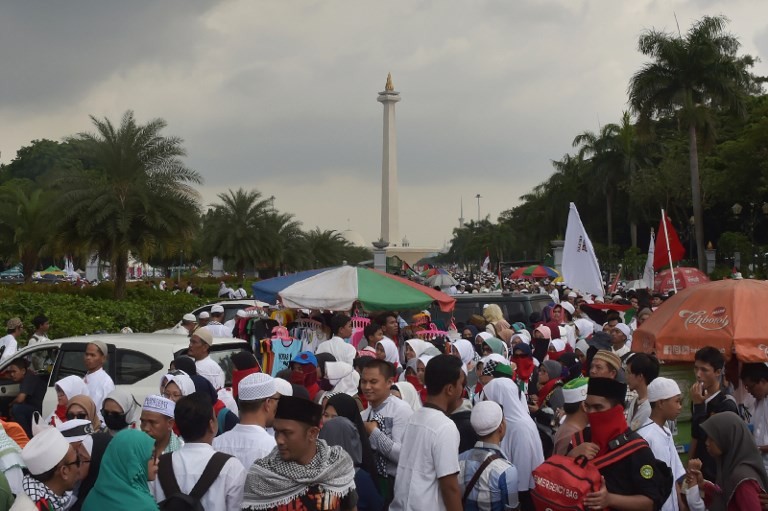
he protests against the Israeli team's participation in the FIFA World Cup U-20 in Indonesia reflect a much deeper and long-standing conflictual sentiment.
Anti-Israel narratives continue to hold significant importance, not only as a declaration of Indonesian support for the Palestinian cause, but also as a political resource that is widely played upon by conservative factions. Although such protests are not new, they have the potential to further complicate an already politically charged environment and provide an opportunity for conservatives to reestablish their position amid ongoing power struggles.
It is noteworthy that the conservatives benefit from our popular reading of the Israeli-Arab conflict, which has also influenced an objective and inclusive outlook. Moreover, Indonesia in recent years has seen a worrying trend of backsliding in various aspects of its democracy, including the increasing polarization and intolerance, the reorganization of oligarchic elites (Robison and Hadiz 2004; Facal 2019; Nadzir et al. 2019; Mujani and Kuipers 2020) and the growing influence of conservatism and populism (Hosen 2019; Perdana and Widianti 2019; Schaefer 2019).
Furthermore, Hadler (2004) and Ali (2010) examined Indonesian perceptions toward Judaism and Jews, which were found to be generally negative. The strong negative sentiment regarding Jews took root in the colonial period and during the occupation by the Japanese, who were then allies of the Nazis.
The narrative of Japanese colonizers has been sustained until modern era through the idea of “Jewish-satanic world domination” (Hadler 2004, 305). It is unrelated to Jewish values or religious debates, as Indonesia never officially prohibited Judaism. Likewise, Ali (2010) noted that Indonesia had a relatively strong negative perception of Jews, even when Indonesia only had few books or academic resources about Jewish history and culture.
In the Indonesian Muslim community, the prevailing view of Jews and Judaism is often seen as monolithic, influenced by a particular reading of the Quran, early and medieval Islamic history and news of contemporary global politics rather than any actual interaction or encounters with contemporary Jews in Indonesia.
Moreover, we have seen rises in these anti-Israel and anti-Semitic sentiments in many transitional periods in Indonesian politics. During the 1997-1998 crisis, some ultraconservative movements initiated massive protests, accusing Israel as being a conspirator in efforts to dethrone Soeharto. This conspiracy logic relies heavily on this logic of crisis, drawing in particular on the economic and political turbulence that hit the republic in the late authoritarian era.