TheJakartaPost
Please Update your browser
Your browser is out of date, and may not be compatible with our website. A list of the most popular web browsers can be found below.
Just click on the icons to get to the download page.


Popular Reads
Top Results
No results found. Please check your search term and try again
Can't find what you're looking for?
View all search results
Popular Reads
Top Results
No results found. Please check your search term and try again
Can't find what you're looking for?
View all search resultsWe can do better in 2026
Without a massive increase in investment, our economy will diverge further from the National Medium-Term Development Plan road map, which envisions a gradual increase in gross domestic product growth from 5.3 percent in 2025 to 8 percent in 2029.
Change text size
Gift Premium Articles
to Anyone
Share the best of The Jakarta Post with friends, family, or colleagues. As a subscriber, you can gift 3 to 5 articles each month that anyone can read—no subscription needed!
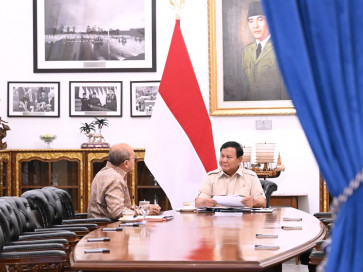
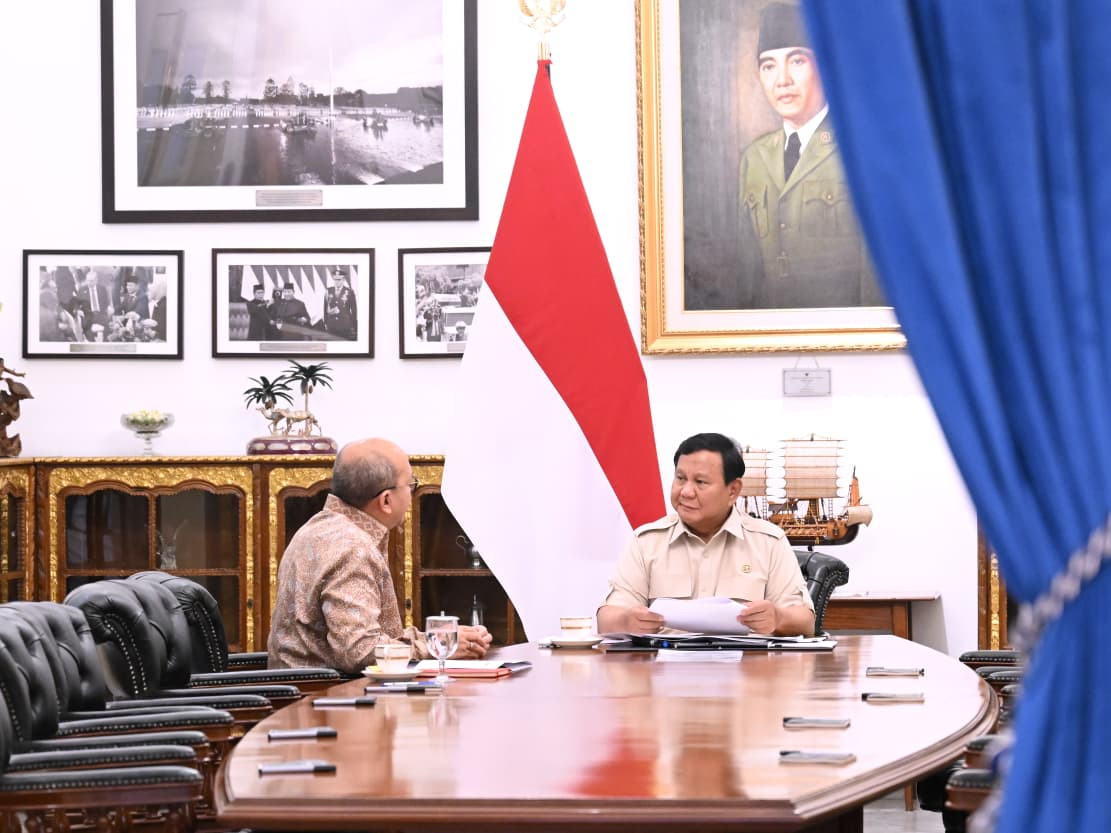 Investment Minister and CEO of state asset fund Danantara, Rosan Roeslani (left), talks with President Prabowo Subianto during a meeting on Dec. 17, 2025, at the Merdeka Palace in Jakarta about the progress of land acquisition for the haj village project in Mecca, Saudi Arabia. The project is expected to provide better services for Indonesian haj and 'umrah' (minor haj) travelers during their pilgrimage. (Courtesy of Presidential Secretariat/Kris )
I
ndonesian policymakers love targets, and always have, and the administration of President Prabowo Subianto is no exception. The problem is that targets can come back to haunt their creators.
Early last year, top presidential advisor Hashim Djojohadikusumo, who is also the President’s brother, expressed confidence that Indonesia would achieve at least 8 percent year-on-year (yoy) economic growth in the fourth quarter of 2025, thanks to the government’s food and housing programs.
We do not have the official figure yet, but it certainly will not be near 8 percent. Where does this leave us? While positive thinking has its merits, it does not build an economy. The government might want to make a healthy dose of realism in its resolution for 2026.
The Prabowo administration appears to have overestimated its capacity to generate economic activity strictly through food and housing programs. While state-led initiatives can provide a significant impact through multiplier effects, they cannot replace private investment. If we look back at economic policymaking in 2025, the first full year under Prabowo’s leadership, one thing stands out: The government sees itself as a business actor rather than a business enabler.
State asset fund Danantara is a case in point. It is conceived as the key tool to get things done. Whether tackling the waste crisis, reducing malnutrition, addressing the housing shortage, upgrading petrochemical industries or solving any other socioeconomic obstacles on our way to becoming an advanced economy, Danantara is the first thing that comes to the government’s mind.
Rather than taking a step back to consider how to encourage private investment, the immediate reflex is to throw money at the problem, perhaps after creating a special task force first. However, the state’s resources are limited, and many of our development gaps are, in fact, opportunities for private-sector engagement, provided there are targeted regulatory changes.

Danantara encroaching on promising business fields, on the other hand, may discourage private sector engagement. While the government keeps stressing its openness to public-private partnerships, many corporate leaders might prefer to have full control of projects.