The Jakarta Post
Please Update your browser
Your browser is out of date, and may not be compatible with our website. A list of the most popular web browsers can be found below.
Just click on the icons to get to the download page.


Popular Reads
Top Results
No results found. Please check your search term and try again
Can't find what you're looking for?
View all search results
Popular Reads
Top Results
No results found. Please check your search term and try again
Can't find what you're looking for?
View all search resultsThe illusion of self-sufficiency
Self-sufficiency was a core promise of Prabowo’s campaign, and the global geopolitical climate has made the idea politically attractive.
Change text size
Gift Premium Articles
to Anyone
Share the best of The Jakarta Post with friends, family, or colleagues. As a subscriber, you can gift 3 to 5 articles each month that anyone can read—no subscription needed!
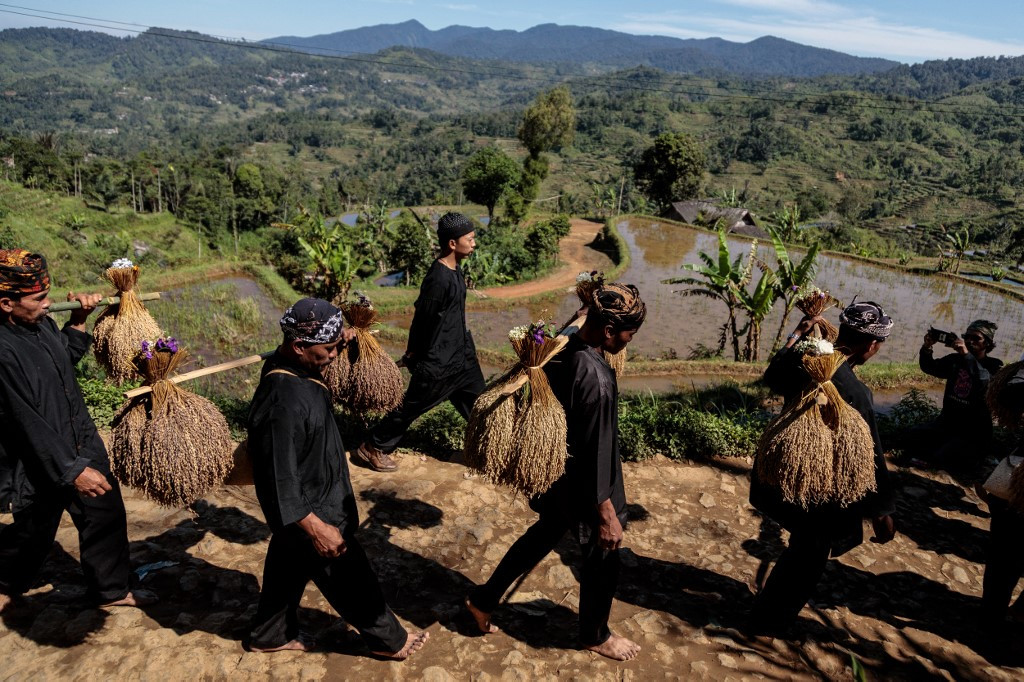 Gelar Alam ethnic people carry bundles of rice stalks on Oct. 5, 2025, in a Seren Taun harvest festival procession in Sukabumi, West Java. The annual ceremony expresses gratitude for the year's harvest and seeks blessings for harmony with nature and ancestors. (AFP/Aditya Aji)
B
arely two weeks into 2026, the economic doctrine of President Prabowo Subianto’s administration has become unmistakable: self-sufficiency.
The former army general has already claimed an early “victory”, declaring that Indonesia achieved rice self-sufficiency just over a year after he took office in October 2024. The government claims the country imported zero rice in 2025, a sharp break from years of reliance on major exporters such as Vietnam, Thailand and India.
This is not Indonesia’s first romance with the concept of swasembada pangan (food self-sufficiency). Back in 1984, President Soeharto, then Prabowo’s father-in-law, achieved rice self-sufficiency after years of being one of the world's largest importers. This achievement was recognized by the United Nations Food and Agriculture Organization in 1985, a moment of immense national pride.
However, by the 1990s, rapid industrialization converted fertile farmland into factories and housing, while the Asian Financial Crisis of 1997-1998 forced Indonesia back into the global market to feed its population.
Prabowo’s declaration, therefore, carries the weight of historical redemption, but also the shadow of past failures. Broader food policies mirror this renewed trend. Beef import quotas for private companies have been slashed from 180,000 tonnes last year to just 30,000 tonnes in 2026, even as industry players warn that domestic demand is outpacing local supply.
Energy constitutes the second pillar of this drive, anchored by the inauguration of Pertamina’s Balikpapan refinery in East Kalimantan. The facility underwent a US$7.4 billion upgrade to become the largest in the country. Combined with Indonesia’s biofuel mandate, blending diesel with palm oil and gasoline with ethanol, the expansion aims to significantly undercut the need for fuel imports.

The impact of this pivot is already tangible. Last year, the government capped gasoline imports and refused to allow private fuel retailers such as Shell, BP and Vivo to bring in additional supplies even when their stocks ran low. Energy and Mineral Resources Minister Bahlil Lahadalia has since gone further, announcing plans to halt diesel imports this year and phase out jet fuel imports by 2027.