Can't find what you're looking for?
View all search resultsCan't find what you're looking for?

View all search resultss Indonesia faces the possibility of losing its license to host the 2023 U-20 World Cup over calls to bar Israel from participating in the tournament, it is Wayan Koster, governor of the free-spirited resort island Bali, who has been thrust into the spotlight, not right-wing ideologues.
Gianyar, Bali, is one of the six cities set to host the tournament beginning on May 20, and the competition’s group-stage draw was supposed to take place in Denpasar on Friday.
However, the Soccer Association of Indonesia (PSSI) announced on Sunday that FIFA had postponed the draw indefinitely, fueling a backlash against calls to block Israel from playing in Indonesia.
“[There is no] diplomatic relationship between the Indonesian government and the Israeli government. [...] We request the minister adopt a policy forbidding the Israeli team from competing in Bali,” Koster wrote in a letter to the Youth and Sports Ministry dated March 14 but made public on March 20.
Senior politician
The Bali governor is an old hand in Indonesian politics, with his membership in the Indonesian Democratic Party of Struggle (PDI-P) stretching back two decades. Koster was first elected to the House of Representatives in 2004 representing the Bali electoral district, where he served a total of three terms until 2018.
With the backing of the PDI-P, Hanura, the Indonesian Justice and Unity Party (PKPI) and the National Mandate Party (PAN), Koster entered the Bali gubernatorial race in 2018, defeating then-Denpasar mayor Ida Bagus Rai Dharmawijaya Mantra with 58 percent of the vote.
Having led Bali through the COVID-19 pandemic and the attendant years-long hit to its tourism revenue, Koster has bemoaned the island’s reliance on the sector.
“The benefits of tourism have been primarily enjoyed by outside investors instead of the people of Bali directly. [...] Our biggest mistake is relying too much on tourism, with the sector contributing 55 percent of Bali’s economy,” Koster said in 2021.
Tourist crackdown
Over the past few months, the governor has taken a strict approach to perceived tourist misbehavior, drafting several regulations imposing restrictions on visitors to the island. On Jan. 30, Koster announced a plan to limit tourist access to the island’s mountains, saying excessive tourism had desecrated the slopes the Balinese consider sacred.
“People should no longer freely enter the areas, [or] make the peaks tourism destinations. Moreover, many people ride their motorbikes onto the summits. I think that’s too much,” Koster said at a meeting with local legislators.
In March, he asked the Foreign Ministry and the Law and Human Rights Ministry to end the visa-on-arrival policy for Russian and Ukrainian nationals and announced a blanket ban on motorcycle rentals for foreign tourists.
Locals have been complaining about tourists repeatedly breaking traffic rules and behaving rudely toward law enforcement officials.
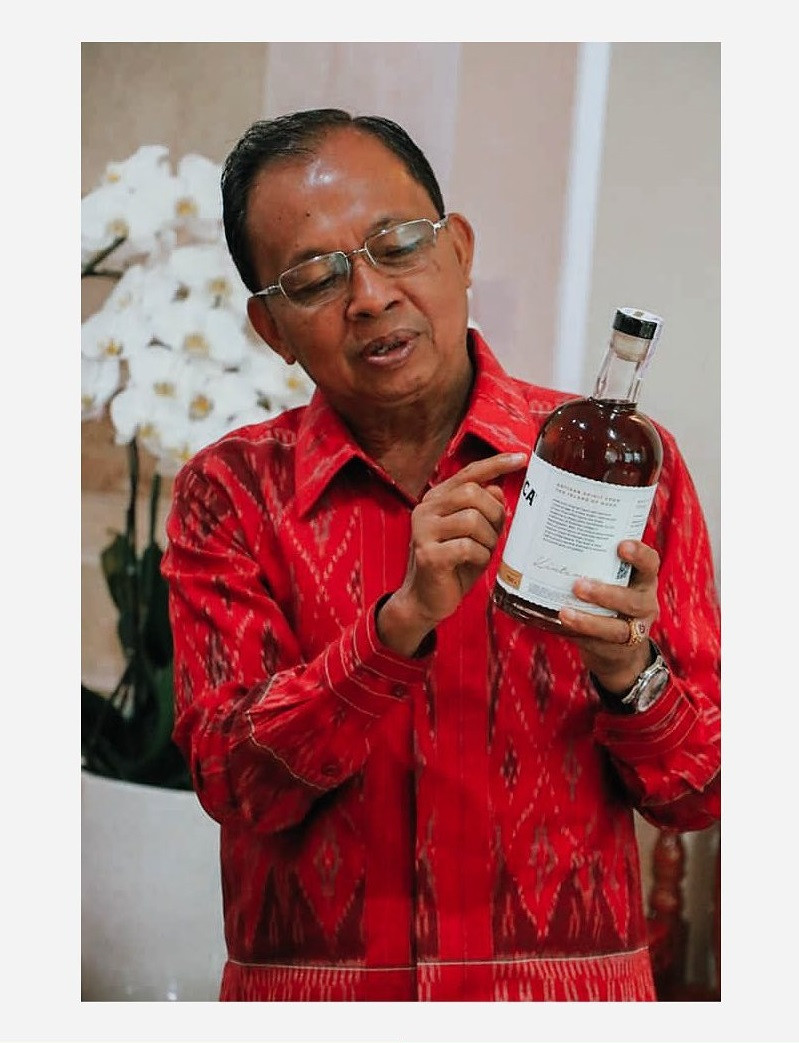
At the same time, Koster has worked to preserve Bali’s local customs and traditions, designating Jan. 29 “Arak Day” and encouraging people to take a shot of the locally made spirit every morning and evening.
“I can have five shots of the mix every day, and I never get drunk. It’s good for our bodies,” Wayan claimed in December 2022.
As with many regional heads in the country, Koster’s tenure as governor is set to end this year. The PDI-P politician has announced his intention to seek reelection in 2024, and Koster’s apparent focus on local voters’ grievances may be intended to boost his reelection bid, analysts say.
However, Koster’s stance on Israel came as a shock as the PSSI had originally hoped that the Hindu-majority island would be willing to host matches involving the Israeli national team. Public opinion on Israel in Indonesia is generally poor, with the Muslim majority firm in its support of Palestine.
Policy flip-flop
Koster’s refusal to welcome Israel marks a reversal of the governor’s position in January.
“In principle, we’re ready to support the [U-20 World Cup],” Wayan said in a meeting with then-youth and sports minister Zainudin Amali.
Speculation abounds that the PDI-P leadership has instructed its regional leaders to oppose the U-20 in honor of the nation’s first president, Sukarno, who blocked Israel from participating in the 1962 Asian Games. Koster insisted, however, that the decision was made “with the government”, sparking even wider debate.
Koster’s about-face has also garnered criticism from Bali’s legislative council, which has lambasted the governor’s decision to oppose the Israeli team’s presence on the island.
“As the host, we will welcome and respect any guest that has come to visit. That is the character of Bali’s culture,” said local councilor IGK Kresna Budi on Monday, as quoted by kompas.com.
With the tournament set to begin in less than two months, it is up to PSSI chief Erick Thohir to lobby FIFA to have Indonesia maintain its host status.
Share your experiences, suggestions, and any issues you've encountered on The Jakarta Post. We're here to listen.
Thank you for sharing your thoughts. We appreciate your feedback.
Quickly share this news with your network—keep everyone informed with just a single click!
Share the best of The Jakarta Post with friends, family, or colleagues. As a subscriber, you can gift 3 to 5 articles each month that anyone can read—no subscription needed!
Get the best experience—faster access, exclusive features, and a seamless way to stay updated.