TheJakartaPost
Please Update your browser
Your browser is out of date, and may not be compatible with our website. A list of the most popular web browsers can be found below.
Just click on the icons to get to the download page.


Popular Reads
Top Results
No results found. Please check your search term and try again
Can't find what you're looking for?
View all search results
Popular Reads
Top Results
No results found. Please check your search term and try again
Can't find what you're looking for?
View all search resultsStrengthening financial regulations in the face of a banking crisis
Speed is the most crucial factor in responding to a financial crisis, and Indonesia has the capacity for this in the KSSK.
Change text size
Gift Premium Articles
to Anyone
Share the best of The Jakarta Post with friends, family, or colleagues. As a subscriber, you can gift 3 to 5 articles each month that anyone can read—no subscription needed!
A
lthough the domino effect from the recent collapse of Silicon Valley Bank (SVB), a California-based bank whose depositors were dominated by tech industries and start-ups, been contained by the prompt action of monetary authorities in the United States, the risk of a future banking crisis cannot be entirely dismissed.
Banking is an industry that is based on trust, and once that trust is shaken, depositors will withdraw their money and bank runs will spread to other banks as panic and fear grip depositors when a bank fails. Confidence in banks is eroded, and past financial crises have shown that confidence evaporates fast. That is why periodic crisis in the financial system is inherently inevitable.
As tech industries suffered a slowdown and their liquidity dried up, depositors accelerated withdrawals. But SVB did not have enough cash, as its money was tied up in US treasury bonds purchased in 2008-2009 when the interest rate was low. Now, when interest rates had surged, the value of the bonds it held had fallen, causing billions of dollars in losses.
The US is not out of the woods of a banking crisis yet. Monetary tightening has pushed many medium-sized banks to the brink. Emergency loans to banks from the US Federal Reserve (Fed) jumped from US$15 billion to $318 billion in March. This is higher than the amount provided during the COVID-19 pandemic and not far from the amount during the 2008 global financial crisis.
The SVB collapse had no impact on Indonesian banks, but it had a short-term impact on the capital market. The Indonesia Stock Exchange (IDX) stumbled. The shares of big banks like BCA, BRI, and Bank Mandiri also dropped on March 16, but recovered rapidly over the next couple of days, with all shares prices reaching near-record highs at the end of March 2023. As capital flowed into Jakarta’s stock market, the rupiah strengthened 2.6 percent against the US dollar, its rate hovering at Rp 14,950 at the end of March. This clearly shows that market confidence in Indonesia’s banks remains strong.
Meanwhile, again related to the global banking crisis, the rupiah seems to have room to strengthen against the US dollar in the near future, as the Fed must adjust its monetary policy. In response to the banking crisis, the Fed now has to show a more dovish face and inject more liquidity to ease concerns. This should imply some weakening of the US dollar.
To deal with the risk of a financial crisis, the government has continuously strengthened regulatory and supervisory frameworks over three decades since the 1998 Asian Financial Crisis, which have improved the financial health and the resilience of the Indonesian banking system. Indonesian banks survived the 2008-2009 global financial crisis without significant problems and showed they were better prepared to face shocks.
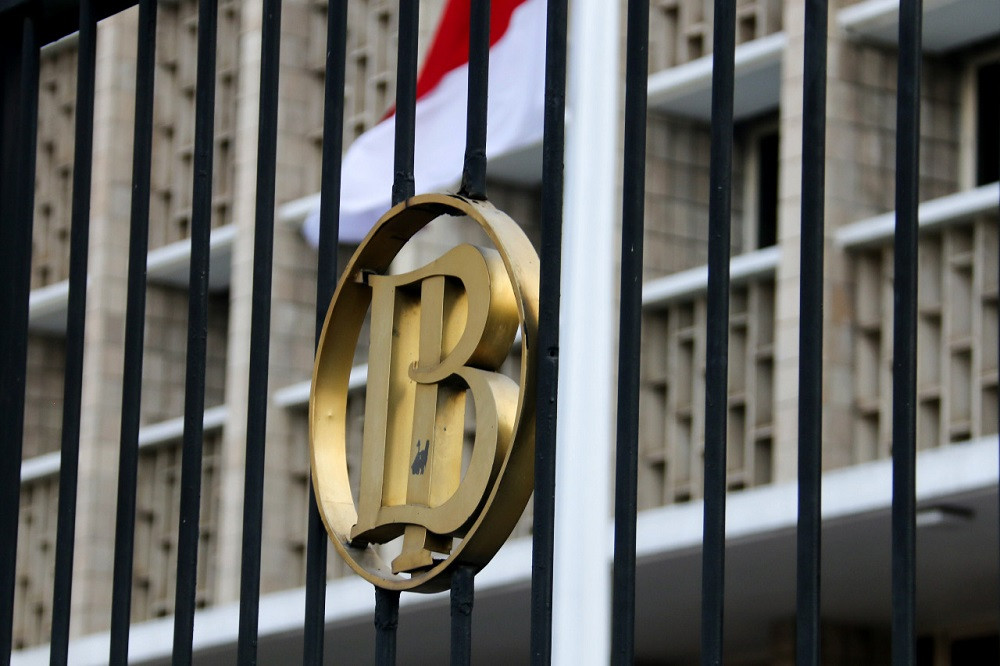
The most important factor in facing a financial crisis is the speed to act before the contagion spreads. The country’s financial regulators, Bank Indonesia (BI), the Financial Services Authority (OJK) and the Deposit Insurance Agency (LPS), are grouped with the Finance Minister in the Financial System Stability Committee (KSSK). The forum was formed by Law No. 1/2020, which was enacted at the height of the COVID-19 pandemic when it was feared that economic recession would spill over into the financial system. In coordinating with regulators, the KSSK is supposed to take immediate action when trouble is spotted in the banking sector.
The formation of the KSSK avoided fragmentation of the regulatory and supervisory framework of the financial system. It should be noted that one of the triggers of the 2008-2009 global financial crisis was the fragmentation that occurred among US regulatory bodies, the Fed, the Federal Deposit Insurance Corporation, the Comptroller of the Currency, and various state-level bodies that sometimes resulted in lack of coordinated action and even produced a contradictory response to the crisis.
Another important point is that regulators should be provided with the adequate authority, power and tools to contain a crisis.
The recently approved Law No. 4/2023 on developing and strengthening the financial sector (PPSK Law) gives financial regulators more power to ensure that in times of a financial crisis, they have the adequate tools to deal with it.
BI is permitted to purchase long-term government bonds in the primary market to mitigate financial crises that could endanger the national economy. It can give emergency short-term loans to banks experiencing liquidity problems against high-quality collateral. It also can purchase corporate bonds under certain conditions.
The OJK has the power to conduct integrated supervision of the financial system. Holding companies and conglomerates that own banks, as well as other parties related to banks, are now also subject to OJK oversight. It has more authority to process resolutions for troubled banks and the power to start and stop criminal indictments.
The LPS functions as a “risk minimizer” to minimize the risk of disruption to the financial system’s stability, as it has the power to intervene early in troubled banks, restructure banks and resolve failed banks.
All regulators fulfill their functions independently, free of intervention from other parties, including from the government.
How the current banking crisis will impact the Indonesian economy depends on how the Fed alters the course of its monetary policy. With the outbreak of the banking crisis, the world is now facing a new situation with the potential for seeing a credit crunch as banks become more careful in lending money, which in turn will undermine economic activity. The current situation will likely lead both the Fed and BI to pause their cycle of rate increases.
After all, inflation in Indonesia and in Group of 7 countries are showing signs of weakening, so this will allow BI to continue to focus on economic stability and growth.
***
The writer is an economist and a commissioner of a publicly listed company.