Can't find what you're looking for?
View all search resultsCan't find what you're looking for?

View all search resultsNext year on Oct. 20, based on the schedule provided by the General Elections Commission (KPU), we will have a new president to replace the incumbent Joko “Jokowi" Widodo.
ext year on Oct. 20, based on the schedule provided by the General Elections Commission (KPU), we will have a new president to replace the incumbent Joko “Jokowi” Widodo, who is currently at the end of his second term.
To date, based on media reports, the three candidates in the 2024 presidential election are Ganjar Pranowo, Prabowo Subianto and Anies Rasyid Baswedan.
As they are not yet registered as the official presidential candidates, they have yet to submit their campaign programs for the five-year term, if elected. Their campaign programs are, of course, not aimed at evaluating the presidential candidates; instead they aim to diagnose what the key agendas are in the economic development ahead.
The main challenges that Indonesia deals with in the upcoming presidential period is to prepare for the demographic bonus. According to the population projection for 2020 to 2050 by Statistics Indonesia (BPS), in 2041 the dependency ratio will be above 50 percent; this means that the number of unproductive people will be higher than the number of productive people.
Accordingly, we should be able to maximize the window of opportunity in the next 17 years before the population starts to enter the aging period.
The economy should grow consistently by 6 to 7 percent to ensure that Indonesia is able to jump to a high-income country group before entering the aging period. Otherwise, Indonesia may be stuck in the middle-income trap with sustained low economic growth, an aging population, poor quality of life and low technological capabilities.
Here we identify some important work that the new president next year should consider prioritizing in their campaign program.
The first agenda is to promote human development through better quality of education and health services. The state budget for these two sectors is already huge. The budget for education and health is 20 percent and 5 percent, respectively, of the total budget every year.
However, we see that the education quality in Indonesia is still far below our neighboring countries in the lower and higher education levels.
Similarly, healthcare also needs a lot of improvement, such as in providing more medical specialists/doctors, building more hospitals and making health costs more efficient, including reform in the pharmaceutical industry to produce cheaper medicine.
Reforms in the education and health sectors are urgently required to support a better quality of life for Indonesians.
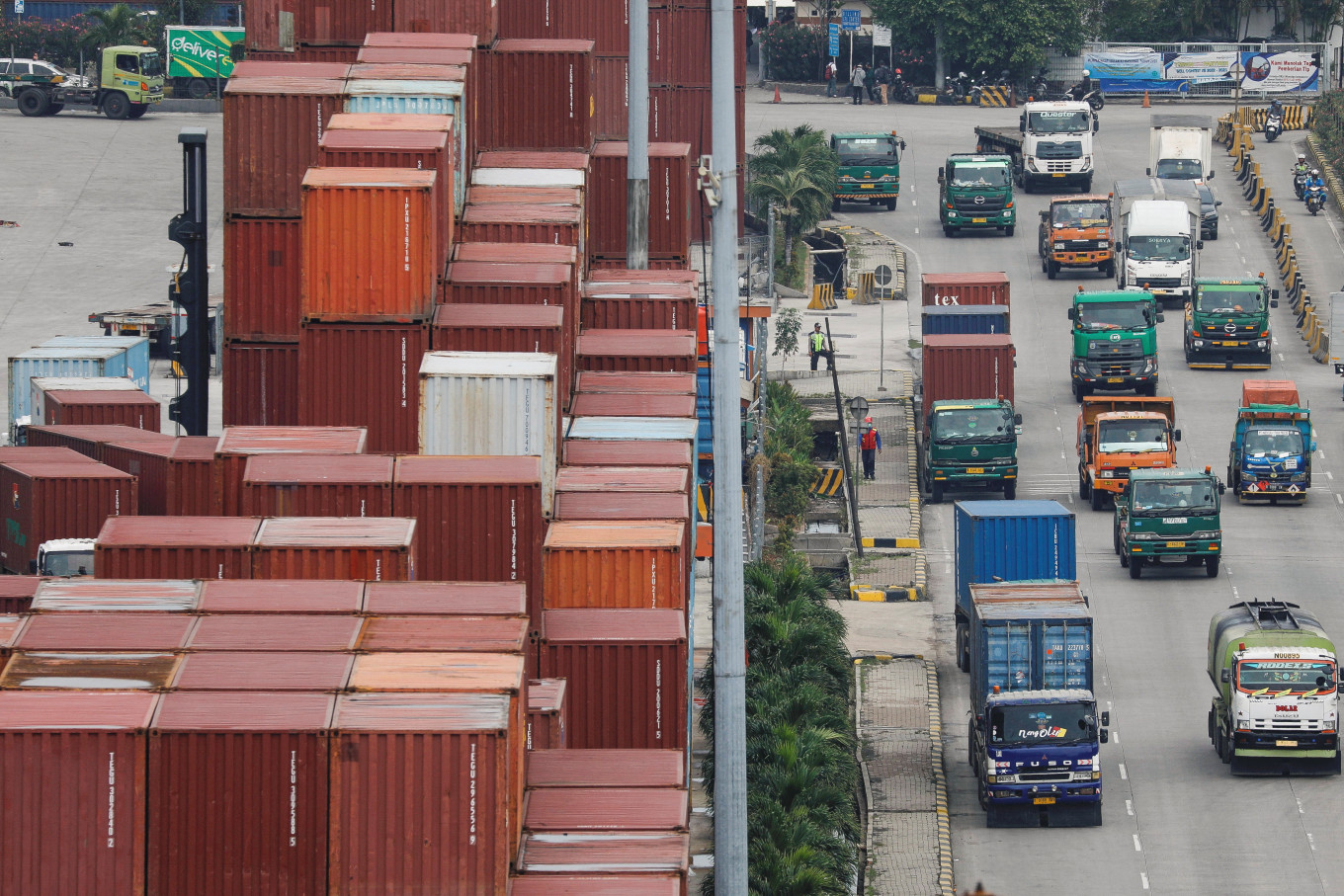
The second agenda is to develop a more integrated infrastructure. President Jokowi has built infrastructure to reduce transportation and logistics costs.
This program should be extended to be more integrated between infrastructures, connecting production and consumer points more efficiently.
As a result, we can expect the market to be bigger, and production and logistics costs will be lower.
The third agenda is to reduce disparities between low versus high income groups, including in reducing the number of low-income people. Based on BPS data, the Gini Coefficient in September 2022 was at 0.381, which is lower than 2014 at 0.414, the first year of Jokowi’s first term.
At the same time, we also urgently need to reduce the number of low-income people. Note that the poverty rate in 2022 was 9.57 percent of the total population, which is lower than 2014 at 10.96 percent. Thus, we should speed things up in order to reduce the income group disparities through better national budget allocation and pro-poor affirmative policies.
The fourth agenda is to reduce regional disparities between Java and outside of Java. As of the first quarter of 2023, Java contributed 57.2 percent of total gross domestic product (GDP), with Sumatera contributing 21.8 percent, Kalimantan 9 percent, Sulawesi 6.9 percent, Bali and Nusa Tenggara 2.7 percent and Maluku and Papua 2.5 percent.
The development outside Java should be continued to accelerate its economic growth, in particular in the western part of Indonesia. The new Nusantara capital city (IKN) is one of the key development programs to reduce regional disparities in the future.
The fifth program is to boost industrialization. The manufacturing industry is a key source of higher economic growth as it creates more added value than any other sector.
So far, Jokowi is already on the right track to boost the manufacturing sector through resource-based industrialization. At the same time, we have also seen massive development of industrial zones in the last five years, which should speed up the industrialization program.
The consistency of industrial policy is important to ensure that existing and forthcoming investments will generate more benefits for our economic growth.
Last but not least is to accelerate the development of institutions. According to the 1993 Nobel laureate, Douglas North, institutions are humanly devised constraints that structure political, economic and social interaction.
We should advance the quality of the rules of the game i.e., the quality of laws and regulations, as well as the quality of law enforcement and enforcers to keep human interaction in order. Economically, clearer regulations with better enforcement are required to improve business environments.
As a result, we can expect a more supportive business climate to attract more investments in order to achieve higher economic growth and create more jobs.
In conclusion, we expect that each presidential candidate can correctly identify the main economic challenges in the future. Subsequently, each should offer a comprehensive campaign program that is able to resolve our upcoming economic problems, so that voters can select objectively the best leader for the next five years.
*****
The writer is head of industry and regional research at Bank Mandiri.
Share your experiences, suggestions, and any issues you've encountered on The Jakarta Post. We're here to listen.
Thank you for sharing your thoughts. We appreciate your feedback.
Quickly share this news with your network—keep everyone informed with just a single click!
Share the best of The Jakarta Post with friends, family, or colleagues. As a subscriber, you can gift 3 to 5 articles each month that anyone can read—no subscription needed!
Get the best experience—faster access, exclusive features, and a seamless way to stay updated.