TheJakartaPost

Please Update your browser

Your browser is out of date, and may not be compatible with our website. A list of the most popular web browsers can be found below.
Just click on the icons to get to the download page.


Jakarta Post

De-dollarization: Local currency settlement and its constraints

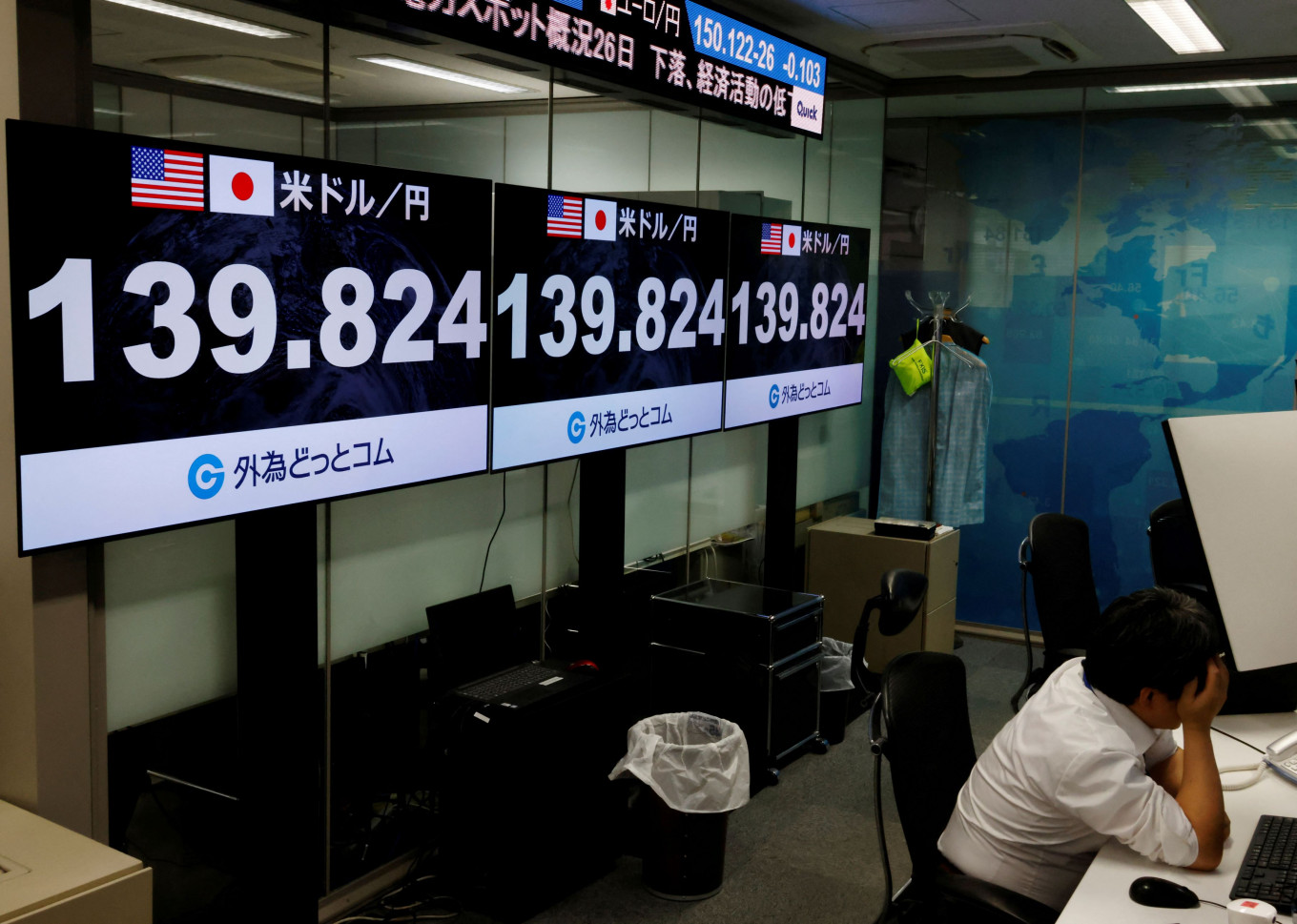
The Fed is still trusted by global investors compared with the European Central Bank and People’s Bank of China when giving policy direction to create public perceptions.   

Darmo Wicaksono (The Jakarta Post)
Jakarta
Mon, July 3, 2023 Published on Jul. 2, 2023 Published on 2023-07-02T13:19:26+07:00

Change text size

Gift Premium Articles
to Anyone

Share the best of The Jakarta Post with friends, family, or colleagues. As a subscriber, you can gift 3 to 5 articles each month that anyone can read—no subscription needed!

T

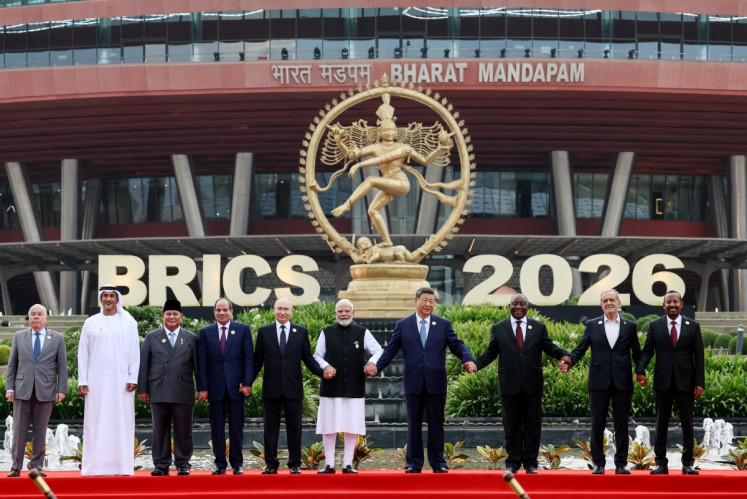
he influence of the United States as the generator of global multilateralism is decreasing, while China's influence is increasing, especially in the aspect of international trade. Amid the US-China geopolitical influence battle that will continue, it is expected that ASEAN, including Indonesia, will gain opportunities in trade and investment given geopolitical neutrality and geographic proximity.

In the height of global uncertainty, investors' concerns are focused on efforts by central banks to maintain inflation and currency stability and their impact on the response of the central bank’s rate going forward. Other issues that have surfaced include the impact of the downward trend in commodity prices and downstreaming policies on GDP prospects and the current account, as well as the impact of twist operations on foreign capital inflows. Investors also continue to monitor geopolitical risks and the sustainability of structural reforms including fiscal reforms linked to the 2024 elections.

This protracted global imbalance contains several problems. First, dependence on the US dollar has caused the global development model to depend on cheap funds resulting from quantitative easing and higher debt levels. Second, the fundamental problem in the international monetary system, if the US ends the balance of payments deficit, the international community will lose its largest additional source of reserves. This dilemma often causes the Fed's monetary policy to be less effective for the US and global economy.

Third, for a developing country like Indonesia, which has a current account deficit due to large investment needs, the dollar hegemony leads to dependence on increasingly volatile foreign capital flows. Currently, the US dollar still has relatively strong fundamentals compared with its closest competitors, the euro and the yen. The European Union and Japan are energy importers whose currencies tend to come under pressure if energy prices increase.

Meanwhile, the US is relatively independent due to the abundant production of offshore oil fields. Plus energy prices are denominated in the US dollar causing an increase in energy prices that will also cause an increase in demand for this currency.

Next, the US government securities market is still unbeatable. Investors around the world are recorded as holding securities worth a total of US$24 trillion, far exceeding those of Japan and China, which are dominated by domestic investors. This sufficient securities market creates a highly efficient financial system and is a risk-free reference in the global financial system. This has also caused the US dollar to become the currency of choice for foreign debt settlement and is often the main currency for foreign exchange reserves in most countries.

Moreover, the Fed is still quite trusted by global investors compared with the European Central Bank and People’s Bank of China when giving policy direction to create public perceptions. If the role of the US dollar is taken over by another currency, for example the Chinese renminbi, this will have three important consequences.


First, consumer and government behavior must change to become a net spender with a very large fiscal deficit. Second, the demand for the currency will increase dramatically, which can make exports uncompetitive. Third, the country's capital market, especially government securities, must be liquid assets.

Currently, the trend of de-dollarization is becoming more and more discussed among the public and policymakers. De-dollarization refers to the phenomenon of countries around the world reducing their dependence on the US dollar for various uses such as a means of storing wealth, a medium of exchange and a store of value, then switching to other currencies.

Furthermore, in the short term, the decreasing demand for the US dollar will cause the dollar to weaken against major currencies, including the rupiah. This will have the effect of easing pressure from imported inflation as well as reduced foreign debt interest expenses for the government and corporations. A weaker US dollar also tends to increase demand for mainstay commodities and energy sources, especially coal and palm oil. In the medium and long term, de-dollarization is likely to have a mixed impact.

The fragmentation of the global monetary system and the transitional period would most likely be marked by a global financial crisis followed by high inflation. This could have an impact on the increasingly volatile flow of foreign capital and put pressure on the rupiah, even though it is supported by the high value of commodity exports.

International policies in the form of international financial cooperation will be able to increase Indonesia's financial resilience, especially in dealing with the impact of other countries' geopolitical problems. Mitigation of the de-dollarization trend has been carried out by Bank Indonesia (BI) and the government.

One of the policies being intensified is local currency settlement (LCS) schemes. The LCS policy is cooperation in the settlement of bilateral trade transactions and direct investment to reduce dependence on the US dollar in trade transactions.

However, currently the use of LCS by customers is still limited, as seen from the number of monthly transactions and the LCS transaction volume as a whole, which is still relatively limited compared with total trade among countries, due to the limited number of banks that are Appointed Cross Currency Dealers (ACCD) and a lack of information and customer understanding of the LCS policy.

To overcome this challenge, the use of LCS needs to be encouraged especially in trade transactions or direct investment including remittances and strengthening the intensification of existing LCS. Several programs can be carried out through initiatives to expand cooperation with new countries and optimize existing LCS, for example by strengthening the role of local governments as agents or information providers for companies entering the strategic sector, collaborating with ACCD bank branch offices in each region to encourage the LCS, educate and encourage LCS coverage through local media to accelerate public understanding of LCS in the regions and to elaborate on the LCS scheme.

Currently, BI together with several other ASEAN countries' central banks are also pushing for the integration of regional payments using QR codes. This will be of great benefit to the regional economy, such as increasing payment efficiency, deepening financial markets and market opportunities, empowering the informal sector and reducing the flow of illegal funds.

 ***

The writer is an analyst at Bank Indonesia. The views in this article are their own.

Your Opinion Matters

Share your experiences, suggestions, and any issues you've encountered on The Jakarta Post. We're here to listen.

Enter at least 30 characters
0 / 30

Thank You

Thank you for sharing your thoughts. We appreciate your feedback.

Share options

Quickly share this news with your network—keep everyone informed with just a single click!

Change text size options

Customize your reading experience by adjusting the text size to small, medium, or large—find what’s most comfortable for you.

Gift Premium Articles
to Anyone

Share the best of The Jakarta Post with friends, family, or colleagues. As a subscriber, you can gift 3 to 5 articles each month that anyone can read—no subscription needed!

Continue in the app

Get the best experience—faster access, exclusive features, and a seamless way to stay updated.