The Jakarta Post
Please Update your browser
Your browser is out of date, and may not be compatible with our website. A list of the most popular web browsers can be found below.
Just click on the icons to get to the download page.


Popular Reads
Top Results
No results found. Please check your search term and try again
Can't find what you're looking for?
View all search results
Popular Reads
Top Results
No results found. Please check your search term and try again
Can't find what you're looking for?
View all search resultsReform team weighs placing police under ministry
Change text size
Gift Premium Articles
to Anyone
Share the best of The Jakarta Post with friends, family, or colleagues. As a subscriber, you can gift 3 to 5 articles each month that anyone can read—no subscription needed!
 Set as preferred source
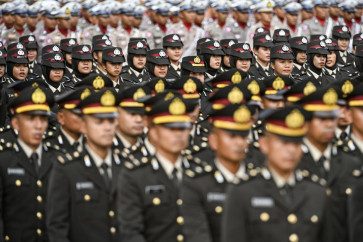
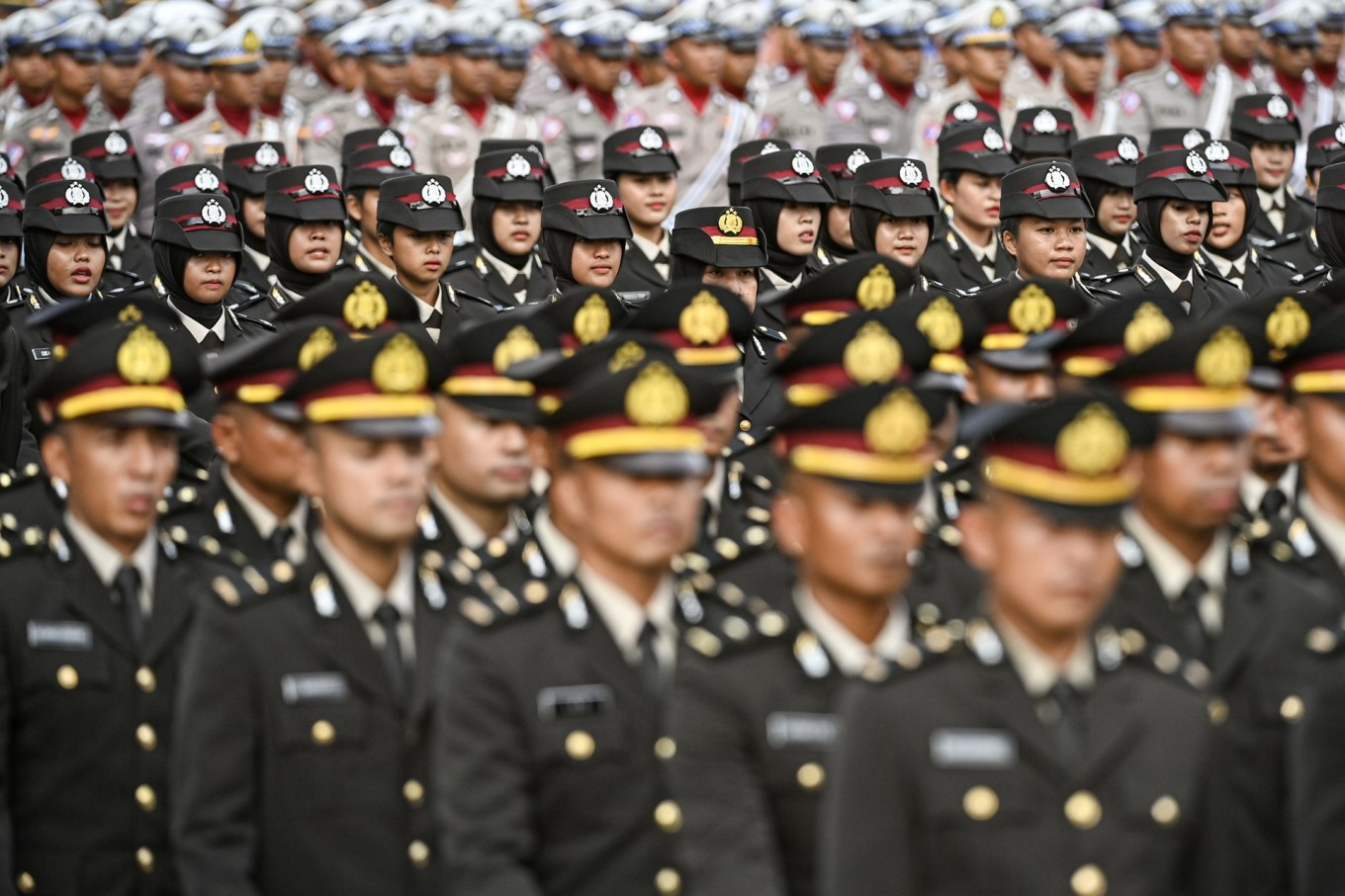 Police officers march during a ceremony on July 1, 2024, to commemorate the 78th anniversary of the National Police at the National Monument (Monas) Square in Central Jakarta. (Antara/Muhammad Adimaja)
A
s President Prabowo Subianto’s police reform commission reviews changes to the force, discussions on placing the National Police under a ministry have reemerged, reviving fresh debate on how best to improve accountability and prevent the politicization of law enforcement.
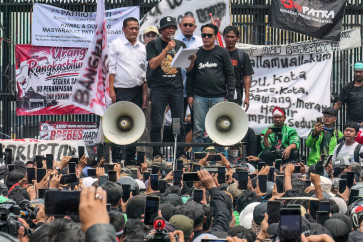
The death of ojol (online motorcycle transportation) driver Affan Kurniawan, who was crushed by a police vehicle during a protest against economic inequality in Jakarta in August of last year, has intensified calls to end police brutality, culture of impunity, corruption and political interference in the force.
Public anger over the killing had spilled into streets across the country, triggering the biggest and most violent protests during Prabowo’s early presidency and prompting him to establish in November the commission to review police policies and deliver recommendations for reform.
Among the key issues currently being discussed by the commission is whether the police should remain directly under the President, commission member Yusril Ihza Mahendra said in a statement on Wednesday.
Opinions in the commission remained divided, Yusril said, with some members supporting maintaining the current police structure, while others propose placing it under the supervision of a ministry, either through an existing or a newly created one.
“These are just ideas and are not yet a decision,” said Yusril, who is also the Office of the Coordinating Law, Human Rights, Immigration and Correctional Services Minister, adding that the model would be similar to how the Defense Ministry oversees the Indonesian Military (TNI).

The debate comes nearly three decades after the 1998 reform movement separated the police from the military, then known as ABRI, and placed the force under the President to boost accountability and ensure civilian oversight. Before these reforms, the police had briefly been placed under the Home Ministry in the 1950s and early 1960s, before being merged into ABRI during Soeharto's New Order regime.