The Jakarta Post
Please Update your browser
Your browser is out of date, and may not be compatible with our website. A list of the most popular web browsers can be found below.
Just click on the icons to get to the download page.


Popular Reads
Top Results
No results found. Please check your search term and try again
Can't find what you're looking for?
View all search results
Popular Reads
Top Results
No results found. Please check your search term and try again
Can't find what you're looking for?
View all search resultsDavos narrative and domestic realities: Indonesia’s split story
Do we even talk about the same Indonesia? Do we live in the same universe as Prabowo?
Change text size
Gift Premium Articles
to Anyone
Share the best of The Jakarta Post with friends, family, or colleagues. As a subscriber, you can gift 3 to 5 articles each month that anyone can read—no subscription needed!
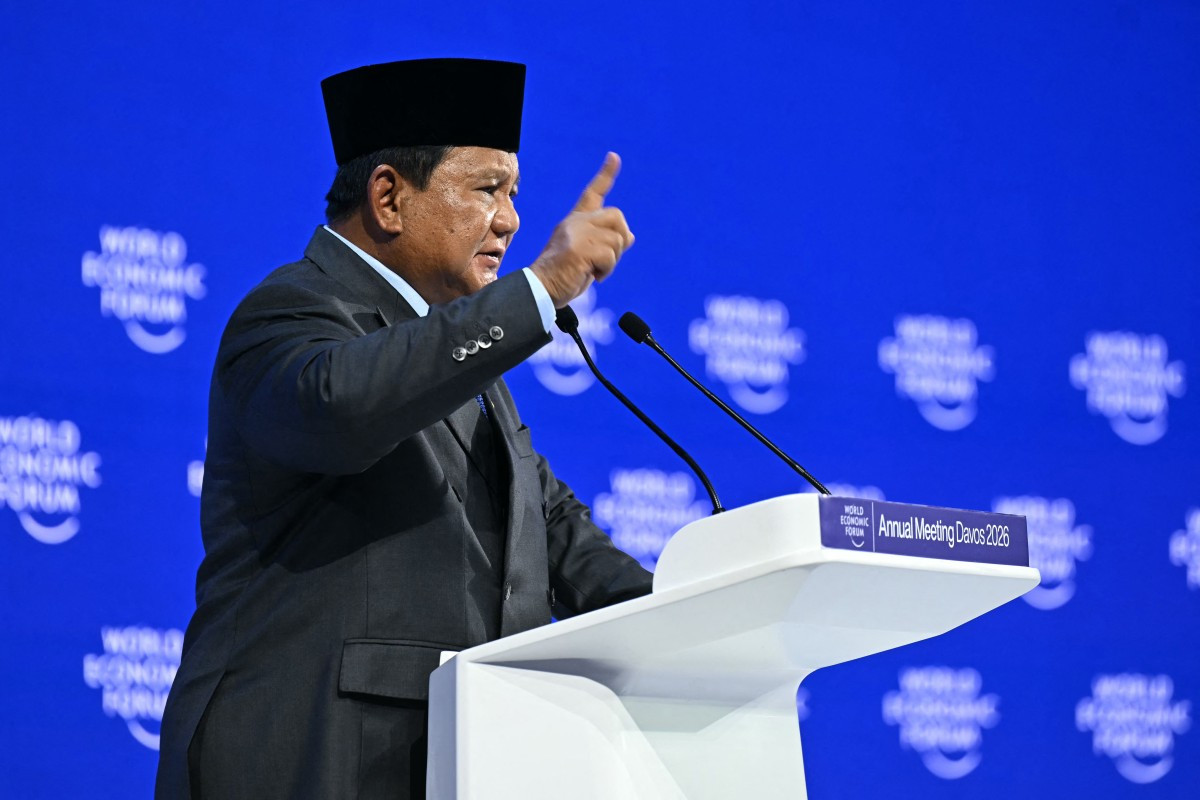 President Prabowo Subianto gestures as he speaks on Jan. 22, 2026 during the World Economic Forum annual meeting in Davos, Switzerland. (AFP/Fabrice Coffrini)
P
resident Prabowo Subianto’s speech at the World Economic Forum in Davos, Switzerland last week was an emotionally charged performance of good intent, delivered with confidence, warmth and an avalanche of numbers meant to reassure the world.
Introduced as "Prabowonomics" by his aides, he spoke of peace and stability as the foundations of prosperity, of a resilient economy growing above 5 percent, of inflation under control and a fiscal deficit safely below the legal ceiling. He spoke of efficiency, redistribution, industrialization and dignity. Listening from the conference hall in Switzerland, one could believe Indonesia had entered a new era of competent, benevolent statecraft.
If only that was the case. If only good intentions alone could govern a country of more than 280 million people. If only ambition automatically translated into well-calibrated, research-based policy, executed efficiently by capable institutions and people, without wasting taxpayers’ money or eroding democratic safeguards.
Prabowo proudly cited economic growth above 5 percent as proof of success. Yet for Indonesia, 5 percent growth is not exceptional; it is ordinary. Nearly every president since the early 2000s has governed during periods of similar growth, if not higher. During his own campaign, Prabowo repeatedly dismissed 5 percent as insufficient, arguing that Indonesia would “go nowhere” without 8 percent annual growth.
More telling than headline growth is its quality. Indonesia’s growth has long failed to translate into secure employment. Nearly 90 million Indonesians still work in the informal sector, without stability or protection.
Do we even talk about the same Indonesia? Do we live in the same universe as Prabowo? This criticism is not written for the sake of criticism. It is an attempt to present realities different from the ones his close circles appear to be feeding him, realities that millions of Indonesians experience daily.

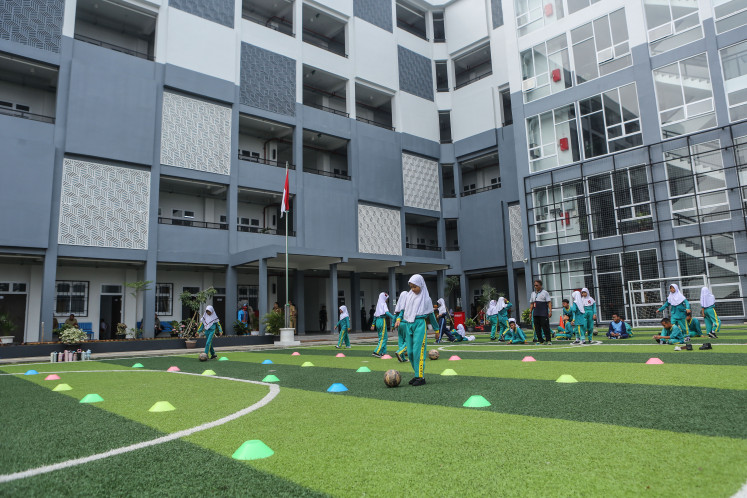
In Davos, Prabowo boasted that Indonesia’s free nutritious meal (MBG) program now produces nearly 60 million meals a day and will soon surpass McDonald’s in scale. The comparison drew applause, but it also revealed how spectacle replaces scrutiny. Counting meals without transparently accounting for cost per unit, procurement integrity, nutritional standards and long-term funding tells us nothing about success.