The Jakarta Post
Please Update your browser
Your browser is out of date, and may not be compatible with our website. A list of the most popular web browsers can be found below.
Just click on the icons to get to the download page.


Popular Reads
Top Results
No results found. Please check your search term and try again
Can't find what you're looking for?
View all search results
Popular Reads
Top Results
No results found. Please check your search term and try again
Can't find what you're looking for?
View all search resultsDiaspora, young voters fully counted, KPU insists
Elections body says it used data in accordance with law.
Change text size
Gift Premium Articles
to Anyone
Share the best of The Jakarta Post with friends, family, or colleagues. As a subscriber, you can gift 3 to 5 articles each month that anyone can read—no subscription needed!
 Set as preferred source
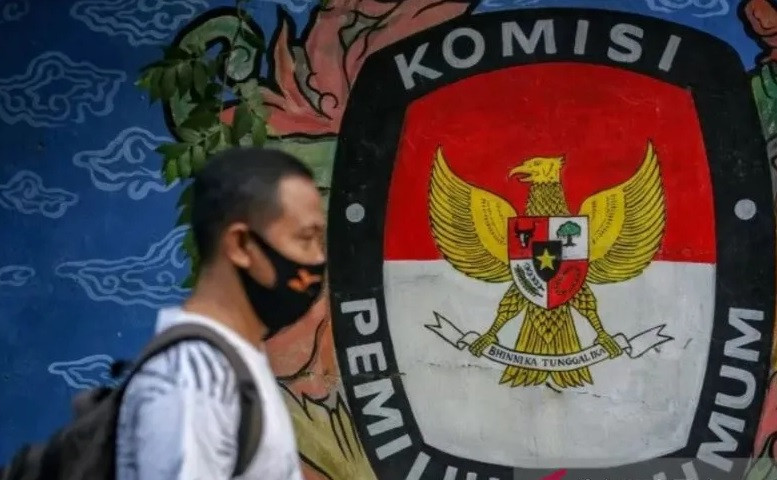
The General Elections Commission (KPU) has defended recent criticisms over its registration of diaspora and first-time voters in the national voter roll for next year’s general election.
The commission presented the national voter roll last week, revealing that 204 million Indonesians, including 1.75 million living abroad, are eligible to cast their votes on Feb. 14 of next year.
But the number of overseas voters drew scrutiny, including from the Election Supervisory Agency (Bawaslu), and the Labor Party.
Bawaslu member Lolly Suhenty said on Friday that the KPU had to explain the data discrepancies of 2.85 million diaspora voters not included in the official voter roll. Lolly, who was echoed by Labor Party Leader Said Iqbal, said the number was underestimated when compared to data from the Agency for the Protection of Indonesian Migrant Workers (BP2MI).
The BP2MI, a government agency responsible for the protection of migrant workers overseas, estimated in May that 4.4 million Indonesians were working overseas through legal and government-recognized channels. Other estimates put the actual figure as high as nine million, taking illegal migrant workers into account.
“KPU needs to synchronize and cross check its data with other stakeholders,” Lolly said as quoted by kompas.id.

KPU Commissioner Betty Epsilon Idroos told The Jakarta Post on Monday that the KPU used the data from the Foreign Affairs Ministry for the diaspora voters, as mandated by the 2017 General Election Law.