TheJakartaPost
Please Update your browser
Your browser is out of date, and may not be compatible with our website. A list of the most popular web browsers can be found below.
Just click on the icons to get to the download page.


Popular Reads
Top Results
No results found. Please check your search term and try again
Can't find what you're looking for?
View all search results
Popular Reads
Top Results
No results found. Please check your search term and try again
Can't find what you're looking for?
View all search resultsGovt shuts down Suralaya power plant in bid to reduce air pollution
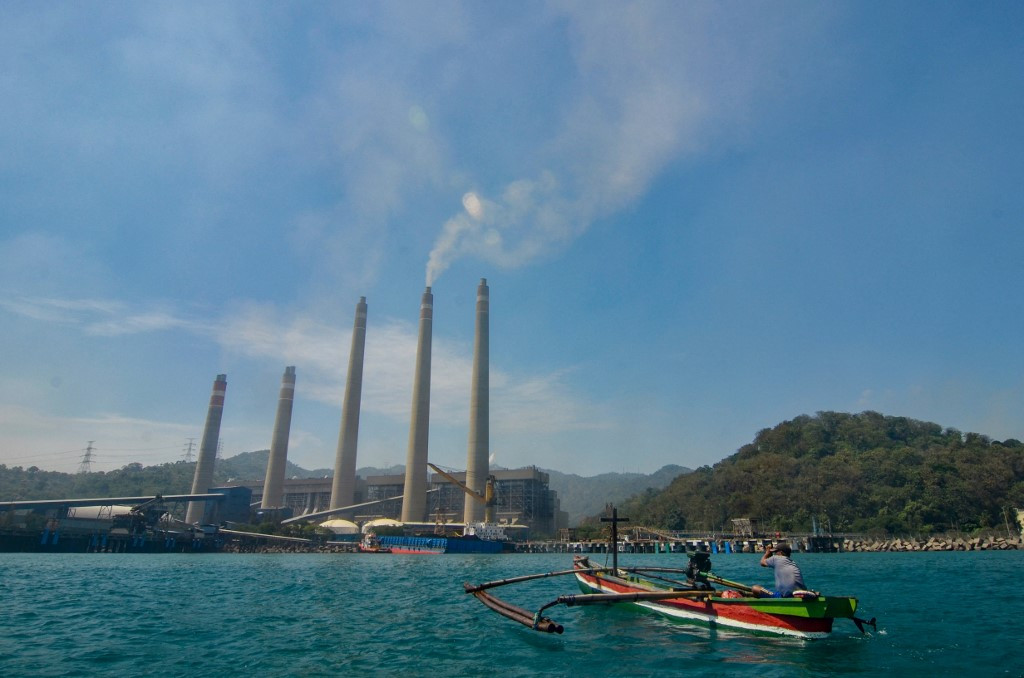
The Suralaya power plant in Cilegon, Banten, is one of the largest coal-fired power plants in Southeast Asia with a total installed capacity of 3,400 megawatts and 35,000 tonnes of estimated daily coal consumption.
Change text size
Gift Premium Articles
to Anyone
Share the best of The Jakarta Post with friends, family, or colleagues. As a subscriber, you can gift 3 to 5 articles each month that anyone can read—no subscription needed!
T
he government has shut down several units of the Suralaya coal-fired power plant in Cilegon, Banten, amid increasing public outcry over worsening air quality in the Greater Jakarta area.
Authorities have been scrambling to reduce pollution in the capital, which has given President Joko “Jokowi” Widodo a cough, as Jakarta hosts the 43rd ASEAN Summit from Tuesday to Thursday.
To reduce the air pollution, State-Owned Enterprises (SOEs) Minister Erick Thohir told the House of Representatives Commission VI which oversees industrial affairs and SOEs about the government’s decision to shut down four of seven units of the Suralaya coal-fired power plant.
The Suralaya plant is owned by PT Indonesia Power, a subsidiary of state-owned electricity company PLN, and is one of the largest coal-fired power plants in Southeast Asia with a total installed capacity of 3,400 megawatts (MW).
Using around 35,000 tonnes of coal per day, the power plant meets 18 percent of the electricity demand of Java and Bali. The power plant has also been blamed as the largest source of pollution in Jakarta, with experts saying that wind carries the fumes from Suralaya into the capital.
Erick, however, claimed the government’s data showed no reduction in air pollution in Jakarta following the shutdown.
Data from Swiss air quality technology company IQAir showed that the air quality in Jakarta has been categorized as “unhealthy” throughout the past week, with the concentration of fine PM2.5 airborne pollutants reaching 77.7 micrograms per cubic meter (μg/m3), more than four times the 15 μg/m3 considered safe by the World Health Organization.
“But we will continue to prohibit their operations as the government is committed to reducing the air pollution,” Erick said during the meeting with lawmakers on Thursday, as quoted by kontan.co.id.
Read also: Critics denounce govt’s methods in tackling Jakarta pollution
At least 16 coal-fired power plants encircle the capital and release dangerous fumes and particles that Jakartans inhale daily.
Environment and Forestry Minister Siti Nurbaya Bakar recently acknowledged that coal-fired power plants are the second biggest contributors to Jakarta’s air pollution after emissions from internal combustion engine vehicles.
Erick did not specify whether authorities would shut down the Suralaya plant temporarily or permanently.
The government has been considering the retirement of the aging Suralaya power plant, which has been operating since 1984, and would replace it with renewable power plants as part of its commitment to fight the climate crisis.
A recent survey from the Center of Economic and Law Studies (CELIOS) revealed that 62 percent of Indonesians are in favor of an early shutdown of coal-fired power plants, a plan that many think can help achieve the country’s target to reduce carbon emissions.
But efforts to retire Suralaya and other old coal-fired power plants, however, have been hindered because of financing issues.
Weekly random checks
The government is planning to shut down more coal-fired power plants, especially those built to power factories and other industrial activities, also known as coal-fired captive power plants.
Coordinating Maritime Affairs and Investment Minister Luhut Binsar Pandjaitan, who was recently tasked with leading the government’s efforts to curb Jakarta air pollution, said the government would identify industries operating their own power plants and ask them to buy electricity from PLN instead.
“Currently, PLN still has about 4 gigawatts in excess capacity,” Luhut said recently as reported by local media.
He added that the government would subsidize the electricity sold to the industries so the shift to PLN’s electricity would not burden the industry with increasing production costs.
Luhut also said that authorities were planning to use refuse-derived fuel, a fuel made of various types of waste, to reduce the use of coal for electricity by up to 30 percent.
Read also: Jakarta pollution blamed for respiratory problems
Authorities have also been ramping up efforts to control vehicular emissions in Jakarta by conducting random checks on vehicles to find out whether they have passed the mandatory emission test.
Since 2020, Jakarta has been requiring annual emissions tests for owners of motor vehicles that are more than three years old who must then take steps to lower their vehicle’s emissions if the test results are high.
From emissions checks conducted in the past few weeks, authorities found that 15 percent of vehicles tested had either not undergone testing or failed, Transportation Minister Budi Karya Sumadi said.
“We’re currently working on sanctions for violators, which will range from fines to license revocation,” Budi said on Tuesday, adding the tests also apply to public transportation vehicles.
A task force with the Environment and Forestry Ministry has also named several suspects and closed small businesses for allegedly burning toxic waste that can contribute to the pollution in Jakarta.