TheJakartaPost
Please Update your browser
Your browser is out of date, and may not be compatible with our website. A list of the most popular web browsers can be found below.
Just click on the icons to get to the download page.


Popular Reads
No popular reads data found
Top Results
No results found. Please check your search term and try again
Can't find what you're looking for?
View all search results
Popular Reads
No popular reads data found
Top Results
No results found. Please check your search term and try again
Can't find what you're looking for?
View all search resultsAmnesty-International

Politics 2 weeks ago
PREMIUM
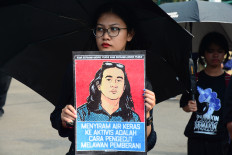
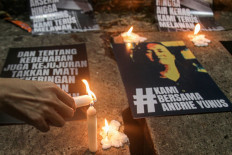
Disinformation used to silent government critics, says Amnesty
Coordinated disinformation campaigns targeting government critics have proliferated in Indonesia under the leadership of President Prabowo Subianto, contributing to the silencing of dissent and intimidation against activists, journalists and the wider public, Amnesty International said on Tuesday.
Politics 4 months ago
PREMIUM
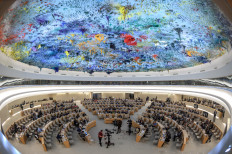
Indonesia assumes UN Human Rights Council presidency amid domestic criticism
Indonesia’s assumption of the presidency of the United Nations Human Rights Council (UNHRC) is unlikely to significantly boost its influence over global human rights issues, analysts say, even as the government hails the role as a diplomatic achievement despite mounting criticism of Jakarta’s own human rights record
Politics 10 months ago
PREMIUM
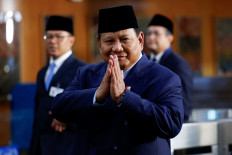
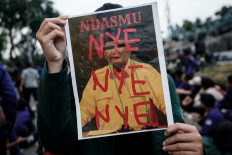
Prabowo’s ‘orchestrated protest’ claim alarms democracy watchdogs
Calls are growing for President Prabowo Subianto to stop delegitimizing civil society movements through unfounded accusations, with pro-democracy activists warning that such behavior reflects authoritarian characteristics and threatens democratic norms.
Politics 11 months ago
PREMIUM
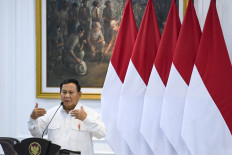
Civic groups reject Prabowo's 'foreign lackey' accusations
Civil society organizations (CSOs) have firmly rejected President Prabowo Subianto’s repeated claims that certain groups are funded by foreign entities to sow division within Indonesian society, calling the allegations baseless and harmful to democracy.
Politics 1 year ago
PREMIUM
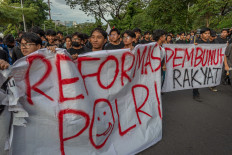
Authoritarianism rising in Indonesia: Amnesty report
Amnesty International annual human rights report raises a red flag on a decline in freedom of expression and the press as well as an increase in oppression by security forces against government critics, sounding an alarm against the rise of authoritarianism in Indonesia.
Society 1 year ago
PREMIUM
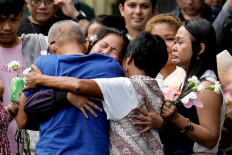
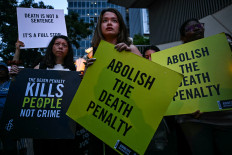
Activists decry govt’s ‘double standard’ on death penalty
Human rights advocates have denounced the government’s “double standard” on capital punishment, following a recent report that revealed its ongoing tendency to hand down the death penalty, while simultaneously repatriating a number of death row convicts to their respective home countries.