TheJakartaPost
Please Update your browser
Your browser is out of date, and may not be compatible with our website. A list of the most popular web browsers can be found below.
Just click on the icons to get to the download page.


Popular Reads
No popular reads data found
Top Results
No results found. Please check your search term and try again
Can't find what you're looking for?
View all search results
Popular Reads
No popular reads data found
Top Results
No results found. Please check your search term and try again
Can't find what you're looking for?
View all search resultsFirli-Bahuri
National 4 years ago
PREMIUM
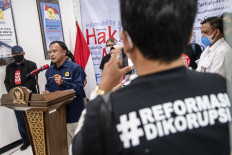
Firli instrumental in lobbying for KPK civic test, sources tell IndonesiaLeaks
Corruption Eradication Commission (KPK) chairman Firli Bahuri allegedly demanded that the agency's employees take the controversial civic knowledge test as part of the procedure to convert their status to that of civil servants, according to a new report by independent whistleblower platform IndonesiaLeaks.
National 4 years ago
PREMIUM
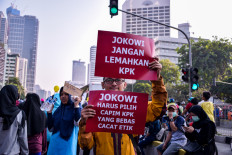
Civic test should not be used to dismiss KPK employees: Jokowi
President Joko "Jokowi" Widodo has called for the Corruption Eradication Commission (KPK) commissioners, the Administrative and Bureaucratic Reform Minister and the National Civil Service Agency (BKN) to help the commission employees who failed to pass the civic knowledge test.
National 4 years ago
PREMIUM
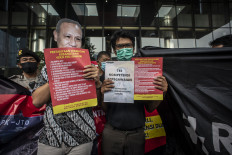
‘Racist, unnecessary’: How controversial test seen as pretext to fire top KPK employees
The controversial civic knowledge test was part of the employment status transition mandated by revised KPK Law, which was passed after a speedy deliberation at the House of Representatives in 2019.

National 5 years ago
Indonesia's antigraft efforts deemed lackluster, survey finds
Indonesia’s ongoing battle against corruption appears to be making little headway as fewer people expressed enthusiasm for the government’s efforts to prevent illicit transactions and prosecute graft perpetrators over the past two years, a recent study by the Indonesian Survey Institute (LSI) has found.

National 5 years ago
PREMIUM
Indonesian minister arrested for alleged embezzlement of COVID-19 relief fund
Social Affairs Minister Juliari Batubara and his subordinates had purportedly accepted roughly Rp 12 billion (US$582,020) in bribes from a number of suppliers during the first wave of the ministry’s aid distribution.


National 5 years ago
Explainer: How the KPK is losing public trust
Since its establishment in 2003 in the wake of the 1998 reform movement, the Corruption Eradication Commission (KPK) has spearheaded Indonesia's long battle against corruption. But now, the KPK is losing public trust as criticism abounds over its new and controversial leaders and a restrictive new anticorruption law.