The Jakarta Post
Please Update your browser
Your browser is out of date, and may not be compatible with our website. A list of the most popular web browsers can be found below.
Just click on the icons to get to the download page.


Popular Reads
Top Results
No results found. Please check your search term and try again
Can't find what you're looking for?
View all search results
Popular Reads
Top Results
No results found. Please check your search term and try again
Can't find what you're looking for?
View all search resultshong-kong-autonomy
Asia & Pacific 4 years ago
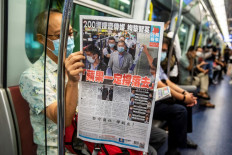
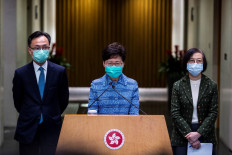
Hong Kong govt 'strongly opposes' UK, US report on city's diminishing freedoms
The United States and Britain released strongly-worded reports on Thursday detailing concerns about an erosion of freedoms in the global financial hub and the stifling of dissent in the city's legislature, civil society, and media.

World 6 years ago
Hong Kong press club says journalists hitting 'unusual' visa issues
Hong Kong's foreign press club said Thursday that reporters in the territory were experiencing "highly unusual" visas problems, and called on China and the United States to stop using the media as a political weapon.
World 6 years ago
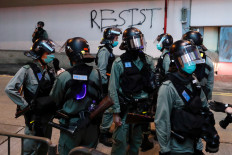
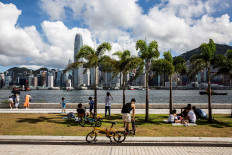
Will Hong Kong become like tightly-ruled but stable Singapore?
Limited democracy but high living standards and stability form a trade-off that most Singaporeans seem willing to live with -- and some now suggest rival Asian finance hub Hong Kong can emulate the model as China tightens control.
World 6 years ago
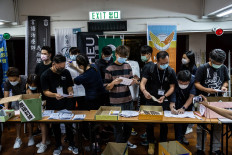
Unofficial Hong Kong vote sees new generation take over battle for democracy
A younger, more defiant generation of Hong Kong democrats has secured the most votes in unofficial primary elections in the Chinese-ruled city, setting the stage for a battle with pro-Beijing politicians for control of the city's legislature.

World 6 years ago
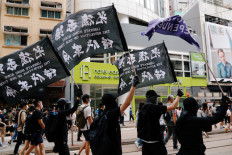
Young Hong Kong democrats seek new political order under shadow of Beijing
The national security law Beijing foisted on Hong Kong has drawn red lines across many aspects of life in the city, but a vanguard of young democrats is intent on shaking up the political order and gaining mass support.
World 6 years ago
NY Times to relocate part of Hong Kong office to Seoul
The New York Times will shift part of its Hong Kong office to Seoul, in an ominous move as worries grow that the new national security law China imposed on the financial hub two weeks ago would curb media and other freedoms in the city.
World 6 years ago
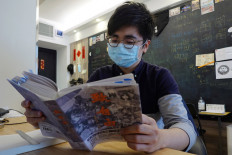
Editing history: Hong Kong publishers self-censor under new security law
In the last two weeks, Hong Kong publisher Raymond Yeung has hastily made changes to a draft paper copy of a book entitled "To Freedom," replacing the word "revolution" with "protests," tweaking a banned slogan and cutting passages that advocate independence for the Chinese-ruled city.
Editor's Picks
Popular
- Much ado about asset forfeiture
- Not the Ministry of Magic
- Mass poisonings cast doubt on free meals reforms
- Children are no longer the priority, were they ever?
- Suahasil seen to prioritize fiscal discipline, continuity
- Purbaya ousted after clash with Prabowo's ex-army colleague, sources say
- Whoosh takeover in limbo after Purbaya ousted as finance minister
- Artists exit Sheeran tour in solidarity with Macklemore pro-Palestinian comments
- Malaysia talks to rival airlines as it monitors AirAsia's financial health
- Prabowo opens new LRT link, backs Jakarta’s expansion push


