The Jakarta Post
Please Update your browser
Your browser is out of date, and may not be compatible with our website. A list of the most popular web browsers can be found below.
Just click on the icons to get to the download page.


Popular Reads
Top Results
No results found. Please check your search term and try again
Can't find what you're looking for?
View all search results
Popular Reads
Top Results
No results found. Please check your search term and try again
Can't find what you're looking for?
View all search resultsislamic



Opinion 1 year ago
PREMIUM
Analysis: Prabowo launches diplomatic offensive in Islamic world
Indonesia has always kept a low profile in the Islamic world despite being the country with the largest Muslim population in the world. It has not taken any noteworthy initiative in the Organization of the Islamic Conference (OIC) comprising mostly Muslim-majority countries, which is riveted with geopolitical competition among its members. Indonesia’s main contribution is in making up the number to bolster the collective voice of the pan-Islamic group.
Asia & Pacific 1 year ago
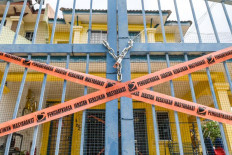
Malaysia charges 22 people linked to Islamic firm GISB with organized crime
Those charged on Wednesday included Mohammad Adib At-Tarmimi, the son of late Malaysian preacher Ashaari Mohamed, the founder of the Al-Arqam religious sect that was outlawed by the government in 1994 for allegedly spreading deviant Islamic teachings in the Muslim-majority country.


Opinion 2 years ago
PREMIUM
Analysis: Conservative Indonesian voters shun Islamism
While Indonesians have become more religiously conservative, most of them shunned Islamism in the February general election, as indicated by the failure of the United Development Party (PPP), the country’s oldest Islamist political party, to win any seats in the national legislature for the first time in its 51-year history.


Community 4 years ago
In his eyes: Japanese scholar chronicles firsthand accounts of Muslim figures
Japanese political scientist Hisanori Kato’s poignant firsthand account of his encounters with Indonesian Muslims from 1991 to the first decade of this millennium provides invaluable insights into a stormy period in Indonesian history.
Art & Culture 4 years ago
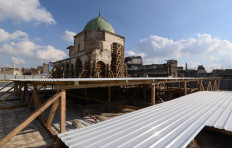
12th century prayer room found under mosque in Iraq’s Mosul
The foundations of a prayer hall from the 12th century have been discovered under the Al-Nuri mosque -- where the Islamic State group once proclaimed their "caliphate" -- in Iraq's Mosul, site managers said Tuesday.
Editor's Picks
Popular
- PISA gains belie Indonesia’s persistent education crisis
- Not the Ministry of Magic
- Suahasil seen to prioritize fiscal discipline, continuity
- The benefit of the doubt has expired
- Hundreds of flights cancelled as Typhoon Dujuan nears Japan
- 3% deficit cap revision puts Indonesia’s fiscal credibility at risk
- Court decision tightens House oversight on free meals funding
- Saudi-led coalition says Houthis fired ballistic missile at Riyadh
- Osama the gamer: A list of Bin Laden’s video games from his hard drive
- Police probe kidnapping, murder of Ukrainian tourist in Bali


