TheJakartaPost
Please Update your browser
Your browser is out of date, and may not be compatible with our website. A list of the most popular web browsers can be found below.
Just click on the icons to get to the download page.


Popular Reads
No popular reads data found
Top Results
No results found. Please check your search term and try again
Can't find what you're looking for?
View all search results
Popular Reads
No popular reads data found
Top Results
No results found. Please check your search term and try again
Can't find what you're looking for?
View all search resultsPPKM
Economy 4 years ago
PREMIUM
Omicron discovery could delay economic recovery
After reporting the country's first known case of the Omicron variant of the coronavirus, the government has declared its readiness to retighten curbs if necessary, a move that would likely slow down — but not halt — the nation's economic recovery.
Society 4 years ago
PREMIUM
Indonesia to stick to current curbs for Christmas, New Year holidays
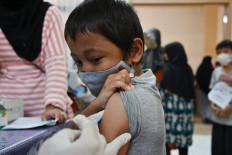
“We will ensure that PPKM is implemented in the regions according to their level [of risk]. [Although restriction] levels are adjustable, we will not ease the prevailing curbs until January,” said Vice President Ma’ruf Amin on Friday.
Archipelago 4 years ago
PREMIUM
People eager to travel as govt cancels plans for stricter year-end curbs
The government’s recent move to scrap its plan to impose tougher curbs during the year-end holidays has been largely welcomed by the public, many of whom are eager to celebrate the holidays with friends and family in their hometowns.
Jakarta 4 years ago
PREMIUM
Cooped-up Jakartans find brief respite in reopened city parks
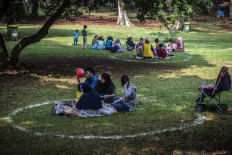
Jakartans have returned with gusto to the city’s public parks, which are now open after months of closure under COVID-19 restrictions, but many are worried about what changes a recently announced period of increased year-end mobility restrictions might bring.

Society 4 years ago
PREMIUM
New regulation sends mixed signals on holiday curbs
Under the regulation, which was issued by Home Minister Tito Karnavian on Monday, the central government has asked regional administrations to urge the public to limit their “nonessential” mobility and tighten border restrictions in anticipation of an influx of Indonesian migrant workers returning from abroad over the holiday period.
Jakarta 4 years ago
PREMIUM
Calls grow for online taxis to be exempt from Jakarta traffic policy
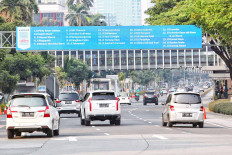
Since the government decided to ease community activity restrictions (PPKM) in Jakarta last week, the city has been seeing more commuters return to the workplace. Civil society is now pushing for online taxis to be exempted from the odd-even number plate policy to benefit commuters who do not own private vehicles.