TheJakartaPost
Please Update your browser
Your browser is out of date, and may not be compatible with our website. A list of the most popular web browsers can be found below.
Just click on the icons to get to the download page.


Popular Reads
No popular reads data found
Top Results
No results found. Please check your search term and try again
Can't find what you're looking for?
View all search results
Popular Reads
No popular reads data found
Top Results
No results found. Please check your search term and try again
Can't find what you're looking for?
View all search resultsTNI
Politics 4 weeks ago
PREMIUM
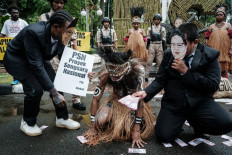
Papua documentary crackdown sparks fears over free speech, military overreach
Produced by WatchDoc alongside several environmental and legal advocacy groups, Pesta Babi explores deforestation and land conversion in Papua linked to the government’s expanding food estate and energy transition programs, which have been designated National Strategic Projects (PSN) under President Prabowo Subianto’s administration.
Academia 4 weeks ago
PREMIUM
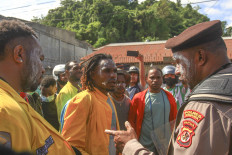
Deconstructing conflict in Papua: A land beyond vacancy
As the government intensifies its food estate ambitions in Papua, a staggering 58-to-1 military-to-insurgent ratio reveals a development strategy that prioritizes industrial expansion over the basic human rights and ancestral lands of the indigenous population.
Opinion 1 month ago
PREMIUM
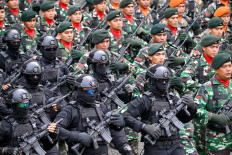
Analysis: Draft TNI regulation on funding raises concerns over military neutrality
The financial independence of the Indonesian Military (TNI) has come under scrutiny following a leaked draft of a government regulation on TNI duties, which appears to open the door for funding from sources outside the state budget. The controversy, however, points to a deeper structural issue: Defense spending in Indonesia has long been deprioritized relative to other national priorities such as infrastructure development, energy subsidies, social assistance and food security.

Politics 1 month ago
PREMIUM
Abuse concerns linger over extremism prevention plan
The new Perpres notes that while Indonesia has seen a decline in terrorist attacks in recent years, including what it describes as “zero terrorist attacks” in the past two years, threats persist beneath the surface, with more than 1,000 suspected militants arrested between 2020 and 2024.
Politics 1 month ago
PREMIUM
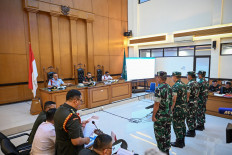
Military court indicts officers in activist acid attack case
Prosecutors suspected the defendants of harboring motives of personal revenge against activist Andrie Yunus for the latter’s interruption of a closed-door House of Representatives meeting for an Indonesian Military (TNI) Law revision, which the officers said was ‘insulting and trampled the military’s dignity’.
Archipelago 1 month ago
PREMIUM
Deadly Puncak clash reignites calls for peace, dialogue in Papua
Calls for peace and an end to military operations in Papua are intensifying after a deadly shootout in Puncak regency, Central Papua, left 15 civilians dead, triggering protests across multiple cities in the region and renewed scrutiny from the National Commission on Human Rights (Komnas HAM).

Academia 1 month ago
PREMIUM
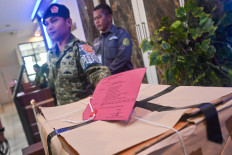
The constitutional challenge: Addressing the architecture of military impunity
Indonesia’s "architecture of impunity" transforms personal vendettas into institutional shields, allowing military personnel to bypass civilian justice. By exploiting legislative loopholes and expanding into civil governance, the TNI risks dismantling the very constitutional safeguards designed to ensure democratic accountability.