The Jakarta Post
Please Update your browser
Your browser is out of date, and may not be compatible with our website. A list of the most popular web browsers can be found below.
Just click on the icons to get to the download page.


Popular Reads
Top Results
No results found. Please check your search term and try again
Can't find what you're looking for?
View all search results
Popular Reads
Top Results
No results found. Please check your search term and try again
Can't find what you're looking for?
View all search resultsvladimir-putin
Asia & Pacific 4 weeks ago
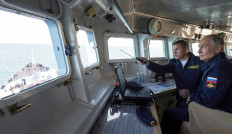
Putin visits disputed island near Japan, drawing Tokyo's ire
The island, known in Russia as Iturup and in Japan as Etorofu, is one of four in the Kuril chain close to Japan's main islands seized by Moscow in the days after Japan's surrender in World War Two. Tokyo has maintained its claim to them, making their return a condition for concluding a formal peace treaty that would unlock closer economic ties.
Europe 2 months ago
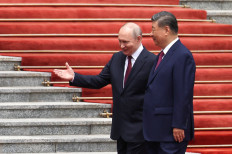
Russia approved secret China military training at top level
The officials said the involvement of such high-ranking individuals in training linked to theUkraine war signalled the importance for Russia and China of such cooperation, which has caused alarm in Europe even as Beijing has denied it took place.
Europe 2 months ago
PREMIUM
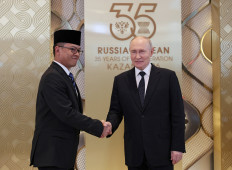
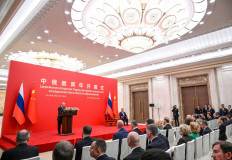
Indonesia joins ASEAN push for deeper Russia ties
Indonesia has called for expanded cooperation between ASEAN and Russia on the economy, food security and energy resilience, as leaders from the regional bloc wrapped up talks in Kazan, Russia, on Thursday with a renewed commitment to deepen engagement with Moscow amid continuing global volatility.
Asia & Pacific 3 months ago
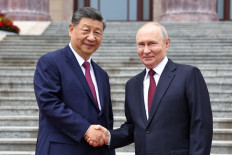
Putin, Xi hail 'unyielding' ties in talks after Trump visit
President Xi Jinping hailed China and Russia's "unyielding" ties in talks with Vladimir Putin on Wednesday, as the pair met to underscore their alliance days after Donald Trump's visit to the Asian superpower economy.
Editorial 4 months ago
PREMIUM
Making sense of Indonesia
Standard practice around that period mostly revolved foreign correspondents parachuted from the major capitals of the West to report from the “exotic” East, who often wrote with an outlook which literary critic Edward Said deemed “orientalist”.
Economy 4 months ago
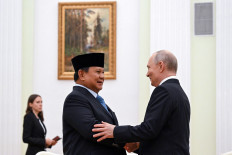
Indonesia says Russia will supply 150 million barrels of oil
Prabowo met Russian President Vladimir Putin at the Kremlin last week, where they discussed strengthening strategic partnerships, including in the energy sector, cabinet secretary Teddy Indra Wijaya said in a statement.
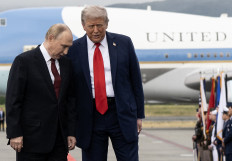

Asia & Pacific 4 months ago
Russia ready to help China with energy ahead of Putin's visit, Lavrov says
The agencies quoted Lavrov as saying that the visit would take place in the first half of the year, while the Vedomosti newspaper cited sources as saying it would be during the week beginning May 18.
Editor's Picks
Popular
- Much ado about asset forfeiture
- Mass poisonings cast doubt on free meals reforms
- New data rules could unlock cross-border data flows
- Children are no longer the priority, were they ever?
- Three more volcanoes erupt following Sinabung, Anak Krakatau
- Indonesia, Hong Kong to host new 14-team FIFA ASEAN Cup
- Haze drives surge in respiratory illnesses in Indonesia
- Trump says he would be OK with China building cars in US
- Assessing the merit of the strategic commodities bill
- Modi, Putin seek stronger ties as Russia calls for BRICS to counter West


