TheJakartaPost
Please Update your browser
Your browser is out of date, and may not be compatible with our website. A list of the most popular web browsers can be found below.
Just click on the icons to get to the download page.


Popular Reads
No popular reads data found
Top Results
No results found. Please check your search term and try again
Can't find what you're looking for?
View all search results
Popular Reads
No popular reads data found
Top Results
No results found. Please check your search term and try again
Can't find what you're looking for?
View all search resultsWWF-Indonesia

National 8 years ago
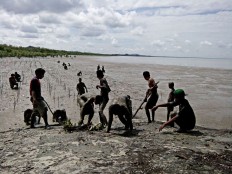
Planting mangroves to save W. Kalimantan's beaches from erosion: WWF
Earth Day, which was celebrated globally on April 22, has become a crucial way for World Wildlife Fund for Nature (WWF) Indonesia to alert various parties about the erosion currently threatening beaches in West Kalimantan.
Environment 9 years ago
Green economy becomes more concrete in Sumatra
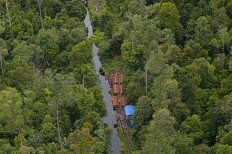
Plagued with illegal logging, forest fires, the uncontrolled development of plantations and mining sites, as well as human settlement, forested areas on the island of Sumatra have been in rapid decline, shrinking to 10.5 million hectares as of last year from 15.8 million ha in 2000.
National 9 years ago
Indonesia raises US$23 million to conserve Bird’s Head Seascape
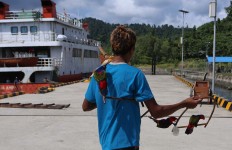
Indonesia’s bid to protect its marine areas has gained support in the form of a US$23 million investment in the Blue Abadi Fund, which is on track to be the world’s largest marine conservation trust, designed to conserve the country’s Bird’s Head Seascape.
National 9 years ago
$3.3m in new grants to protect Kalimantan forests
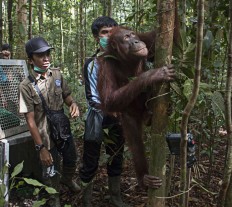
The Tropical Forest Conservation Act Kalimantan (TFCA Kalimantan), a partnership program among the US government, the Indonesian government, the Nature Conservancy (TNC) and the World Wildlife Fund for Nature (WWF) Indonesia, has approved 14 new grants worth $3.3 million for local non-governmental organizations (NGOs) in Indonesia.
Environment 9 years ago
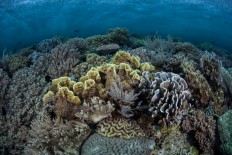
Majority of Southeast Sulawesi coral reefs damaged: Study
A study conducted by WWF Indonesia has found that the majority of coral reefs in waters around Southeast Sulawesi have been damaged. The lack of hard coral cover, high rubble cover and high sedimentation rates are signs that the underwater ecosystem is in a dire state.