The Jakarta Post
Please Update your browser
Your browser is out of date, and may not be compatible with our website. A list of the most popular web browsers can be found below.
Just click on the icons to get to the download page.


Popular Reads
Top Results
No results found. Please check your search term and try again
Can't find what you're looking for?
View all search results
Popular Reads
Top Results
No results found. Please check your search term and try again
Can't find what you're looking for?
View all search resultsbappenas
Academia 1 month ago
PREMIUM
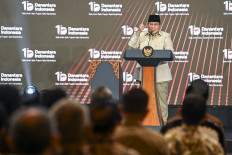
Why Indonesia needs an accountable developmental state
To unlock its economic potential on the road to 2045, Indonesia must move beyond simply chasing finance to closing its core development capital formation gap. Building an accountable, state-led architecture, not just a larger bureaucracy, is the true master key to turning strategic priorities into productive national wealth.
Academia 2 months ago
PREMIUM
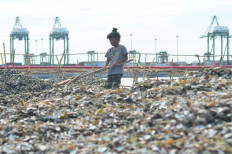
Three flaws, one solution: Ending child labor in Indonesia
Behind Indonesia’s improving statistics lies a harsh reality of over one million children hidden in an unregulated, informal economy. To save them, the government must democratize local data and force its siloed ministries to cooperate.


Academia 10 months ago
PREMIUM
Climate finance beyond paper: Can Bali turn promises into actions?
The recently launched Bali Climate Financing Platform introduces a new model for translating road maps into implementation and if successful, it could be emulated in other provinces to safeguard regional economies toward building climate resilience.
Economy 10 months ago
PREMIUM
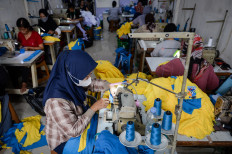
Productivity among lowest in region, govt launches national push
The government has launched a drive to increase productivity as Indonesia’s labor productivity remains among the lowest in Southeast Asia, threatening long-term growth. Experts warn that red tape, weak incentives and regional disparities undermine the competitiveness of local companies.



Economy 1 year ago
Investment of US$2.9t expected for 2025-2029: Bappenas
Raden Siliwanti, an expert staffer at the National Development Planning Ministry/National Development Planning Agency (Bappenas), has said the total investment needed for the next five years of 2025-2029 amounts to Rp 47,587.3 trillion (US$2.9 trillion).


Economy 1 year ago
PREMIUM
Bappenas draws up two scenarios to attain Prabowo’s 8% growth target
Bappenas has drawn up two possible scenarios for the country to achieve incoming president Prabowo's plan to reach GDP growth of 8 percent, an entire percentage point higher than Jokowi's unattained target of 7 percent.
Editor's Picks
Popular
- Mass poisonings cast doubt on free meals reforms
- New data rules could unlock cross-border data flows
- Malaysia must not breathe Indonesia’s governance failure
- Volcanic eruptions take toll on economy
- Search intensifies for journalists, crew as Anak Krakatau ashfall eases
- Mitigation budget under scrutiny as Indonesia grapples with disasters
- Indonesian wildfire emissions surge to world's highest
- Anak Krakatau doesn't need an earthquake to kill
- Student suffers memory loss, seizures after free meal food poisoning
- Search resumes for missing journalists on Anak Krakatau mission


