The Jakarta Post
Please Update your browser
Your browser is out of date, and may not be compatible with our website. A list of the most popular web browsers can be found below.
Just click on the icons to get to the download page.


Popular Reads
Top Results
No results found. Please check your search term and try again
Can't find what you're looking for?
View all search results
Popular Reads
Top Results
No results found. Please check your search term and try again
Can't find what you're looking for?
View all search resultsbonds




Academia 4 months ago
PREMIUM
Weakening rupiah: No panic required, professional heads-up urged
As the rupiah grapples with a "perfect storm" of global dollar strength and domestic regulatory uncertainty, Indonesia faces a critical test of market confidence that may require a fresh infusion of professional leadership to resolve.



Markets 7 months ago
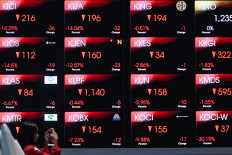
Buoyant stocks pause for breath on signs of softening US consumption
Bonds jumped and a rebound in stock markets slowed down on Wednesday after softer-than-expected US retail sales figures, while a rally in the yen has extended and might be beginning to signal a shift in investor thinking since Japan's election.
Academia 7 months ago
PREMIUM
Deepening markets or deepening risk? Rethinking the 20% equity rule
Doubling the equity limit for insurers and pension funds to 20 percent from currently 8 percent can be either a bold boost for market stability or a dangerous gamble with institutional solvency. However, "flexibility" might be a double-edged sword that threatens to undermine asset-liability matching and trigger a capital-requirement crisis.

Markets 7 months ago
PREMIUM
RI bond yield spikes on BI independence worries, uncertainty
The yield on Indonesian government bonds has climbed to its highest level in more than three months on the back of general uncertainty, fiscal worries and concerns about the independence of Bank Indonesia (BI) following the nomination of Thomas “Tommy” Djiwandono as deputy governor.
Editor's Picks
Popular
- Mass poisonings cast doubt on free meals reforms
- Much ado about asset forfeiture
- New data rules could unlock cross-border data flows
- Children are no longer the priority, were they ever?
- Indonesia, Hong Kong to host new 14-team FIFA ASEAN Cup
- Free meals face seven-day ultimatum, possible lawsuit
- Prabowo’s approval slide fuels warm-up to 2029 elections
- Volcanic eruptions take toll on economy
- Osama the gamer: A list of Bin Laden’s video games from his hard drive
- The war on terror and its unintended consequences


