The Jakarta Post
Please Update your browser
Your browser is out of date, and may not be compatible with our website. A list of the most popular web browsers can be found below.
Just click on the icons to get to the download page.


Popular Reads
Top Results
No results found. Please check your search term and try again
Can't find what you're looking for?
View all search results
Popular Reads
Top Results
No results found. Please check your search term and try again
Can't find what you're looking for?
View all search resultslegislative-candidates
Legislative Race 2 years ago
PREMIUM
South Korean native vies for House seat
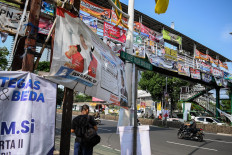
Among thousands of election campaign ads across the capital, one particular poster has stood out around Central Jakarta and South Jakarta showing a South Korean native running for a seat at the House of Representatives in February's general election.
Legislative Race 2 years ago
PREMIUM
Jakarta sees tight competition for 2024 legislative race
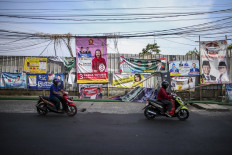
From cabinet ministers to celebrities, more than 300 legislative candidates in the capital city are competing for only 21 seats at the House of Representatives. While deep pockets and fame play an important role in the election, an analyst predicts that incumbents will have a lead in the competition thanks to their established positions in the country's legislative body.
Legislative Race 2 years ago
PREMIUM
Creative campaign ads may be catchy, but not always effective
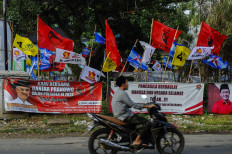
Some candidates are getting creative with their campaign ads for the legislative election, hoping to one-up their competition, but both potential voters and analysts are questioning the effectiveness and relevance of such a strategy.
Legislative Race 2 years ago
PREMIUM
KPU urges political parties to withdraw ex-graft convicts from legislative elections
The General Elections Commission (KPU) has called on political parties to withdraw ineligible ex-corruption convicts from a provisional list of candidates for next year’s legislative elections following a Supreme Court ruling that effectively makes a five-year waiting period mandatory for all former graft convicts.
Legislative Race 3 years ago
PREMIUM
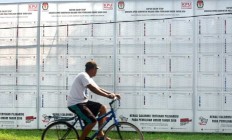
Political dynasties, graft leniency loom over 2024 elections
With relatives of sitting lawmakers, political leaders and regional heads, along with former graft convicts, vying for seats in national and local legislatures next year, observers are concerned that Indonesia's democracy is shifting toward political dynasties and a disregard for antigraft values.

Election Updates 3 years ago
PREMIUM
Bawaslu file ethics complaint against KPU on ‘closed’ legislative candidates screening
Bawaslu wants to monitor the software the KPU used to review thousands of prospective legislative candidates but the elections commission says it can only provide full access if a complaint is made about a candidate.
Legislative Race 3 years ago
PREMIUM
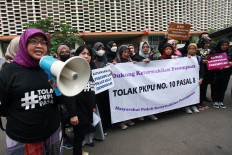
KPU denies backroom deal on controversial rules for legislative elections
The election organizer is again in hot water over several provisions in its latest regulation, including those that activists say contradict existing rules on ex-graft convicts' participation and minimum female representation.
Legislative Race 3 years ago
PREMIUM
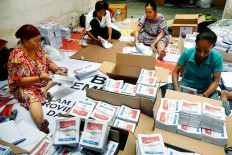
Ministers, incumbents, newcomers throw hats in for 2024 legislature
Political parties have spared no effort in supporting their lofty electoral ambitions for next year, nominating Cabinet members, incumbents and even some notable newcomers for the 2024 legislative election before the close of the registration period on Sunday.

Legislative Race 3 years ago
PREMIUM
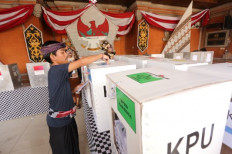
PDI-P, NasDem sign up legislative candidates, with some incumbents, ministers on the list
The opposition Prosperous Justice Party (PKS) was the first to register its candidates on Monday, while Hanura Party, which contested the 2019 legislative elections but failed to send its representatives to the House, completed its registration on Wednesday.
Editor's Picks
Popular
- Popular discontent is justified. Authoritarianism is not the answer
- Recentralization concerns in fiscal, education heighten
- Govt under pressure as 3 million home drive hits cracks
- Sugarcane farmers query House over sugar imports
- The agrarian reform law and investment prospects of palm oil
- Jakarta international airport extends closure after Anak Krakatau eruption
- Militarization by request: The quiet creep in Jakarta
- Women fight fires, sexism in Kalimantan
- Safeguarding Indonesia's AI future
- Govt suspends BDx data center project in West Java amid environmental concern


