The Jakarta Post
Please Update your browser
Your browser is out of date, and may not be compatible with our website. A list of the most popular web browsers can be found below.
Just click on the icons to get to the download page.


Popular Reads
Top Results
No results found. Please check your search term and try again
Can't find what you're looking for?
View all search results
Popular Reads
Top Results
No results found. Please check your search term and try again
Can't find what you're looking for?
View all search resultsloan-growth


Economy 10 months ago
PREMIUM
Loan growth remains sluggish despite Purbaya’s liquidity injection
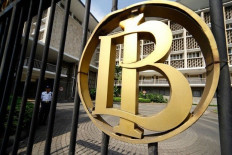
Disappointing data on bank lending raises questions about the effectiveness of the Finance Ministry’s Rp 200 trillion (US$12 billion) liquidity injection conducted in early September to jump-start economic activity, with economists pointing to a lack of credit demand.

Regulations 11 months ago
PREMIUM
Bank Indonesia to add incentives amid slow lending
Bank Indonesia (BI) plans to roll out additional macroprudential liquidity incentives (KLM) on Dec. 1 through new disbursement schemes to boost sluggish credit growth and expedite the pass-through of central bank rate cuts to commercial banking rates.

Markets 11 months ago
PREMIUM
BI pauses after three consecutive rate cuts, but open to more
Bank Indonesia has kept its benchmark interest rate in place after decreasing it by 25 basis points (bps) in each of the past three months, but the central bank is open for further cuts to encourage lending and push economic growth to its true potential.


Economy 11 months ago
PREMIUM
Govt gunning for high GDP growth from this quarter onward
The government has promised strong gross domestic product growth for the remainder of this year and onward as it expects higher consumption, underpinned by increased private sector activity and government spending.

Regulations 1 year ago
PREMIUM
Govt to deposit $12b in commercial banks to ‘jump-start’ lending
The government has announced plans to shift some state deposits from the central bank to commercial banks to allow for more loan disbursements and thereby invigorate private sector activity in a bid to achieve 6 to 7 percent gross domestic product growth.
Economy 1 year ago
PREMIUM
Bank lending slows further on stricter standards, weak demand
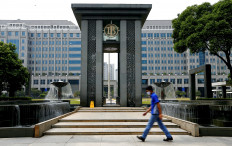
Bank Indonesia (BI) has flagged declining loan growth in the country’s banking industry amid stricter lending standards and weak demand, emphasizing the need to boost credit disbursement to push national economic growth.
Companies 1 year ago
PREMIUM
BCA reports 8% profit growth with loans up 13% yoy in first half
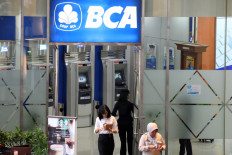
Bank Central Asia (BCA) posted a net profit of Rp 29 trillion (US$1.7 billion), up 8 percent year-on-year (yoy), in the first half of this year, in line with growing loan disbursement and funding, as well as rising transaction volume.
Editor's Picks
Popular
- Popular discontent is justified. Authoritarianism is not the answer
- Recentralization concerns in fiscal, education heighten
- Govt under pressure as 3 million home drive hits cracks
- Safeguarding Indonesia's AI future
- Indonesian wildfires threaten critically-endangered orangutan: IUCN
- Power exports to Singapore hinge on regulatory clarity
- Indonesia signs UN treaty to combat, prevent cybercrime
- Trump rejects Iran proposal for deal to reopen Hormuz
- Death toll from Java Sea ferry sinking jumps to 64
- BI to expand QRIS to Timor Leste, Hong Kong


