The Jakarta Post
Please Update your browser
Your browser is out of date, and may not be compatible with our website. A list of the most popular web browsers can be found below.
Just click on the icons to get to the download page.


Popular Reads
Top Results
No results found. Please check your search term and try again
Can't find what you're looking for?
View all search results
Popular Reads
Top Results
No results found. Please check your search term and try again
Can't find what you're looking for?
View all search resultsoffice
Business 6 years ago
Some Japan firms rethink traditional office as pandemic boosts working from home: Reuters
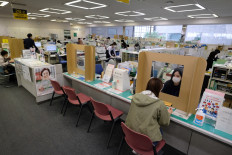
A third of Japanese firms are reassessing using offices after a sharp drop in their utilisation in August from a year ago, as 65 percent of firms allowed or encouraged employees to work from home due to the coronavirus pandemic, a monthly Reuters poll showed.

Lifestyle 6 years ago
Tokyoites leaving bustle behind as pandemic proves catalyst for change
As companies close offices in central Tokyo or encourage employees to work from home due to coronavirus pandemic worries, young people are relocating to the suburbs where rents are cheaper, space less at a premium and nature nearer the doorstep.

National 6 years ago
Indonesia sees uptick in COVID-19 transmission in poorly ventilated offices
Besides poor ventilation in indoor settings, transmissions were also rampant in offices due to people’s unruly behavior of refusing to wear masks and maintain physical distance, according to the Health Ministry’s disease control and prevention director general, Achmad Yurianto.

World 6 years ago
NY Times to relocate part of Hong Kong office to Seoul
The New York Times will shift part of its Hong Kong office to Seoul, in an ominous move as worries grow that the new national security law China imposed on the financial hub two weeks ago would curb media and other freedoms in the city.

Health 6 years ago
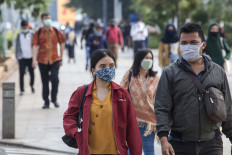
Heading back to the office? Here’s how to protect yourself and your colleagues from corona
Small offices often have insufficient airflow to dilute the virus, and, if an infectious person is present, could end up with high concentrations of viral particles over the course of an hour or so.


Business 6 years ago
Home work triggers demand jump for chips, laptops and network goods
With more employees working from home to help slow the spread of the coronavirus, demand is surging for laptops and network peripherals as well as components along the supply chain such as chips, as companies rush to build virtual offices.

Editor's Picks
Popular
- New islands appear after Anak Krakatau volcano erupts
- Prabowo resurrects advisory board
- A ministry restored
- Reshuffle shores up coalition support for 2029
- Whisky, big-screen TV seized from prison 'villas' in West Java
- Sugarcane farmers query House over sugar imports
- The agrarian reform law and investment prospects of palm oil
- Indonesia pushes cooperation to outpace global scam networks
- Can young Indonesians still afford home?
- Gibran’s fall, Prabowo’s power reconfiguration?


