The Jakarta Post
Please Update your browser
Your browser is out of date, and may not be compatible with our website. A list of the most popular web browsers can be found below.
Just click on the icons to get to the download page.


Popular Reads
Top Results
No results found. Please check your search term and try again
Can't find what you're looking for?
View all search results
Popular Reads
Top Results
No results found. Please check your search term and try again
Can't find what you're looking for?
View all search resultsracism-in-indonesia
Opinion 6 years ago
PREMIUM
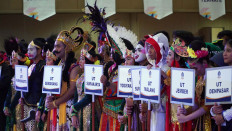
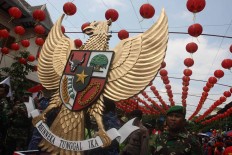
Ethnicity is futile. Time for Indonesia to move toward civic nationalism
The discrimination against Papuans has yet again brought the issue of ethnicity and nationalism into the spotlight. But what is nationalism, especially when faced against the backdrop of ethnic diversity in Indonesia?
National 6 years ago
PREMIUM
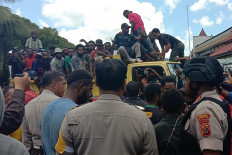
International group behind deadly clashes in Papua: Government
According to Coordinating Political, Legal and Security Affairs Minister Wiranto, Monday’s unrest was controlled by the National Committee of West Papua (KNPB), which is affiliated to the United Liberation Movement for West Papua (ULMWP), led by UK-based Papuan exile Benny Wenda.
Opinion 6 years ago
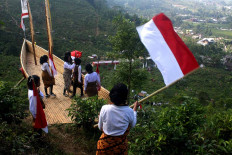
Ethnicity is futile. It's time for Indonesia to move towards civic nationalism
Civic nationalism, also known as liberal nationalism, is a form of nationalism in contrast with ethnic nationalism. Under this paradigm, nationality is not based on ethnicity or religion. It is based on a person's willingness to follow the shared principles and values of the nation.
National 6 years ago
PREMIUM
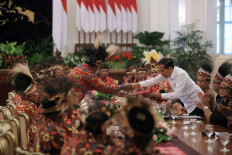
Jokowi's meeting with Papuan delegation 'misses the point'
“If the President really wants to help, he’d better finish Jakarta’s responsibilities by creating three human rights institutions in Papua, namely a human rights commission, a human rights court and a commission for freedom and reconciliation,” Usman said.
Opinion 6 years ago
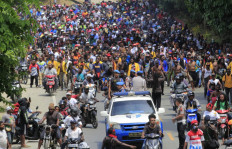
Blaming provocateurs ignores voice of Papuans
But focusing on so-called provocateurs would mean that we neglect the voice of Papuans who took to the streets in peace. Thousands of them rallied for a cause and they deserve to be heard. Believing in outside influence is also condescending, as if we believe Papuans cannot act on their own volition.
Opinion 7 years ago
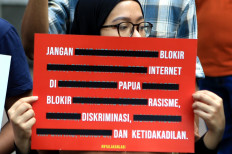
The internet shutdown in Papua threatens Indonesia's democracy and its people's right to free speech
In the context of Papua, without the internet, it would be difficult for a group of people that experience injustice and discrimination to tell their stories to foster the much-needed awareness of these injustices.Because of this, limitations on internet access should be regarded as an attack on democracy.
Editor's Picks
Popular
- Anak Krakatau eruption halts flights, schools, fishing
- Eight airports remain shut on Monday due to volcanic ash from Anak Krakatau
- Barelang Police, Japanese diplomat hold meeting on Batam security
- Jakarta international airport extends closure after Anak Krakatau eruption
- Mass poisonings cast doubt on free meals reforms
- New data rules could unlock cross-border data flows
- Malaysia must not breathe Indonesia’s governance failure
- Anak Krakatau eruption grounds flights, blankets vast region
- The state's new muscle
- Soekarno-Hatta airport extends closure after Anak Krakatau eruption


