TheJakartaPost
Please Update your browser
Your browser is out of date, and may not be compatible with our website. A list of the most popular web browsers can be found below.
Just click on the icons to get to the download page.


Popular Reads
No popular reads data found
Top Results
No results found. Please check your search term and try again
Can't find what you're looking for?
View all search results
Popular Reads
No popular reads data found
Top Results
No results found. Please check your search term and try again
Can't find what you're looking for?
View all search resultsrevenue

Academia 3 days ago
PREMIUM
Promising ‘no new tax amnesty’ is not enough
The anxiety over Indonesia's tax amnesty is that the policy created a kind of legal catch-22: In its aim to close a past legal problem, it left the legal consequences open-ended, potentially creating a new legal past for the state.

Regulations 2 weeks ago
PREMIUM
No tax amnesty while I'm minister, insists Purbaya
Indonesia has held two tax amnesties, in 2016 and 2022, the first of which was initiated on the fallout from the Panama Papers leak that revealed data on individuals holding assets offshore, many in tax haven countries.

Opinion 2 weeks ago
PREMIUM
Analysis: Toll road VAT, EV disincentive: Short-term revenue, long-term losses
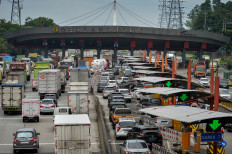
As the government seeks to shore up fiscal stability amid slowing tax revenue and rising spending pressures, it is turning to controversial new revenue measures, including imposing VAT on toll roads and removing tax exemptions for EV. These policies could slow adoption even as the country pushes electrification to reduce reliance on costly fuel imports.

Opinion 1 month ago
PREMIUM
Analysis: Coal and nickel dilemma: Racing for revenue, lagging in readiness
A potentially widening budget deficit amid soaring global oil prices has prompted Finance Minister Purbaya Yudhi Sadewa to explore alternative revenue sources, including export duties on nickel and coal, commodities that are currently benefiting from relatively strong price trends. The push for rapid revenue mobilization, however, appears to be running ahead of sectoral readiness.


Opinion 3 months ago
PREMIUM
Analysis: Raids and revenue woes: the leaky tax and customs system
As the government scrambles to shore up tax and excise revenues, a wave of corruption arrests targeting tax and customs officials has exposed deep governance problems within Indonesia’s revenue-collecting agencies. The Corruption Eradication Commission’s (KPK) recent raids have prompted Finance Minister Purbaya Yudhi Sadewa to carry out large-scale bureaucratic rotations at both the tax and customs offices. Yet questions remain over whether these measures can deliver lasting reform or meaningfully improve revenue collection.

Opinion 4 months ago
PREMIUM
Analysis: Government's tax revenue slips, raising fiscal deficit pressures
Indonesia may face a tax revenue shortfall this year, as recent data show the country had realized only 74.62 percent of its annual tax target as of November, underscoring mounting difficulties in sustaining revenue growth amid global and domestic economic headwinds. The World Bank Group (WBG) has projected Indonesia's tax ratio, the share of tax revenue in gross domestic product (GDP), to fall to 9.4 percent in 2025, down from 10.1 percent in 2024. The downward trend is a worrying signal for future state spending, particularly as the government rolls out costly flagship programs that risk widening the fiscal deficit.