The Jakarta Post
Please Update your browser
Your browser is out of date, and may not be compatible with our website. A list of the most popular web browsers can be found below.
Just click on the icons to get to the download page.


Popular Reads
Top Results
No results found. Please check your search term and try again
Can't find what you're looking for?
View all search results
Popular Reads
Top Results
No results found. Please check your search term and try again
Can't find what you're looking for?
View all search resultsrupiah-against-dollar

Economy 5 months ago
PREMIUM
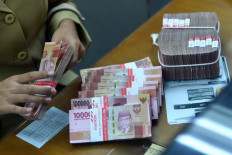
Iran war, domestic strains push rupiah to new historic low
The rupiah was the worst-performing currency in the region, depreciating 0.61 percent by market close, followed by the Philippine peso and the Thai baht, which weakened by 0.6 percent and 0.55 percent, respectively.
Economy 5 months ago
PREMIUM
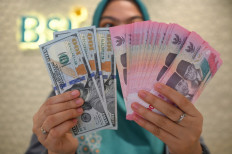
BI holds rate steady to rein in rupiah's weakening
The central bank has decided to keep the BI-Rate unchanged at 4.75 percent to prevent the rupiah from spiraling ever downward amid the nearly two-month war in Iran as the currency hit a record low of Rp 17,193 per greenback on Wednesday, while experts pointed to a narrowing room for monetary policy in its aim to secure financial stability.

Economy 5 months ago
PREMIUM
Ceasefire provides temporary relief for bleeding rupiah
A de-escalation in the United States-Israeli war on Iran has helped the rupiah bounce back somewhat after approaching its historic low, but economists say the Indonesian currency remains subject to a range of risks.

Regulations 6 months ago
PREMIUM
BI keeps rate on hold as Iran war pressures rupiah
Bank Indonesia (BI) has left its benchmark interest rate unchanged as the United States-Israel war on Iran puts pressure on the rupiah, prompting the central bank to respond with forex market intervention and tighter foreign exchange controls.



Regulations 7 months ago
PREMIUM
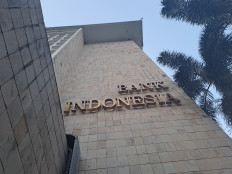
Pushing rupiah to 15,000 per dollar ‘not that difficult’, says Purbaya
Finance Minister Purbaya Yudhi Sadewa says pushing the rupiah exchange rate back up to 15,000 per United States dollar should not be that difficult as the currency is undervalued when taking into account Indonesia’s economic fundamentals.

Regulations 8 months ago
PREMIUM
BI to remain ‘professional’ with strong governance, Perry vows
Professionalism will continue in monetary policymaking, Bank Indonesia (BI) Governor Perry Warjiyo has promised, seeking to allay any concerns following Deputy Finance Minister Thomas “Tommy” Djiwandono’s nomination as a deputy BI governor.
Editor's Picks
Popular
- Batam residents protest data centers amid water crisis
- Recentralization concerns in fiscal, education heighten
- Popular discontent is justified. Authoritarianism is not the answer
- Safeguarding Indonesia's AI future
- Govt under pressure as 3 million home drive hits cracks
- Prabowo’s universal free education plan raises feasibility questions
- Free meals marketplace raises supply chain concerns
- Inside the education system moulding Afghanistan's next generation
- Rocking the boat in a storm
- Rethinking empire, extraction and identity in the Pacific: A New History


