The Jakarta Post
Please Update your browser
Your browser is out of date, and may not be compatible with our website. A list of the most popular web browsers can be found below.
Just click on the icons to get to the download page.


Popular Reads
Top Results
No results found. Please check your search term and try again
Can't find what you're looking for?
View all search results
Popular Reads
Top Results
No results found. Please check your search term and try again
Can't find what you're looking for?
View all search resultsskill-gap


Academia 3 years ago
PREMIUM
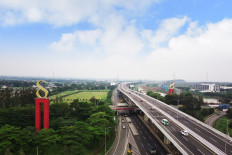
Engineering a way out of the skills gap between Indonesia and Australia
Over the next three to 10 years Indonesia will continue to have a deficit of structural engineers, network engineers, data engineers and project managers for specific construction projects, such as tunnel construction.

Business 6 years ago
PREMIUM
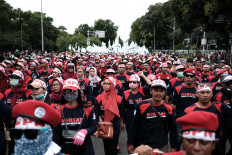
Workers wrestle with Labor Law, skills gap, automation
The business community considers the 2003 Labor Law and its derivatives to be one of the factors dragging down the country’s competitiveness, as high severance pay requirements and high wage requirements have discouraged labor-intensive, smaller enterprises from investing in the country.


Business 7 years ago
PREMIUM
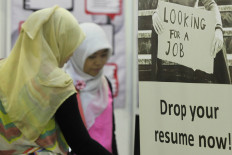
Devil in the details: Can Jokowi’s pre-employment cards bridge skills gap?
It’s all top line at this point: About Rp 10.3 trillion has been budgeted for the cards that are to be disbursed to 2 million recipients, of which 1 million would specifically be for digital training and the rest for other unidentified skills. The mechanism would be similar to that of scholarships with certain eligibility requirements and application processes.

Business 7 years ago
PREMIUM
Workforce needs to step up game as interest in automation grows
“Indonesia’s labor force growth rate is slowing, which means that it will need to rely more heavily on productivity gains like those that automation provides,” the Alpha Beta-Prospera researchers wrote. Statistics Indonesia data show that Indonesia’s workforce growth has stagnated at less than 1 percent annually since 2011.
Business 7 years ago
PREMIUM
Skills gap: Why education alone is not enough to land you a job in Indonesia
Unemployment rate for graduates of vocational high schools, which are meant to tailor students for specific jobs, is most alarming at 8.63 percent in February 2019, compared with 6.24 percent for university student graduates and 6.78 percent for high school graduates.
Editor's Picks
Popular
- Indonesia pushes cooperation to outpace global scam networks
- Whisky, big-screen TV seized from prison 'villas' in West Java
- Career diplomat Arrmanatha takes helm of Foreign Ministry
- Top cop, Jokowi aide out as Prabowo consolidates power
- The agrarian reform law and investment prospects of palm oil
- BREAKING: Prabowo reshuffles cabinet, replaces police chief
- New islands appear after Anak Krakatau volcano erupts
- Sugarcane farmers query House over sugar imports
- How Indonesia’s oligarchs turned democracy to their advantage
- Inside the education system moulding Afghanistan's next generation


