The Jakarta Post
Please Update your browser
Your browser is out of date, and may not be compatible with our website. A list of the most popular web browsers can be found below.
Just click on the icons to get to the download page.


Popular Reads
Top Results
No results found. Please check your search term and try again
Can't find what you're looking for?
View all search results
Popular Reads
Top Results
No results found. Please check your search term and try again
Can't find what you're looking for?
View all search resultsterror-attack

Politics 3 years ago
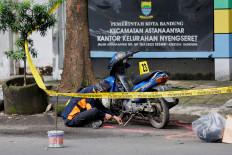
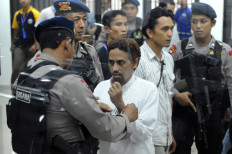
Prayers and release of birds to mark 20 years since Bali bombing
A total of 202 people, including 88 Australians and 38 Indonesians, were killed when a car bomb exploded outside the Sari Club in Bali's Kuta Beach area and from another almost simultaneous blast at the Paddy's Bar across the road.
Politics 3 years ago
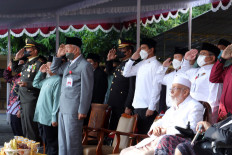
Ba'asyir insists on enforcing Islamic law in Indonesia
Abu Bakar Ba'asyir, 84, who was freed last year after serving time in a separate case for funding a militant training camp, spoke with Kyodo News last month near Surakarta, Central Java ahead of the bombings' 20th anniversary on Wednesday.


Americas 4 years ago
Canada hunts suspects in stabbing spree that killed 10, wounded 15
The stabbings across 13 crime scenes were among the deadliest mass killings in modern Canadian history and certain to reverberate throughout the country, which is unaccustomed to bouts of mass violence more commonly seen in the United States.
Society 4 years ago
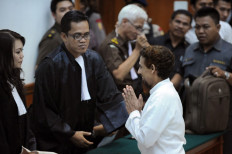
Ahead of parole, Umar Patek regrets role in 2002 Bali bombing
Umar Patek was sentenced to 20 years in prison in 2012 for his involvement in bombings that ripped through two Bali nightclubs, killing 202 people, including 88 Australians. He became eligible for parole this month after a series of remissions for good behaviour.
Society 4 years ago
'I cannot accept it': Bali bomb survivors fume after attacker's term cut
The government's latest reduction to Umar Patek's prison sentence -- revealed last week by Australian Prime Minister Anthony Albanese and confirmed by AFP -- means the bomber could be released on parole before the island marks the 20th anniversary of the attacks in October.
Editor's Picks
Popular
- Batam residents protest data centers amid water crisis
- Popular discontent is justified. Authoritarianism is not the answer
- Recentralization concerns in fiscal, education heighten
- Govt under pressure as 3 million home drive hits cracks
- Safeguarding Indonesia's AI future
- Prabowo’s universal free education plan raises feasibility questions
- Inside the education system moulding Afghanistan's next generation
- Free meals marketplace raises supply chain concerns
- Rocking the boat in a storm
- Rethinking empire, extraction and identity in the Pacific: A New History


