The Jakarta Post
Please Update your browser
Your browser is out of date, and may not be compatible with our website. A list of the most popular web browsers can be found below.
Just click on the icons to get to the download page.


Popular Reads
Top Results
No results found. Please check your search term and try again
Can't find what you're looking for?
View all search results
Popular Reads
Top Results
No results found. Please check your search term and try again
Can't find what you're looking for?
View all search resultsthe-brief
Opinion 1 month ago
PREMIUM
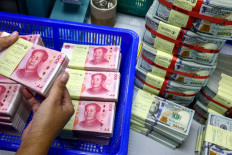
Analysis: Panda Bond success tests its geopolitical balancing act
Indonesia's latest return to China's capital market has been met with overwhelming demand as the government successfully issued two tranches of yuan-denominated Panda Bonds totaling 7 billion yuan (Rp 18.6 trillion or US$1.1 billion) to help finance the 2026 state budget. The offering was oversubscribed by 2.4 times, underscoring continued confidence in Indonesia's fiscal outlook. However, the timing of the issuance has also attracted attention, as it comes amid heightened scrutiny over Indonesia's economic relations with major global powers.

Opinion 1 month ago
PREMIUM
Analysis: Prabowo's KSSK Plus: Coordination or quiet control?
President Prabowo Subianto is once again reshaping Indonesia's economic institutions. This time, he has instructed the Financial System Stability Committee (KSSK) to involve the Danantara sovereign wealth fund in its deliberations, creating what Danantara CEO Rosan Roeslani calls "KSSK Plus." But when a state investor joins discussions where its own risks may be assessed, the question is whether the arrangement strengthens policy coordination or weakens institutional independence.
Opinion 1 month ago
PREMIUM
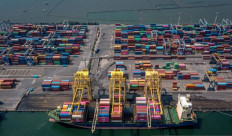
Analysis: Indonesia's DHE exemptions create a two-tier export regime
Indonesia has introduced a new exception to its natural resources export proceeds (DHE-SDA) policy, allowing exporters from the United States, China, Australia and Canada greater flexibility in managing their export proceeds. The announcement marks the first significant relaxation of a policy that, only months earlier, was expanded to require most natural resource exporters to retain 100 percent of their export earnings in Indonesia's state-owned banks (Himbara) for 12 months.
Opinion 1 month ago
PREMIUM
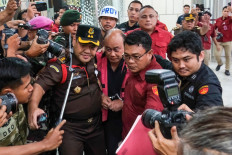
Analysis: Corruption in the kitchen: Governance crisis in BGN
The National Nutrition Agency (BGN) is reaching a critical junction, burdened by systemic corruption, opaque procurement and severe leadership instability. Tasked with executing President Prabowo Subianto’s flagship Free Nutritious Meal (MBG) program for nearly 90 million children, the agency has cycled through three different heads in less than two months. This rapid turnover is a warning sign: An institution attempting to scale overnight for a massive multibillion-dollar policy must establish airtight safeguards against graft and political patronage if it hopes to deliver on its promise.
Opinion 1 month ago
PREMIUM
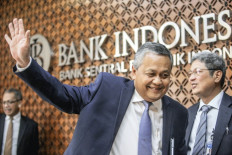
Analysis: Perry’s resignation revives questions over BI independence
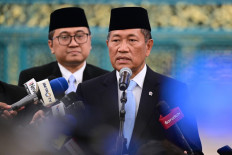
Bank Indonesia (BI) Governor Perry Warjiyo has resigned, becoming the latest senior fiscal and monetary policymaker to leave office over the past year. After more than four decades helming the central bank, his decision to step down in the middle of his second term comes at a time of heightened global economic uncertainty, mounting domestic fiscal pressures and weakening market confidence. Perry’s departure has reignited debate over the central bank’s independence amid growing state policy priorities.
Opinion 1 month ago
PREMIUM
Analysis: URI: Good intentions do not justify impulsive policymaking
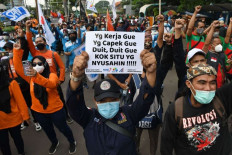
President Prabowo Subianto has once again taken what many observers describe as an impulsive policy step, raising eyebrows among academics and policy experts. This time, the controversy surrounds the establishment of the University of the Republic of Indonesia (URI), a project announced without any publicly available policy study or broad institutional consultation.
Opinion 1 month ago
PREMIUM
Analysis: JHT is social protection, not tax revenue
Retirement savings are meant to provide financial security in old age. Yet Indonesia's renewed debate over the Old-Age Savings (JHT) program has focused largely on tax rates and thresholds, overlooking a more fundamental question: Should the state tax retirement savings at all? In a country where fewer than half of workers participate in the formal social security system, the issue goes beyond taxation to retirement security itself.
Opinion 1 month ago
PREMIUM
Analysis: Seeking the missing sugar feedstock for E20 initiative
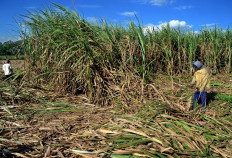
Indonesia is preparing to introduce E20, a gasoline blend containing 20 percent fuel ethanol, even as it continues to import sugar to meet domestic food demand. The initiative seeks to replicate the success of the country's biodiesel mandate by reducing reliance on imported gasoline while creating new demand for domestic agricultural commodities.


Opinion 1 month ago
PREMIUM
Analysis: Russian oil imports put Indonesia in sanctions crosshairs
Indonesia's import of Russian crude oil, marked by the arrival of Eastern Siberia–Pacific Ocean (ESPO) crude at Lawe-Lawe Port in East Kalimantan on June 28, signals a significant shift in the country's energy sourcing strategy. But the move also raises questions over whether state-owned oil and gas company Pertamina could be perceived as circumventing Western sanctions on Russia, a risk the government appears largely unfazed by.
Editor's Picks
Popular
- Mass poisonings cast doubt on free meals reforms
- Much ado about asset forfeiture
- New data rules could unlock cross-border data flows
- Children are no longer the priority, were they ever?
- Indonesia, Hong Kong to host new 14-team FIFA ASEAN Cup
- Assessing the merit of the strategic commodities bill
- Free meals face seven-day ultimatum, possible lawsuit
- Prabowo’s approval slide fuels warm-up to 2029 elections
- Volcanic eruptions take toll on economy
- Osama the gamer: A list of Bin Laden’s video games from his hard drive


