The Jakarta Post
Please Update your browser
Your browser is out of date, and may not be compatible with our website. A list of the most popular web browsers can be found below.
Just click on the icons to get to the download page.


Popular Reads
Top Results
No results found. Please check your search term and try again
Can't find what you're looking for?
View all search results
Popular Reads
Top Results
No results found. Please check your search term and try again
Can't find what you're looking for?
View all search resultsthe-brief
Opinion 3 weeks ago
PREMIUM
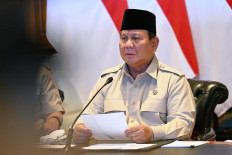
Analysis: Shooting from the hip: Prabowo's unscripted presidency
President Prabowo Subianto's tenure has been marked by a recurring pattern of rhetorical detours. His supporters see his direct, unscripted style as refreshingly authentic; critics see a habit that regularly produces high-profile verbal slips with real domestic and international consequences.
Opinion 3 weeks ago
PREMIUM
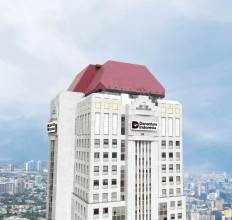
Analysis: Danantara’s hedge fund gamble
Danantara’s plan to appoint hedge fund managers marks a potentially significant shift toward a more complex and higher-risk investment strategy. The move comes even as the state asset fund has yet to publish financial reports substantiating President Prabowo Subianto’s claims of stellar performance. It raises a fundamental question: Is Danantara’s investment strategy aligned with its long-term national mandate, or is the fund experimenting with increasingly aggressive approaches to managing state assets?
Opinion 3 weeks ago
PREMIUM
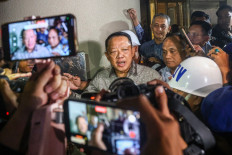
Analysis: Ex-top prosecutor's exit strategy feels like political theatre
The legal saga surrounding former assistant attorney general for special crimes (Jampidsus) Febrie Adriansyah has entered yet another chapter. What began as one of Indonesia's highest-profile money laundering investigations has increasingly evolved into a politically charged legal battle, with the former senior prosecutor now appearing to pursue an exit strategy through the courts.
Opinion 3 weeks ago
PREMIUM
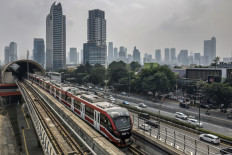
Analysis: RI’s 5.29 percent growth tests sustainability of fiscal expansion
Statistics Indonesia (BPS) announced that Indonesia’s economy expanded 5.29 percent year-on-year (yoy) in the second quarter of 2026, marking notable growth above the 5 percent threshold amid continued global uncertainty and geopolitical tensions. The figure also improved from 5.12 percent in the same quarter last year, suggesting that President Prabowo Subianto’s increasingly expansionary fiscal policies have helped sustain domestic economic activity even as global trade growth weakens. However, the stronger growth also comes as the government ramps up spending on its flagship programs, raising questions about the fiscal cost of sustaining this momentum.
Opinion 4 weeks ago
PREMIUM
Analysis: Foreign debt climbs to Rp 8 quadrillion amid weak loan usage
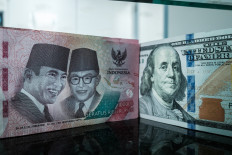
Indonesia’s external debt has continued to rise and reached a new high of Rp 8 quadrillion ($444 billion) in May 2026. The increase was primarily driven by government and central bank debt, which accounted for 55.9 percent of total external debt, or US$248.5 billion, after growing 3.89 percent year-on-year (yoy).

Opinion 4 weeks ago
PREMIUM
Analysis: Whoosh's mounting financial burden is now govt’s problem
The government's decision to take over the debt restructuring of the Whoosh Jakarta-Bandung high-speed railway marks the end of one of Indonesia's largest business-to-business (B2B) infrastructure experiments. A decade after promising the project would not rely on the state budget, the government has been forced to step in. The rescue raises a broader question: If the existing line has yet to prove financially sustainable, why extend it to Surabaya?
Opinion 4 weeks ago
PREMIUM
Analysis: Trump's forced labor tariffs: Flawed but revealing
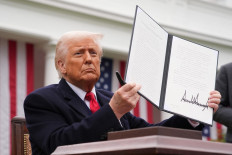
United States President Donald Trump has revived his tariff agenda under a new legal justification. After the Supreme Court struck down his "Liberation Day" tariffs in February, his administration turned to Section 301 of the Trade Act of 1974, accusing trading partners of failing to prevent forced labor in their supply chains. Indonesia is among the affected countries, which has raised questions about how effectively it is tackling forced labor at home.
Opinion 1 month ago
PREMIUM
Analysis: Court hands education budget a win over school free meals
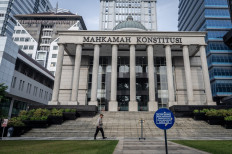
The Constitutional Court just handed down a much-needed reality check on the country's public finances. By striking the free nutritious meal program out of the national education budget, the court drew a clear line in the sand: money set aside for education needs to go toward education. Now, the government has to figure out a transparent, long-term way to fund its flagship free meals program without taking a bite out of other vital national priorities.
Opinion 1 month ago
PREMIUM
Analysis: Fraud exposes vulnerabilities in Sumatra's fuel distribution
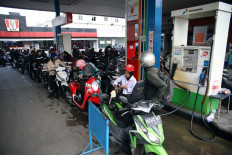
The arrest of 142 suspects by South Sumatra Police has brought renewed attention to what authorities describe as one of the largest fuel embezzlement cases in the country’s recent history. Between January and July 2026, police uncovered 96 cases involving the diversion and illegal trade of subsidized fuel, with an estimated 1.4 million liters of fuel allegedly siphoned from the official distribution system.
Opinion 1 month ago
PREMIUM
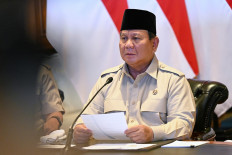
Analysis: Prabowo’s approval rating 51 percent and falling
For most of his first two years in office, President Prabowo Subianto enjoyed a honeymoon that simply refused to end. Survey after survey showed him with approval numbers most world leaders can only dream of. That period has now ended. It was a long and genuinely good run, but the latest data from Saiful Mujani Research and Consulting (SMRC) confirm that political reality has caught up with him.
Editor's Picks
Popular
- Mass poisonings cast doubt on free meals reforms
- Much ado about asset forfeiture
- New data rules could unlock cross-border data flows
- Children are no longer the priority, were they ever?
- Indonesia, Hong Kong to host new 14-team FIFA ASEAN Cup
- Assessing the merit of the strategic commodities bill
- Free meals face seven-day ultimatum, possible lawsuit
- Prabowo’s approval slide fuels warm-up to 2029 elections
- Volcanic eruptions take toll on economy
- Osama the gamer: A list of Bin Laden’s video games from his hard drive


