The Jakarta Post
Please Update your browser
Your browser is out of date, and may not be compatible with our website. A list of the most popular web browsers can be found below.
Just click on the icons to get to the download page.


Popular Reads
Top Results
No results found. Please check your search term and try again
Can't find what you're looking for?
View all search results
Popular Reads
Top Results
No results found. Please check your search term and try again
Can't find what you're looking for?
View all search resultsworkers
Opinion 1 year ago
PREMIUM
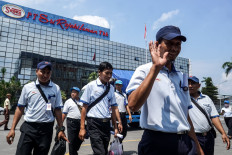
Analysis: Textile giant Sritex shuts down, leaving over 10,000 workers jobless
PT Sri Rejeki Isman (Sritex), one of Southeast Asia’s largest integrated textile manufacturers, officially ceased operations on Mar. 1, 2025, following its bankruptcy declaration. The shutdown led to the layoff of 10,965 workers between January and February 2025. In response, President Prabowo has instructed several ministers to devise solutions to help re-employ the affected workers, including leasing factory machinery, attracting investors to acquire the company and facilitating their absorption into other companies.


Asia & Pacific 1 year ago
BHP and Rio pressured women to sign NDAs after sexual harassment complaints, lawyer says
Brisbane-based law firm JGA Saddler filed a class action against each mining giant this week, alleging widespread and systemic sexual harassment and discrimination at Australian mine sites.
Regulations 1 year ago
PREMIUM
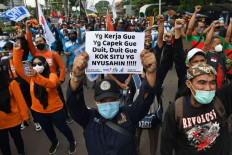
Major union calls strikes over govt defiance of jobs law ruling
The KSPI has released a statement announcing nationwide strikes on Nov. 19 and Dec. 24 over the government's failure to comply with the Constitutional Court's 2021 ruling to amend the highly contentious jobs law, as well as its failure to meet workers' minimum wage demands conveyed last month.
Regulations 1 year ago
PREMIUM
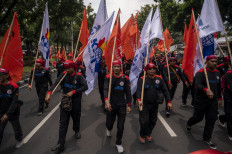
Unions begin nationwide ‘wave’ of protests for wage hikes
The Confederation of Indonesian Trade Unions (KSPI) has kicked off what it says will be a nationwide wave of mass protests ahead of November, the month in which the next year’s minimum wage is typically determined.


Companies 2 years ago
PREMIUM
Informality in Indonesia and middle-income trap
Before the COVID-19 pandemic, Indonesia progressed positively by driving down workers in the informal sector from 65 percent in 2007 to 56 percent in 2019. The tide has turned because of the pandemic, and as a result, the number of informal workers jumped to almost 80 million workers, or 59 percent of total employment in 2023.
Editor's Picks
Popular
- Malaysia must not breathe Indonesia’s governance failure
- Mass poisonings cast doubt on free meals reforms
- New data rules could unlock cross-border data flows
- Volcanic eruptions take toll on economy
- Search intensifies for journalists, crew as Anak Krakatau ashfall eases
- Mitigation budget under scrutiny as Indonesia grapples with disasters
- Indonesian wildfire emissions surge to world's highest
- Student suffers memory loss, seizures after free meal food poisoning
- Anak Krakatau doesn't need an earthquake to kill
- Search resumes for missing journalists on Anak Krakatau mission


