The Jakarta Post
Please Update your browser
Your browser is out of date, and may not be compatible with our website. A list of the most popular web browsers can be found below.
Just click on the icons to get to the download page.


Popular Reads
Top Results
No results found. Please check your search term and try again
Can't find what you're looking for?
View all search results
Popular Reads
Top Results
No results found. Please check your search term and try again
Can't find what you're looking for?
View all search resultsIsraeli strikes pummel Lebanon, killing 250 in deadliest day of war
The strikes raised questions about regional truce efforts, with Iranian President Masoud Pezeshkian saying a ceasefire inLebanon was an essential condition of his country's agreement with the US.
Change text size
Gift Premium Articles
to Anyone
Share the best of The Jakarta Post with friends, family, or colleagues. As a subscriber, you can gift 3 to 5 articles each month that anyone can read—no subscription needed!
 Set as preferred source
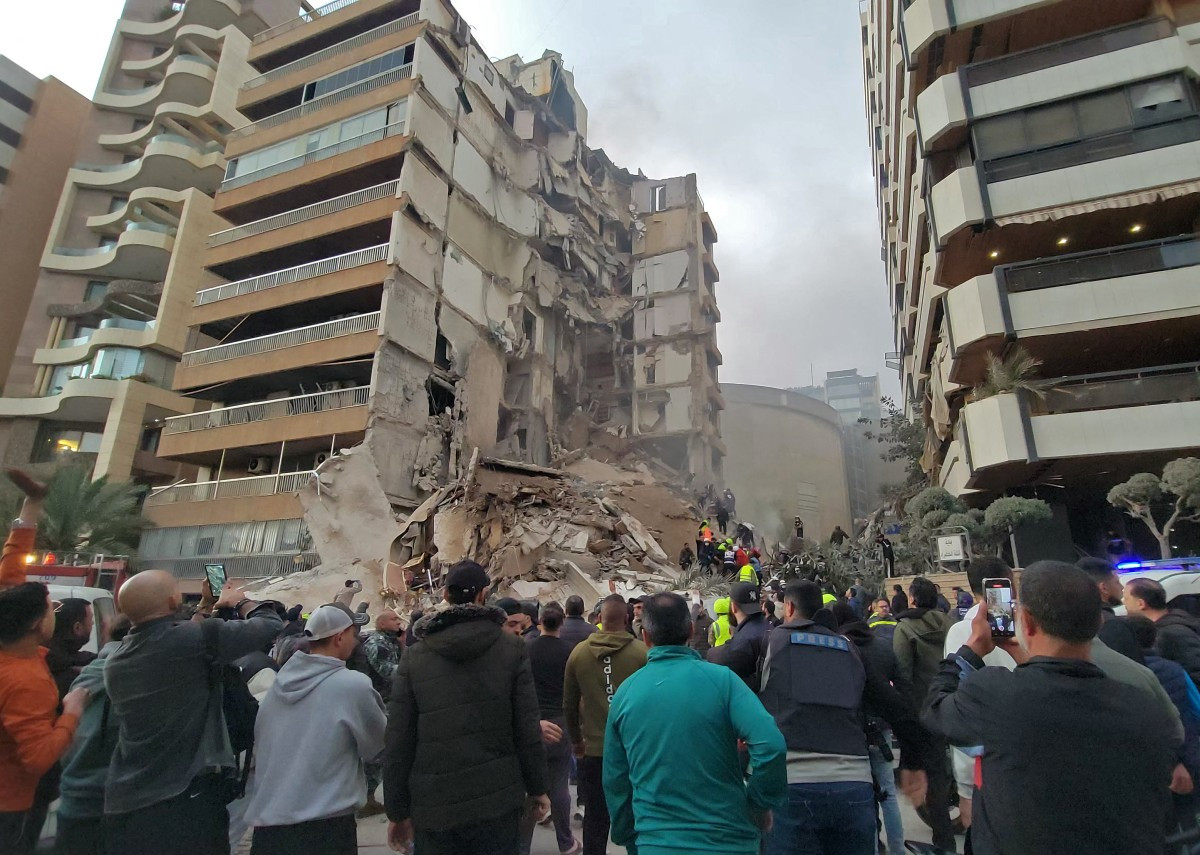 First responders and residents gather at the site of an Israeli airstrike in Beirut's Tallet al-Khayyat neighbourhood, on April 8, 2026. (AFP/Fadel Itani)
I
srael carried out its heaviest strikes on Lebanon since the conflict with Hezbollah broke out last month, killing more than 250 people on Wednesday, as the Iran-aligned group resumed rocket attacks on northern Israel after a brief pause under the two-week US-Iran ceasefire.
The strikes raised questions about regional truce efforts, with Iranian President Masoud Pezeshkian saying a ceasefire inLebanon was an essential condition of his country's agreement with the US.
On Wednesday afternoon, at least five consecutive strikes rocked the capital Beirut, sending columns of smoke into the sky as Israel's military said it had launched the largest coordinated strike of the war. More than 100 Hezbollah command centres and military sites were targeted in Beirut, the Bekaa Valley and southern Lebanon within ten minutes, it said.
A total of 254 people were killed and over 1,100 wounded across Lebanon, the country's civil defence service said. The highest toll was in Beirut, where 91 people were killed. The health ministry gave a toll of 182 dead across the country and said it was not a final figure.
Hezbollah said early on Thursday it fired rockets at the small kibbutz of Manara, citing what it described as Israel's ceasefire violations.
"This response will continue until the Israeli-American aggression against our country and our people ceases," the group said in a statement.
It was the deadliest day of the war that erupted on March 2, when Hezbollah fired into Israel in support of Tehran after the US-Israeli attack on Iran two days earlier. Israel launched a fully fledged air and ground campaign in response.
The Red Cross said it was "outraged by the devastating death and destruction" in densely populated areas across Lebanon Wednesday as Israel launched a massive wave of attacks.
Heavy explosive weapons with wide-area effects struck bustling neighbourhoods, including the capital Beirut, without effective advance warnings, the International Committee of the Red Cross said in a statement.
"People across Lebanon were holding their breath for a ceasefire agreement, but a wave of deadly strikes plunged the country into panic and chaos," said Agnes Dhur, the ICRC's head of delegation in Lebanon.
"Many who had begun thinking of the moment when they might return to their homes have been rushing to streets and hospitals, searching for missing loved ones or seeking a safety that feels increasingly out of reach."