TheJakartaPost
Please Update your browser
Your browser is out of date, and may not be compatible with our website. A list of the most popular web browsers can be found below.
Just click on the icons to get to the download page.


Popular Reads
Top Results
No results found. Please check your search term and try again
Can't find what you're looking for?
View all search results
Popular Reads
Top Results
No results found. Please check your search term and try again
Can't find what you're looking for?
View all search resultsTrump says he's dissatisfied with Iranian proposal as rift with allies deepens
Though the US and Iran have suspended hostilities since an April 8 ceasefire, the two countries remain at odds over a range of issues, including Iran's nuclear ambitions and control over the Strait of Hormuz.
Change text size
Gift Premium Articles
to Anyone
Share the best of The Jakarta Post with friends, family, or colleagues. As a subscriber, you can gift 3 to 5 articles each month that anyone can read—no subscription needed!
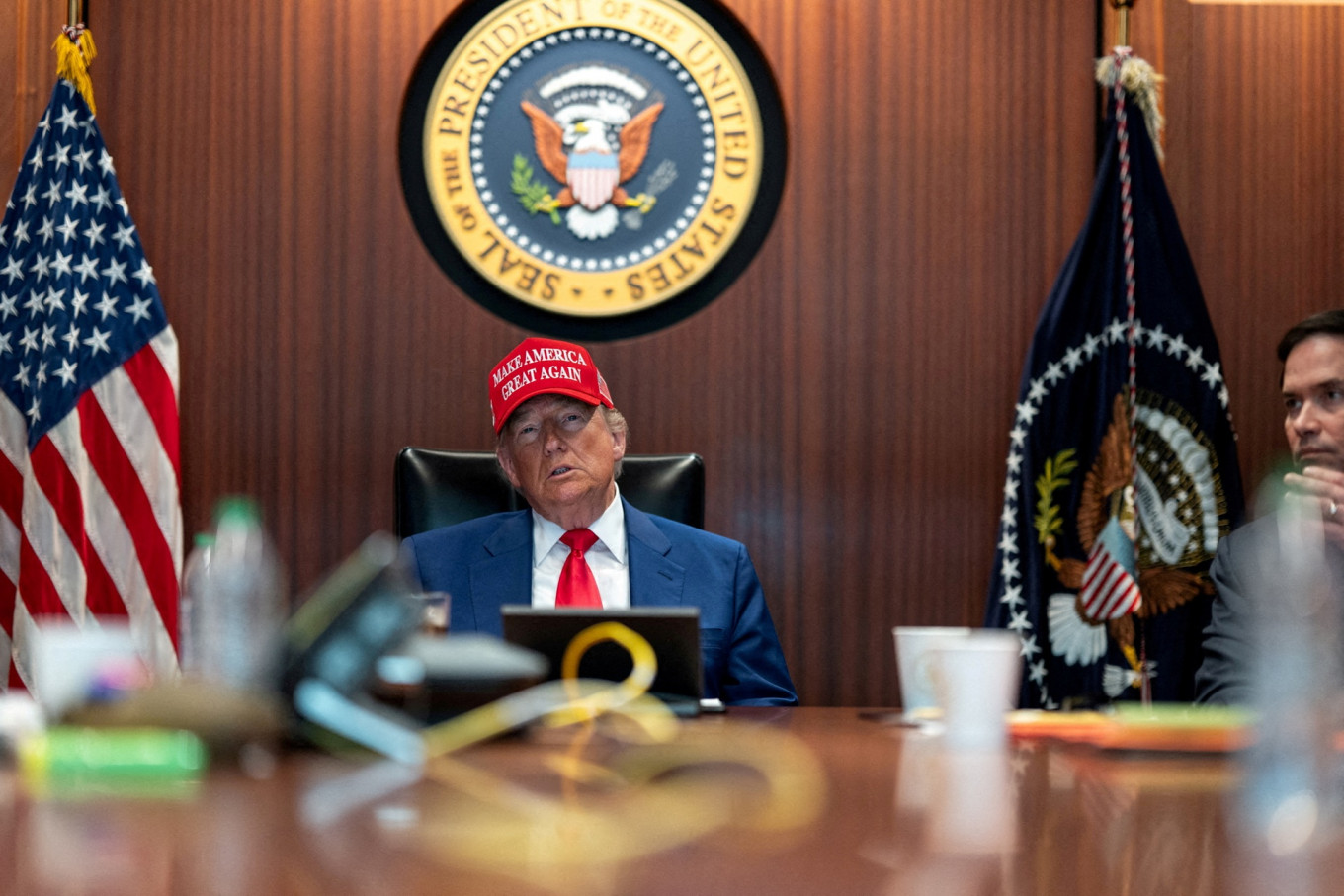 United States President Donald Trump holds a meeting in the Situation Room at the White House in Washington, D.C., the US on June 21, 2025. (Reuters/Handout/The White House)
U
nited States President Donald Trump said on Friday he was not satisfied with the latest Iranian proposal for talks on the Iran war, while Iran's foreign minister said Tehran was ready for diplomacy if the US changes its approach.
Trump's comments indicated the deadlock over the two-month-old war is likely to persist, even as he looks to end a conflict that remains deeply unpopular among Americans.
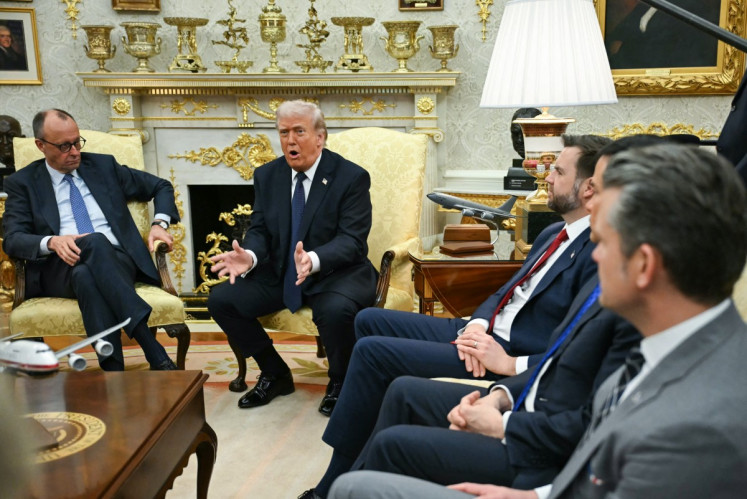
Meanwhile, US relations with its traditional allies were further strained over Iran on Friday, as the US announced it was withdrawing 5,000 troops from Germany. Trump had threatened a drawdown over differences with German Chancellor Friedrich Merz, who said on Monday the Iranians were humiliating the United States and that the Americans lacked an exit strategy.
A senior Pentagon official, speaking on condition of anonymity, said recent German comments were "inappropriate and unhelpful."
"The president is rightly reacting to these counterproductive remarks," the official said.
Though the US and Iran have suspended hostilities since an April 8 ceasefire, the two countries remain at odds over a range of issues, including Iran's nuclear ambitions and control over the Strait of Hormuz, and the two sides have yet to agree to a second meeting following a brief summit of senior officials in Islamabad last month.
It was unclear what the Iranians had submitted in their fresh proposal. Iran's Foreign Ministry has cautioned against expecting quick results.
"They want to make a deal, but [...] I'm not satisfied with it," Trump told reporters at the White House, adding that the Iranian leadership was "very disjointed" and split into two or three groups.
"They're asking for things that I can't agree to," he said, adding that negotiations by phone were continuing.
Later on Friday, during a speech in Florida, Trump said the US would not end its confrontation with Iran early "and then have the problem arise in three more years."
Trump has said Iran would not be allowed to have a nuclear weapon. He is also under pressure to break Iran's hold on the strait, which has choked off 20 percent of the world's oil and gas supplies.
Global oil prices eased on Friday following news of the Iranian proposal, coming off Thursday's four-year high. Benchmark Brent crude was down 1 percent to around $109.
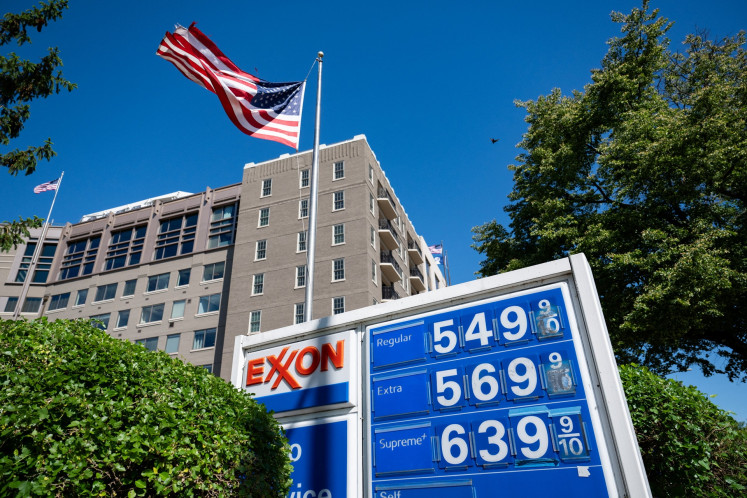
Iran's Foreign Minister Abbas Araqchi said his country was ready to pursue diplomacy if the United States changes what he called its "excessive approach, threatening rhetoric and provocative actions."
However, Araqchi added in a post on his Telegram channel that "Iran's armed forces remained ready to defend the country against any threat."
Iran has activated air defenses and plans a wide response if attacked, having assessed that there will be a short, intensive US strike, possibly followed by an Israeli attack, two senior Iranian sources told Reuters on condition of anonymity.
New strikes plans
Separately, Trump told leaders in Congress that he did not need their permission to extend the war beyond a Friday deadline set by law because the ceasefire had "terminated" hostilities.
"Do we want to go and just blast the hell out of them and finish them forever? Or do we want to try and make a deal?" Trump said when asked about his options.
Trump added that "on a human basis," he did not prefer the military course of action.
The war, which began with US and Israeli strikes on Iran on Feb. 28, has led to the deaths of thousands of people. The closure of the strait has increased concerns about the possibility of a wider global economic downturn.
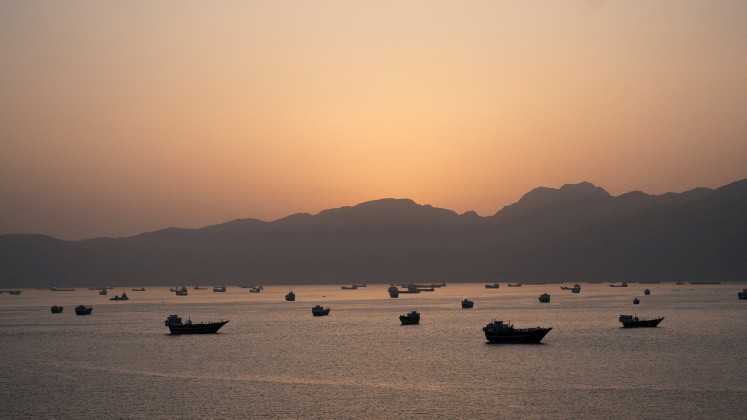
The US Navy is blockading exports of Iranian crude oil. As of Friday afternoon, 45 commercial vessels had been stopped, according to the US military.
The US Treasury said that any shipper paying tolls to Iran for passage, including charitable donations to organizations such as the Iranian Red Crescent Society, would be at risk of punitive sanctions.
Buy domestic
The war has aggravated Iran's economic plight, but it looks able to survive a standoff for now, despite the US blockade that has curtailed its energy exports.
In a written message, Iran's Supreme Leader Mojtaba Khamenei called on businesses damaged in the war to avoid layoffs as much as possible, Iranian news agencies reported.
China's United Nations ambassador, Fu Cong, said it was an urgent necessity to maintain the ceasefire and that the strait needs to be reopened as quickly as possible. He said he was sure the strait would be high on the agenda in talks between China's leader Xi Jinping and Trump if it is still closed when Trump travels to Beijing this month.