The Jakarta Post
Please Update your browser
Your browser is out of date, and may not be compatible with our website. A list of the most popular web browsers can be found below.
Just click on the icons to get to the download page.


Popular Reads
Top Results
No results found. Please check your search term and try again
Can't find what you're looking for?
View all search results
Popular Reads
Top Results
No results found. Please check your search term and try again
Can't find what you're looking for?
View all search resultsWhat is destroying our rainforests? Greed, palm oil
The establishment of oil-palm plantations in Kalimantan and Sumatra poses the greatest threat to orangutans today
Change text size
Gift Premium Articles
to Anyone
Share the best of The Jakarta Post with friends, family, or colleagues. As a subscriber, you can gift 3 to 5 articles each month that anyone can read—no subscription needed!
 Set as preferred source

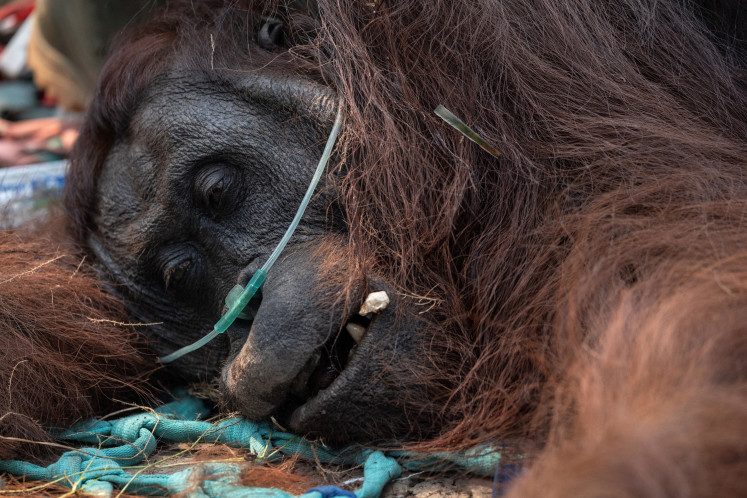
The establishment of oil-palm plantations in Kalimantan and Sumatra poses the greatest threat to orangutans today. In fact, the clearing of forest and the establishment of oil-palm plantations has a negative impact not only on orangutan populations but also on climate, the water cycle, carbon emissions and livelihoods in local communities.
Although many people are aware of these facts, oppose the development of biofuels from palm oil and oppose the creation of these plantations, the destruction of the rainforest continues.
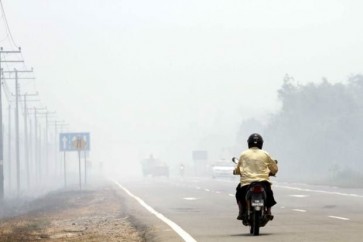
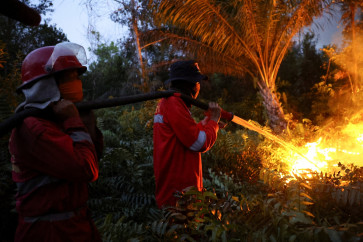
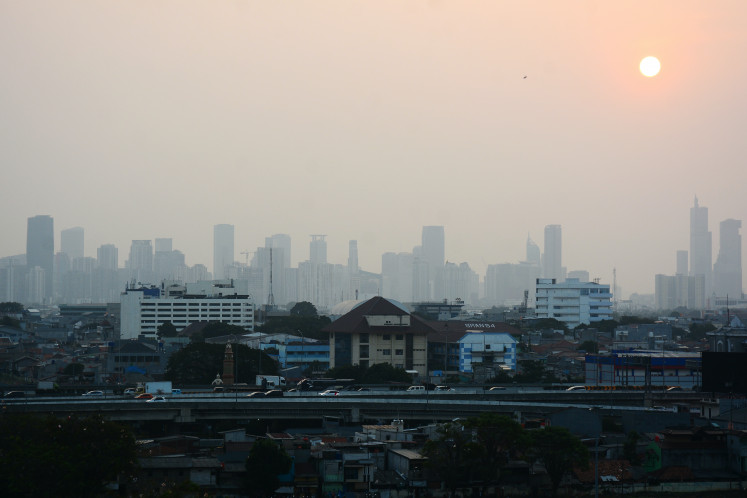
The effects of land-clearing are simple and obvious once you have seen it with your own eyes. It is even easier when you witness the rescue of orangutans or experience breathing difficulties and stinging eyes from the smoke of burning forest and peat.
When we consume destructive palm oil in crispy chips or delicious chocolate, or wash our hands with sweetly fragranced soap, we are very rarely conscious of the adverse effects our activities incur. Because we don't feel the negative impacts firsthand we can't imagine the way our behavior influences nature and the lives of people on a faraway island. Meanwhile the destructive oil business continues and the market keeps growing.
Unilever is one of the biggest palm oil consumers worldwide using 1.3 metric tons every year. Its heart-shaped ice cream brand under many names and numerous other brands -- Dove, Sunsilk, Omo, Knorr, Blue Band, Becel, Best Foods, Ben & Jerry's and Findus -- are only a few of the many Unilever companies.
Avoiding products which may contain palm oil is nearly impossible, but as consumers we can all try to do what we can. Many consumers have made an effort to avoid products containing palm oil, and Unilever has been forced to respond, promising improvement by way of ensuring the palm oil they use is "sustainably" produced.
But where should all this sustainable palm oil come from? As worldwide demand for palm oil is so high, it can't be met with only the sustainably grown version simply because not enough is available.
With limited supplies of certified sustainable palm oil only now entering the market, Unilever has had to buy unsustainable palm oil from many companies, one of which is Wilmar Group, one of the biggest palm-oil trading companies in the world, handling at least a quarter of all global palm-oil output. Besides supplying Unilever with palm oil, Nestl* and Cargill are also among Wilmar's customers.
Not only are we eating palm oil, washing our clothes and ourselves with it, driving cars and producing electricity fueled by it, but our savings are often invested in banks connected with this biofuel that is helping destroy the planet. Among Wilmar's financiers are Rabobank, ABM Amro, Standard Chartered, Citibank, IFC of the World Bank, OCBC, Fortis and ING.
Just as Unilever has many brands which we might assume are independent local companies, Wilmar International also owns plantations under different company names and buys palm oil from family-related companies as well, such as from the Indonesian Ganda Group. Wilmar's plantations are situated in Kalimantan, Malaysia, Sumatra and Uganda. Their plantations cover nearly 600,000 hectares, and are proposed to grow to up to 1 million hectares, an area as large as South Korea. Two-thirds of these lands still must be cleared of forest and planted with palms.
Forest where orangutans were known to live have been cleared illegally. Plantations were established without official permission or environmental impact assessments. After immense pressure by NGOs, Wilmar International admitted in February 2008 it had violated its own plantation development policies in Indonesia.
Since Wilmar is planning to set up plantations in Central Kalimantan in Borneo, large-scale forest destruction and burning awaits that region. With the merging of PPB Palm Oil and Wilmar International, Wilmar now has 16 subsidiaries in Central Kalimantan. Most of the approximately 250,000 hectares have still not been developed. Another 250,000 hectares in Central Kalimantan are allocated for other companies' plantations; concessions covering one million hectares in all have already been handed out.
Existing forest should be protected from more onslaughts and oil-palm entrepreneurs should be forbidden to clear further. This and other steps are laid out in the Indonesian "Oranguatan Conservation Strategy and Action Plan", which should be enforced and implemented.
"To save orangutans, we must save the forests," the Indonesian President said in December 2007.
That is quite true, but implementation looks quite different. Companies are still cutting down forest and setting fire to peatlands as the cheapest and quickest method to clear new ground for yet more oil-palm plantations.
We see a nightmare relentlessly approaching. The forests will burn and orangutans will have to flee or die of hunger. Borneo is a hotspot of endemic plants and animals, hosting creatures most people haven't seen in their lives and natural medicines (which the resident Dayak people know well and use), but Borneo is also a hotspot for destruction, suffering and death.
Let your voice be heard. We as consumers are driving the market. Because of our consumption, companies make a profit from rainforest destruction.
Be concerned about your consumer behavior and show your concern by writing to companies. Help us save what is left!
The writer is International Communications Coordinator for Borneo Orangutan Survival International). She can be reached at rita@bos-international.org