TheJakartaPost
Please Update your browser
Your browser is out of date, and may not be compatible with our website. A list of the most popular web browsers can be found below.
Just click on the icons to get to the download page.


Popular Reads
Top Results
No results found. Please check your search term and try again
Can't find what you're looking for?
View all search results
Popular Reads
Top Results
No results found. Please check your search term and try again
Can't find what you're looking for?
View all search resultsRamadan: Refining spirituality
We know that the human race has created some serious problems
Change text size
Gift Premium Articles
to Anyone
Share the best of The Jakarta Post with friends, family, or colleagues. As a subscriber, you can gift 3 to 5 articles each month that anyone can read—no subscription needed!

W
e know that the human race has created some serious problems. Instead of creating technology that makes their life simpler, the human mind has instead impoverished the wisdom of our existence on earth.
Globally speaking, we know that the sky above us is no longer bright because of air pollution made in this century. We know that millions of people have died because of war, also in this century. We also know that hundreds of species have been wiped and that we are disrupting the balanced ecosystem because of deforestation or our lust for the rarest of the rare.
Looking at things locally, Indonesia has been facing serious problems: corruption is the root of the suffering of millions of people, while terrorism oppresses and spreads fear and instability.
What is wrong with humanity? The above mentioned cases show that the human mind, collectively, has lost its spiritual side. In the age when materialism is impossible for us to deny, humans have forgotten the wisdom of their own existence. I am not saying that we all have to go back to religious conservatism, but I am suggesting that we have to reflect on ourselves.
The upcoming month of Ramadan offers a good chance for us to collectively refine our spirituality. This is the month where Muslims all over the world observe daily fasting — the absence of food and drink from sunrise to sunset. It is also the holy month when the prophet received the first verses of the Koran. But, pertaining to humanity’s problems, what makes it so good?
As a spiritual practice, fasting has been employed by many religious groups for millennia. Ancient Egyptians, Greeks, Babylonians, and Mongolians believed that fasting was a healthy ritual that detoxified the body and purified the mind. In the modern era, three of the world’s major religions advise fasting at certain times: Jews fast during Yom Kippur, Christians during Lent and Muslims during the festival of Ramadan.
The common belief is that fasting is a way to communicate with the Divine Being through the purification of the body and mind. The other major religions, such as Buddhism and Hinduism, also highly recommend this practice.
In addition, the Natives Americans of Mexico and the Incas of Peru also observed fasting as a form of penance. Thus, throughout history, fasting has been observed as a way to purify the mind with a spiritual or religious intention.
These historical records imply an abstract idea, that fasting is a form of purifying the mind. This is difficult to discuss scientifically. In science, the mind itself is an abstract idea that is yet to be fully understood and the word “purification” has so many ambiguities. But I am suggesting that the purification of the mind here means reflection on ourselves.
During Ramadan, the 12 hour absence of food and drink causes the body’s digestive system to rest. Of course this is good since the metabolism will be efficient, including in the mind. I have not found any scientific proof that explains whether the efficiency of the metabolism affects our ability to reflect and contemplate, but our efforts to resist temptation when fasting is enough to refine our mind.
Concentrating – preventing yourself from eating, drinking, smoking, etc – trains your mind to manage your primitive behaviour. Fasting in Ramadan sets aside the animal side of us (eating, drinking, sexual intercourse) and gives us wider space for our mind to perform its uniquely human feature: reflective thinking; something no other species can do.
During Ramadan we are supposed to reflect on our humanity. Eating less, resting our digestive system and concentrating on spiritual practices creates good conditions for our mind think reflectively.
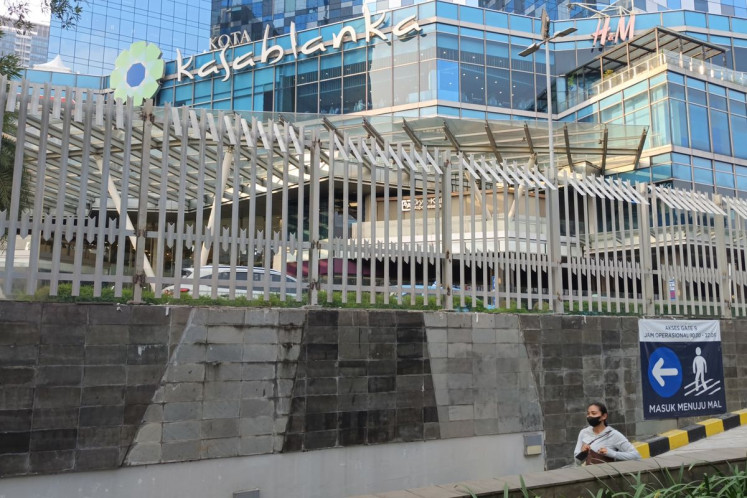
But now, in Indonesia, Ramadan has become the month of consumerism and greed. Shopping malls offer big sales, TV channels broadcast their so-called “Islamic soap operas” (sinetron Islami), mothers cook larger amounts of food. Ramadan has turned into the month of celebration.
Indeed, we have to get back, reduce our greediness and refine our spirituality – just like prophet Muhammad did.
The author is a freelance science writer