TheJakartaPost
Please Update your browser
Your browser is out of date, and may not be compatible with our website. A list of the most popular web browsers can be found below.
Just click on the icons to get to the download page.


Popular Reads
Top Results
No results found. Please check your search term and try again
Can't find what you're looking for?
View all search results
Popular Reads
Top Results
No results found. Please check your search term and try again
Can't find what you're looking for?
View all search resultsMuseums an appeal to holiday makers
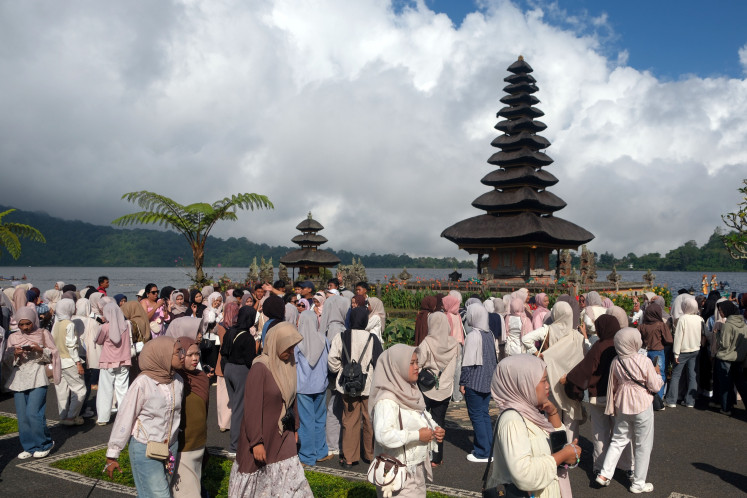
Holiday seasons have enlivened the once gloomy and unattractive Balinese museums with thousands of people enjoyed their actually extraordinary art collections
Change text size
Gift Premium Articles
to Anyone
Share the best of The Jakarta Post with friends, family, or colleagues. As a subscriber, you can gift 3 to 5 articles each month that anyone can read—no subscription needed!

H
oliday seasons have enlivened the once gloomy and unattractive Balinese museums with thousands of people enjoyed their actually extraordinary art collections.
Komang Pasek Guna Wirawan from Bajra Sandi (the Balinese people’s struggle) museum in Renon civic center in Denpasar said he was buoyant to see the sharp increase in the number of visitors to museum.
“We have been campaigning from school-to-school about our museum’s program, which is in line with the government’s Visit Museum Year campaign. We encourage teachers, parents to bring their students and children to the museum,” Wirawan said.
Bajra Sandi museum displays diorama of the lives of the Balinese people starting from the pre-historic to modern times. Located in the leavy area of Renon, the museum should become one of Denpasar’s holiday attractions.
However, the presence of the museum is almost unnoticed as people come there only to play soccer or to spend Sunday mornings in the spacious and greeny Puputan Renon park that surrounds the museum.
During the first quarter of 2010, around 5,900 visited the museum. During holidays, which started in the middle of June, the number of visitors increased to 10,000 persons coming from Bali and other places across Indonesia.
Ida Bagus Padma from Archaelogy Museum in Tampak Siring, Gianyar, also shared the feeling. He was happy that more and more people visited the museum.
“Many of them are students who have to make school reports. But, some other visitors including foreign tourists are interested in coming here,” Padma said.
The archaelogy museum is home to priceless artifacts, sarcophagus, and valuable collections from the Stone to Bronze Age periods, very important clues to the existence of the Balinese civilization.
Nyoman Gunarsa, chairman of Bali Museum Association, admitted that the number of visitors to museums in Bali is still far from the target.
“We need to take real action to encourage people to come to the museums such as compulsory museum-visit programs applied in every school in Bali,” Gunarsa said.
He also suggested that travel agencies include museum-visit as parts of their holiday itineraries.
Gunarsa said that the majority of museums in Bali have faced financial constraints. “Travel guides usually get tips from hotels, restaurants, cafes or shops, but we [museum managements] are still unable to provide them with such tips.” Gunarsa added that many travel agencies half-heartedly welcome the government’s Visit Museum Year programs.
I Ngurah Wijaya, chairman of Bali Tourism Board, said that all the board’s stakeholders including travel agencies, hotels and restaurants associations have been very supportive of the Visit Museum program.
The museums’ managements must also improve their physical facilities as well human resources’ skills.
Attractive and inviting display rooms, cleanliness and interesting museum programs may boost the number of visitors to the museum, Wijaya said.
“People want to see everything —landscape, culture and arts and museums’ collections alike—when they come to Bali,” Wijaya said.