The Jakarta Post
Please Update your browser
Your browser is out of date, and may not be compatible with our website. A list of the most popular web browsers can be found below.
Just click on the icons to get to the download page.


Popular Reads
Top Results
No results found. Please check your search term and try again
Can't find what you're looking for?
View all search results
Popular Reads
Top Results
No results found. Please check your search term and try again
Can't find what you're looking for?
View all search resultsOn menu for world leaders - trash, and a message
Russian Foreign Minister Sergey Lavrov speaks to the United Nations Sustainable Development Summit at the United Nations General Assembly on Sunday
Change text size
Gift Premium Articles
to Anyone
Share the best of The Jakarta Post with friends, family, or colleagues. As a subscriber, you can gift 3 to 5 articles each month that anyone can read—no subscription needed!

R
span class="caption">Russian Foreign Minister Sergey Lavrov speaks to the United Nations Sustainable Development Summit at the United Nations General Assembly on Sunday. (AFP/Timothy A. Clary)
World leaders accustomed to fine dining had a surprise on their plates Sunday at the United Nations -- trash.
Chefs cooked up a lunch made entirely of food that would have ended up in garbage bins, hoping to highlight the extraordinary waste in modern diets and its role in worsening climate change.

On the menu for the lunch at the UN headquarters was a vegetable burger made of pulp left over from juicing, which typically wastes most of the produce.
The burger came with fries created from starchy corn that would typically go to animal feed -- which along with biofuels is the end product of the overwhelming majority of the 90 million acres (36 million hectares) of corn grown in the United States.
"It's the prototypical American meal but turned on its head. Instead of the beef, we're going to eat the corn that feeds the beef," said Dan Barber, a prominent New York chef who co-owns the Blue Hill restaurant.
"The challenge is to create something truly delicious out of what we would otherwise throw away," he told AFP.
Barber crafted the menu with Sam Kass, the former White House chef who drove the anti-obesity "Let's Move" campaign of First Lady Michelle Obama.
Kass thought of the waste-lunch concept as he learned about year-end UN climate negotiations in Paris, which aim to reach a far-reaching global agreement to tackle the planet's worsening climate change.
"Everybody, unanimously, described it as the most important negotiation of our lifetime," he said.
But food waste "was not something that was being discussed at that point, except in small environmental circles," he said.
- Vast contributor to climate change -
Major world leaders took part in Sunday's lunch that was led by French President Francois Hollande and Peruvian President Ollanta Humala with an aim of building momentum for the Paris talks.
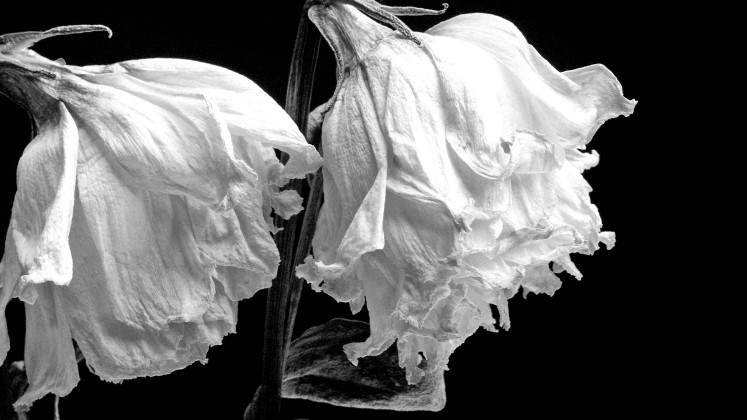
Secretary-General Ban Ki-moon, speaking to reporters afterward, said the lunch demonstrated how food waste was "an often overlooked aspect of climate change."
"That is shameful when so many people suffer from hunger," Ban said.
According to UN figures, 28 percent of agricultural lands around the world go to produce food that is lost or wasted.
The loss each year is the equivalent of 3.3 billion tons of carbon responsible for climate change -- which would make food waste, if it were a nation, the biggest emitter after China and the United States.
"It's just unthinkable, the inefficiency in our system, particularly when you look at something of this magnitude," Kass said.
- 'Delicious' social change -
Barber earlier this year ran a pop-up restaurant in New York sourced from food scraps and is the author of the book "The Third Plate" that has championed a global approach to his farm-to-table philosophy.
He said that the elimination of food waste was in fact an ancient rather than modern idea, as cooks historically would use everything edible at their disposal.
"The idea of doing a 'waste dinner' would not have existed in the 1700s," he said.
"The Westernized conception of a plate of food is enormously wasteful because we've been able to afford waste," he said.
Food waste rates are even higher in the United States, which is blessed with vast agricultural resources.
Barber expressed hope that events such as the lunch could gradually change food culture.
"The long-term goal of this would be not to [be able to] create a waste meal," he said.
"You don't do that by lecturing -- you do it... by making these world leaders have a delicious meal that will make them think about spreading that message."