

 Set as preferred source




Enjoy This Gifted Article!
You're reading this thanks to a The Jakarta Post subscriber.
Access is available for 30 days. For unlimited access, consider subscribing.
Please Update your browser
Your browser is out of date, and may not be compatible with our website. A list of the most popular web browsers can be found below.
Just click on the icons to get to the download page.

Can't find what you're looking for?
View all search resultsCan't find what you're looking for?
View all search resultsIf URI is not intended to function as a conventional university, what exactly distinguishes it from institutions that already train public leaders? If it is, why establish a new university rather than strengthen existing ones?
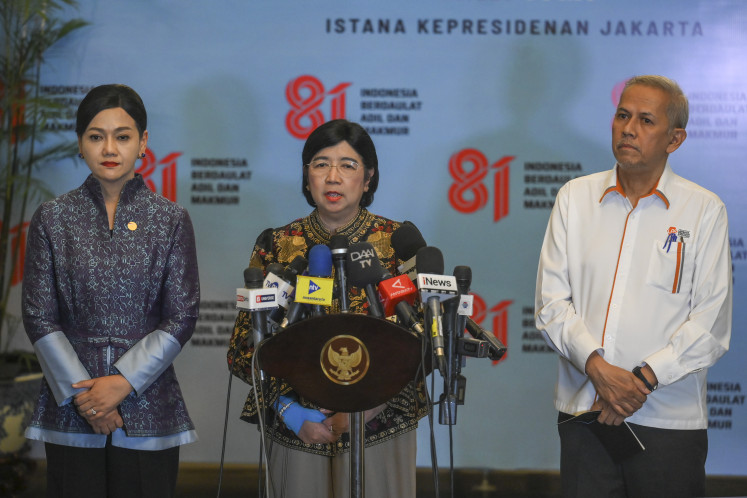
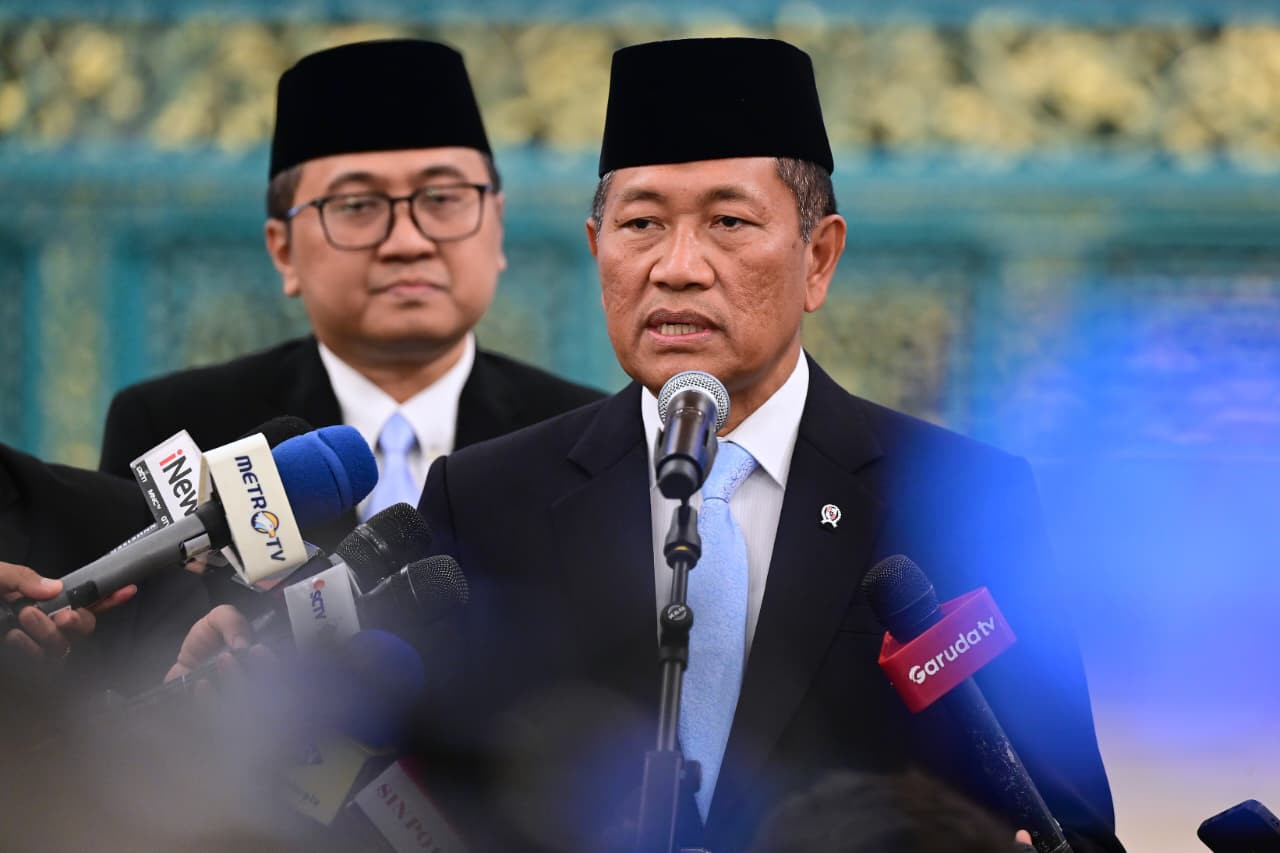 Deputy Defense Minister and newly-inaugurated University of the Republic of Indonesia (URI) Governor Donny Ermawan Taufanto (right) talks to journalists on July 22 as Bandung Institute of Technology (ITB) professor and URI Deputy Governor Yos Sunitiyoso looks on at the State Palace in Central Jakarta. (Courtesy of Presidential Secretariat/Muchlis Jr)
ast month, President Prabowo Subianto inaugurated the governor and deputy governor of the newly established University of the Republic of Indonesia (URI) to the surprise of many.
The ambitious initiative (yet another) was launched on July 22, and on the same day, the President appointed Sudaryono as the new head of his flagship free nutritious meal program following the abrupt resignation of his predecessor after only six weeks in office.
There had been no public consultation, no policy paper outlining the university’s purpose and no indication that the government had conducted a comprehensive study to justify creating yet another state university.
Even the House of Representatives’s Commission X overseeing education later admitted it had yet to receive an official explanation from the government regarding the university’s legal basis, mandate, budget or institutional design.
The appointment of a governor rather than a rector immediately drew comparisons with institutions such as the Military Academy, the National Police Academy and the National Resilience Institute (Lemhannas), all of which adopt hierarchical, quasi-military leadership models aimed at producing future state leaders.
URI's governor who is also sitting Deputy Defense Minister Donny Ermawan Taufanto later said the university would prepare future leaders for government and state-owned enterprises by instilling patriotism, integrity, nationalism and managerial competence.

He added that URI would offer academic programs from bachelor's to doctoral levels. Yet before the university's website disappeared from public view, it stated that URI would not provide conventional programs such as medicine, engineering, economics or law.
If URI is not intended to function as a conventional university, what exactly distinguishes it from institutions that already train public leaders? If it is, why establish a new university rather than strengthen existing ones?
Those questions become even more pressing after the government confirmed plans to establish 10 URI campuses funded through the state budget.
Finance Minister Purbaya Yudhi Sadewa has indicated that the funding will overlap with the Higher Education, Science and Technology Ministry's allocation, raising concerns among academics whose universities are already grappling with shrinking research budgets following the government's fiscal tightening.
URI follows other novel educational institutions. Earlier came Sekolah Rakyat for children from low-income families and Sekolah Garuda for high-achieving students. Each was presented as a solution to longstanding educational challenges. Yet the government has struggled to explain why entirely new institutions are needed when similar functions already exist.
Creating parallel institutions without first addressing weaknesses in the existing system risks adding another layer of bureaucracy while leaving underlying problems unresolved.
Those problems are hardly difficult to identify. Schools across Indonesia continue to struggle with deteriorating infrastructure, uneven teacher distribution and inadequate learning facilities. Universities face persistent shortages in research funding and academic resources.
Every rupiah allocated to establishing new schools and universities is a rupiah unavailable for improving those already serving the vast majority of Indonesians.
That trade-off becomes even more significant when nearly a third of the constitutionally mandated education budget has effectively been tied to financing the President’s free meals program, which itself continues to face implementation problems, including food poisoning incidents and corruption allegations involving its leadership.
Indonesia's education system undoubtedly requires reform, but education policy demands careful planning because its consequences extend far beyond a single administration. Universities cannot be built on political ambition alone, nor should scarce public funds be committed before a compelling case has been made.
We therefore question not only the necessity of URI, but also the policymaking process that produced it. Before creating another publicly funded institution, the government should first ask whether the same objective can be achieved by improving those already in place. In education, as in any area of public policy, thinking first is always wiser than building first.
Share your experiences, suggestions, and any issues you've encountered on The Jakarta Post. We're here to listen.
Thank you for sharing your thoughts. We appreciate your feedback.
Quickly share this news with your network—keep everyone informed with just a single click!
Share the best of The Jakarta Post with friends, family, or colleagues. As a subscriber, you can gift 3 to 5 articles each month that anyone can read—no subscription needed!
Get the best experience—faster access, exclusive features, and a seamless way to stay updated.


