TheJakartaPost
Please Update your browser
Your browser is out of date, and may not be compatible with our website. A list of the most popular web browsers can be found below.
Just click on the icons to get to the download page.


Popular Reads
Top Results
No results found. Please check your search term and try again
Can't find what you're looking for?
View all search results
Popular Reads
Top Results
No results found. Please check your search term and try again
Can't find what you're looking for?
View all search resultsHow we can reduce risks of terrorism
The Sigi attack showed that East Indonesia Mujahidin (MIT), the terror group held responsible, was able to continue recruitment and obviously received local support.
Change text size
Gift Premium Articles
to Anyone
Share the best of The Jakarta Post with friends, family, or colleagues. As a subscriber, you can gift 3 to 5 articles each month that anyone can read—no subscription needed!
I
ndonesia is a diverse nation that after the reform movement in 1998, has done what it takes to maintain its multiculturalism against all odds, including acts of terrorism that have claimed so many lives since the first Bali bombings in 2002.
Even during the COVID-19 pandemic, terrorism remains a threat. The National Counterterrorism Agency (BNPT) revealed that 232 terrorist suspects have been arrested so far. Just after the atrocities in Sigi, Central Sulawesi, police arrested Zulkarnaen, who had been on the run for 18 years. Another milestone was achieved after the police in no time found out that terrorist cells made use of charity money collected in boxes outside of minimarkets to finance their actions.
To mitigate the extremist ideology from turning into violence and later developing into terrorism, we cannot focus only on security approaches, but also on the improvement of the social, economic, cultural and political fabrics at the local level.
Understanding the national and local context is important if we want to prevent acts of terrorism from recurring. What matters now is how to synchronize the national and local strategies.
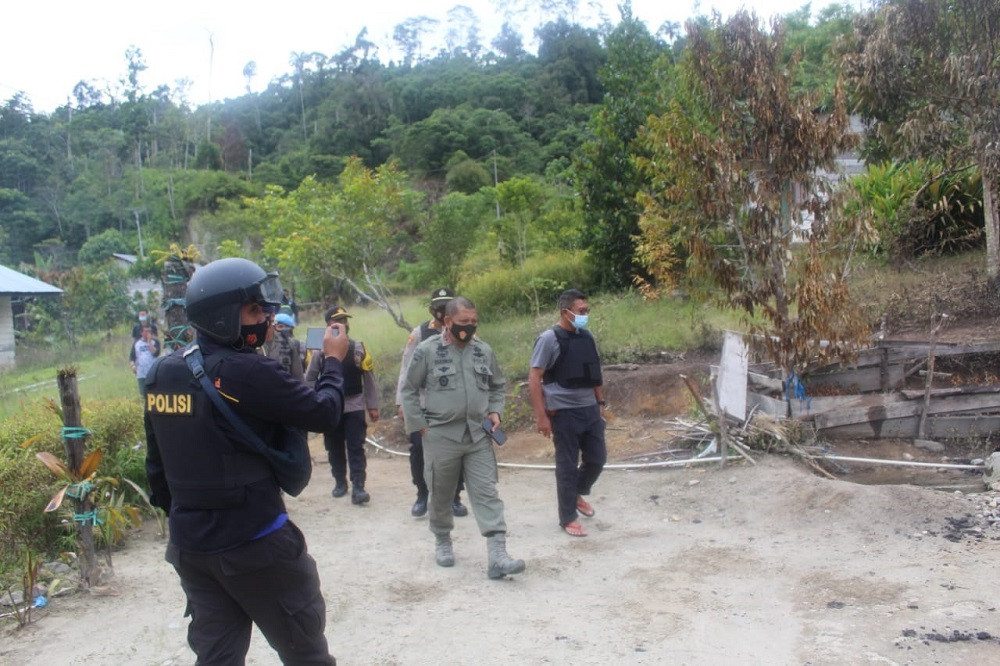
First, revisit the security approaches considering the case like attack in Sigi, where security apparatuses met guerrilla tactics coupled with challenging topography. The Sigi attack showed that East Indonesia Mujahidin (MIT), the terror group held responsible, was able to continue recruitment and obviously received local support.
Herein lie the links to be broken. Society support for a terror group indicates that local communication channel does now work. We must dig deep into what has happened to the local social and political structures under the decentralization regime.
As the credo of countering and preventing violent extremism mandated by the United Nations Security Council Resolution 2242 prescribes collaboration between the government and society, we should not leave the local governance behind. This brings us to the next issue: To what extent has the peace pact affected the sustainable peace in surrounding Central Sulawesi after the bloody sectarian conflict in 2000-2001?
So far, Poso and its surroundings have remained the operational areas of the terrorist group. As in the Sigi attack, one might ponder why the local early warning mechanism did not work. Under the regional autonomy, local government actors have received the power and resources to develop their regions.
A study by Rachel Diprose in 2009 found that decentralization had affected the dynamics of local conflicts, which also impacted public service delivery and growth, as a conflict could undo development gains. To some extent, the conflicts in Central Sulawesi may speak volumes of inter-group tensions and horizontal inequalities at the local level.
The second issue concerns the utilization of a gender-based perspective in mitigating the impacts of violence. Thanks to the global shift in the trend of terrorism, women and children are increasingly seen as strategic actors in carrying out amaliyah (charity) mission among extremist groups.
Women's participation in jihadist groups is also related to the attribution that women are recipients, interpreters as well as those who implement and reproduce the values of fundamentalism. From the perspective of a peace agent, how to fight the two phenomena of women as actors of violence?
It can be developed by promoting the character of parenting, where the role of a mother is the foundation of family education. This kind of pattern emphasizes women's ability to communicate by preventing themselves and their families from being influenced by extremist groups.
On the other hand, the role of men in family relations is also important, because the teachings of jihadist militancy that glorify their negative masculinity have made the attraction to joining terrorism inevitable. We can see from the case of MIT in Sigi that recruitment of new members was conducted mostly by male youths.
This means expansion of terrorist groups maintains the old mechanism that utilizes the masculinist image of jihadism and spreads the teachings through social media and community support (including family). These tactics must be understood by decisionmakers in security and local governance actors so that the counterterrorism and prevention of violent extremism will not come to no avail.
Take as an example the case of Ummu Sabrina, an Indonesian mother who started posting her travel blog on Facebook five years ago on her trip to Syria to join the Islamic State. She wrote that her husband wanted to go on a holy war and join the terrorist militia. As quoted in this German article (srf.ch/news/international/terrorismus-in-suedostasien-frauen-im-dienste-des-islamischen-staates), she said, “I don't want my husband to go alone. When death approaches, I have to be there. That's why I said to him: I and the children are coming with you."
Gender sensitivity can unlock the narratives behind such motives. The gender sensitivity will also reveal the extent of the struggles of women whose family members became victims of terrorist bombing. They may face difficulties in raising their children, accessing justice and sustainable medical and psycho-social services, and the right to compensation.
Applying gender sensitive interventions in rehabilitation and reintegration can increasingly take into account the distinct needs of women and girls during the rehabilitation period. The gender perspective hopes to inform more about the positive potentials of women in influencing acceptance of the community toward the former male terrorists who have served sentences, too.
The participation of civil society in all potential interventions will also encourage a more accountable and sustainable process of reintegration.
Last but not least is dialogues among various stakeholders at the local level, particularly in regions that have experienced episodes of bloody conflicts. However, the dialogues should involve those who agree to live in Indonesia without threatening fellow citizens who have the equal right to prosper. On the other hand, the state must present in order to protect the members of society from threats like terrorism.
As a nation that bears the scars of violence, efforts to maintain peace should continue while solving fundamental problems related to justice and accountability.
***
The writer is PhD candidate at Monash Gender, Peace and Security Center, School of Social Sciences, School of Arts, Monash University.