TheJakartaPost
Please Update your browser
Your browser is out of date, and may not be compatible with our website. A list of the most popular web browsers can be found below.
Just click on the icons to get to the download page.


Popular Reads
Top Results
No results found. Please check your search term and try again
Can't find what you're looking for?
View all search results
Popular Reads
Top Results
No results found. Please check your search term and try again
Can't find what you're looking for?
View all search resultsKeeping MSMEs afloat next year
The macroeconomic dominance of micro, small and medium enterprises (MSMEs) is not reflected in their financial health or in the banking credit market.
Change text size
Gift Premium Articles
to Anyone
Share the best of The Jakarta Post with friends, family, or colleagues. As a subscriber, you can gift 3 to 5 articles each month that anyone can read—no subscription needed!
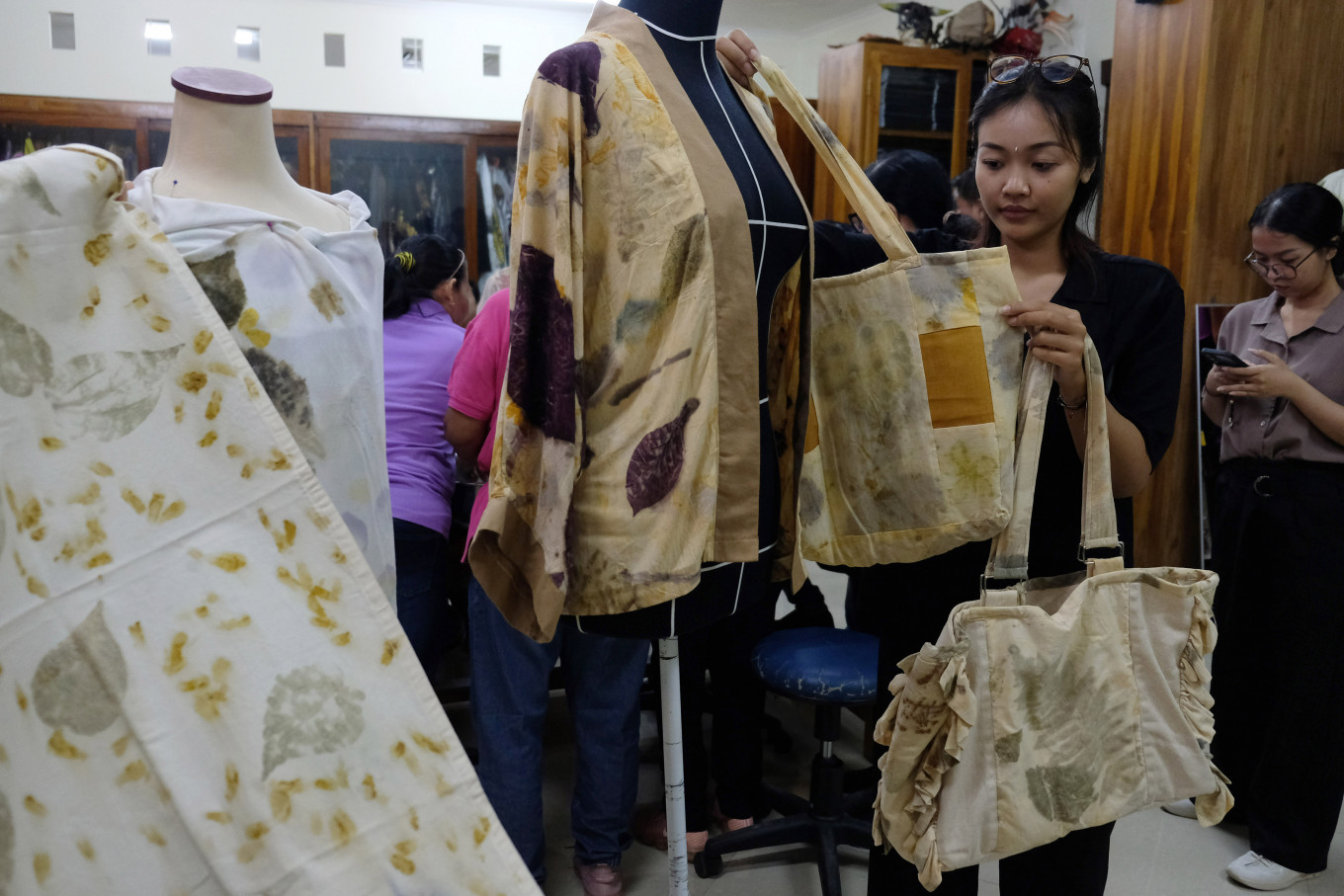 A participant arranges bags on May 14, 2024, made during a fashion training program in Denpasar, Bali. Twenty people from micro, small and medium enterprises (MSMEs) took part in the event organized by the Denpasar city administration. (Antara/Nyoman Hendra Wibowo)
I
n the post-pandemic era, the condition of micro, small and medium enterprises (MSMEs) presents a paradox of recovery because of structural and financial issues.
We know that MSMEs remain the backbone of the Indonesian economy. MSMEs are claimed to contribute approximately 61 percent to gross domestic product. With over 30.2 million business units accounting for nearly 32 percent of total employment, the sector remains the main engine of domestic economic and labor absorption.
Because of calibrations to MSMEs' contribution and adjustments to account for informality issues, MSME contribution to GDP has been lowered to 12-15 percent, still too big to be ignored.
However, this macroeconomic dominance is not reflected in the MSMEs' financial health or the banking credit market. The last two years have indicated a divergence in credit allocation. While the wholesale formal corporation records robust double-digit credit growth, MSMEs experience almost stagnant net lending growth.
Credit growth has collapsed since 2024. The latest figures for October 2025 recorded MSME credit growth at negative 0.11 percent year-on-year (yoy). As overall bank lending activity still grew by 6.9 percent, the figures underscore the K-shaped recovery in private-sector credit growth. The effects of fast, steady growth among big corporations, supported by commodities, downstreaming and infrastructure development, do not trickle down to MSMEs.
One contributing factor to this vulnerability is the structure of the MSME sector. Most MSME output comes from the micro segment (99.7 percent), which is characterized by low capital intensity and high reliance on daily cash flow.

On the other hand, micro segments tend to have limited sales ranges by location, as they have limited capacity to expand market access and marketing campaigns through digitalization. Our survey reveals that only 23 percent of small and medium enterprises (SMEs) go digital, especially to sell or promote their products. Thus, we can expect a much lower penetration in the micro segment.