The Jakarta Post
Please Update your browser
Your browser is out of date, and may not be compatible with our website. A list of the most popular web browsers can be found below.
Just click on the icons to get to the download page.


Popular Reads
Top Results
No results found. Please check your search term and try again
Can't find what you're looking for?
View all search results
Popular Reads
Top Results
No results found. Please check your search term and try again
Can't find what you're looking for?
View all search resultsIndonesia to start restricting children’s social media access in 2026
Change text size
Gift Premium Articles
to Anyone
Share the best of The Jakarta Post with friends, family, or colleagues. As a subscriber, you can gift 3 to 5 articles each month that anyone can read—no subscription needed!
 (Image courtesy of the Communication and Digital Ministry)
A
s part of broader efforts to strengthen child protection in the digital space, the Indonesian government is preparing to impose restrictions on children’s and adolescents' access to social media starting in 2026.
The policy will be implemented through Government Regulation (PP) No. 17/2025 on the Governance of Electronic System Providers for Child Protection, commonly known as the Child Protection in Digital Space Regulation (PP Tunas), which is scheduled to take effect on March 1, 2026.
Aimed at protecting children from online harm, PP Tunas will require all electronic system providers, including social media, online gaming and e-commerce platforms, to enforce minimum age requirements for users.
“The state is present to ensure that every Indonesian child can grow up in a safe and healthy digital environment. The Tunas policy reflects our commitment to protecting children from various digital threats and risks, while also ensuring that they reap the full benefits of technological advancement,” said President Prabowo Subianto.
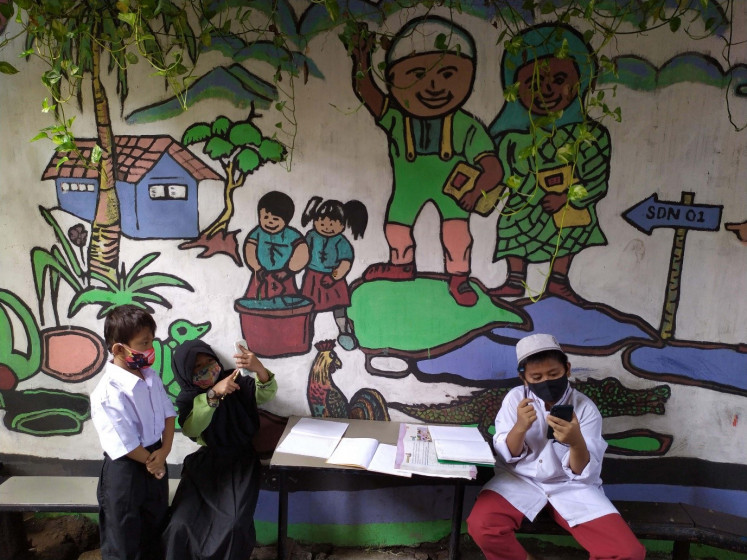
Authorities are currently finalizing the regulation’s implementing rules, which are expected to provide detailed and practical guidance to ensure effective enforcement. Public consultations on the draft rules have been completed, and the government has entered a pilot-testing phase involving child users of digital platforms in several regions.

Communications and Digital Minister Meutya Hafid said the regulation would govern children’s access to digital platforms based on each platform’s risk profile. Children aged 13 to 16 will face different access limitations depending on the level of risk associated with the services they use, with the government set to publish classifications of high- and low-risk platforms, including social media services.
Under the regulation, platforms are also prohibited from conducting profiling, data collection and data analysis involving children. Administrative sanctions will be imposed on platforms that fail to comply with the rules.
“There will be gradual sanctions for platforms found violating the rules, starting with warnings, followed by fines and, at the final stage, access termination,” Meutya said.
In drafting the regulation, the government involved nongovernmental organizations as well as children themselves.
Andy Ardian, national coordinator of children’s rights group ECPAT Indonesia, said Indonesia’s approach was more comprehensive than that of many other countries, as it addresses child protection across the entire digital ecosystem rather than focusing solely on social media.
According to Andy, digital risks to children can arise across a wide range of online services, from search engines without safe-search features and messaging platforms to digital advertising and content distributed by advertising agencies. He noted that platform responsibility for child protection has largely remained voluntary and should be strengthened into a mandatory obligation.
He also emphasized that exposure to harmful content does not stem solely from social media, pointing out that hundreds of websites hosted in Indonesia continue to carry content that poses risks to children.
Indonesia’s policy direction has been informed by international developments, particularly in Australia.
In 2024, Australia amended its Online Safety Act to introduce minimum age limits for social media use, effectively barring children from accessing several platforms, including Facebook, Instagram, TikTok and YouTube. The move was supported by extensive data highlighting the negative impact of social media on children’s and adolescents’ mental health.
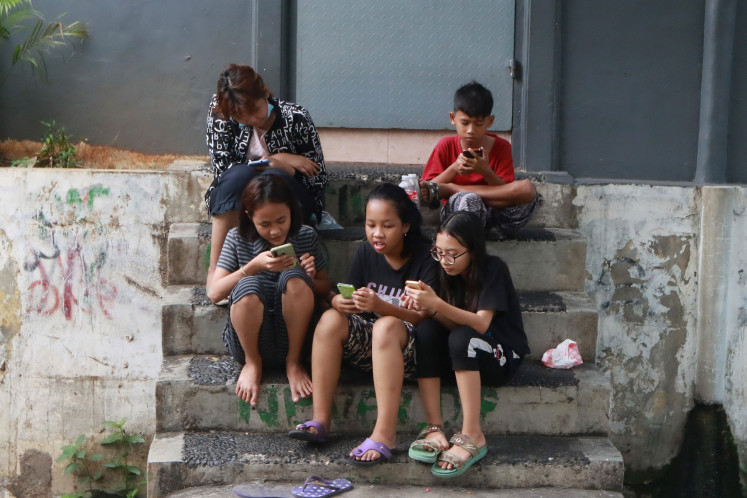
Nevertheless, Indonesia has opted for a more gradual and context-specific approach, taking into account children’s rights to information and the readiness of the domestic digital ecosystem. The government has stressed that restrictions cannot be imposed abruptly without careful technical preparations, including oversight of algorithms, content assessment mechanisms and the role of parents.
Looking ahead, the government expects the implementing regulations of PP Tunas to provide clear guidance for digital platforms, parents and the education sector in supervising children’s online activities. The ultimate goal, officials say, is to create a safer, healthier and more child-friendly digital environment for Indonesia’s younger generation.
As Indonesia moves toward implementing the Child Protection in Digital Space Regulation (PP Tunas) in 2026, the policy is expected to strengthen online safety for children, curb data misuse and provide clearer rules for digital platforms.
By taking a risk-based approach, it aims to balance children’s access to information with protection, encourage parental oversight and support a safer digital ecosystem for families and the broader economy.